Flight Anxiety Results After 30 Days Of App Practice
Most nervous flyers can expect flight anxiety results after 30 days that look like lower anticipatory dread, better control of panic symptoms, and more confidence using coping tools, not a complete cure. The strongest improvements usually come from consistent daily practice with breathing, meditation, hypnosis-style audio, and cognitive reframing.
A self-guided flight anxiety program can provide meditation, hypnosis-style relaxation, breathing exercises, and cognitive techniques for nervous flyers.
- Thirty days is usually enough to build noticeable coping skill, but not always enough to erase fear of flying.
- Daily consistency matters more than doing occasional long sessions before a trip.
- Breathing and grounding can help within days, while catastrophic beliefs about flying usually take longer to change.
30-Day Flight Anxiety Results: Realistic Changes To Expect
After 30 days, realistic flight anxiety results are usually less dread before travel, fewer panic spikes, better recovery after symptoms rise, and more willingness to board. Complete elimination of fear in one month is uncommon.
Fear of flying is not rare. Up to 28% of adults report flying-related fear symptoms, and about 12.5% have at least subthreshold flying phobia, according to a 2014 study in Frontiers in Psychology (https://www.frontiersin.org/articles/10.3389/fpsyg.2014.01158/full). That range matters because a mildly nervous first-time flyer and someone avoiding flights for years are not starting from the same place.
A good month-one result may sound ordinary: “I was still scared, but I knew what to do.” That is progress. The jaw may still tighten at cruising altitude, but the person can open a saved breathing track, name the sensations, and stay with the flight instead of escalating every body cue into danger.
Scared but capable is a valid outcome.
Five Facts About Flight Anxiety Practice Outcomes After One Month
- Structured CBT-style tools, exposure rehearsal, and relaxation practice can reduce fear of flying symptoms within a few weeks for many people, though 30 days rarely erases the fear completely.
- Consistent app engagement predicts improvement more reliably than the app brand alone; five short practices a week usually beat one long panic-driven session the night before travel.
- Exposure-based CBT is widely treated as first-line care for specific phobia, and meaningful reductions can appear within a 4-8 session window; the NICE evidence review for anxiety disorders describes exposure-based CBT as a core psychological approach for phobic anxiety (https://www.nice.org.uk/guidance/cg113).
- Short-term tools, especially breathing, grounding, and attention training, can reduce in-the-moment anxiety before deeper beliefs about aircraft safety change.
- Medication may help situationally for some flyers, but long-term improvement usually depends on repeated skill practice and new learning.
Clinicians typically recommend exposure-based CBT for specific phobias because it helps the brain update threat predictions through repeated, tolerable contact with feared cues. For flying, that may start with airport images, aircraft sounds, takeoff audio, or a planned practice flight.
The pocket check is real.
How Flight Anxiety Practice Works
Flight anxiety practice works by teaching the brain that flight cues are uncomfortable but survivable, instead of signals that danger is unfolding. It changes the loop between threat prediction, body arousal, and avoidance.
When a nervous flyer avoids booking, skips the trip, or spends the whole week checking turbulence maps, the short-term relief reinforces the fear. The brain learns, “I stayed safe because I escaped.” Practice interrupts that pattern through gradual nervous-system recalibration: repeated, tolerable contact with cues like boarding sounds, takeoff imagery, engine noise, or the feeling of being seated with limited control. Breathing helps manage arousal, meaning the racing-heart and shallow-breath state, but it does not need to erase fear to be useful.
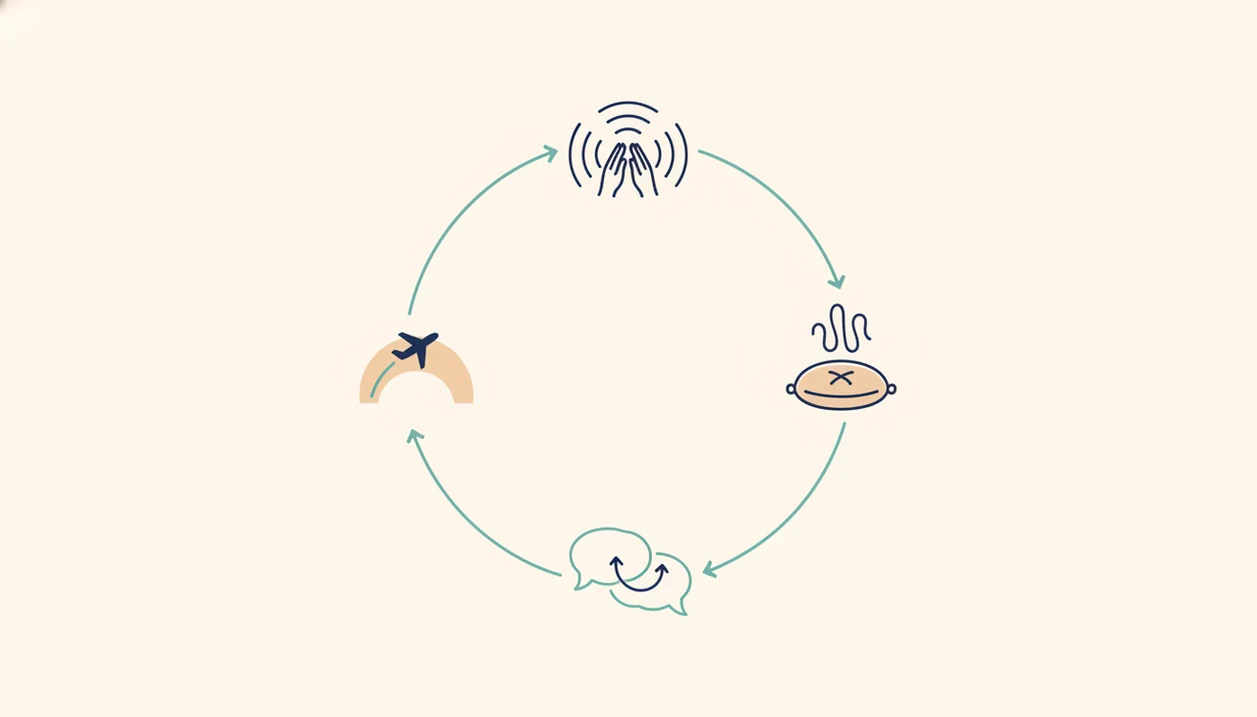
A simple practice loop looks like this:
- Notice the feared prediction, such as “turbulence means the plane is unsafe.”
- Regulate the body enough to stay present with slow breathing or grounding.
- Rehearse one flight cue at a tolerable level instead of avoiding it completely.
- Test the catastrophic thought against a safer explanation, such as normal aircraft movement.
- Repeat the loop across days, because new learning strengthens through many small exposures, not one intense pre-flight session.
Fear Of Flying App Results In The First 30 Days
Fear of flying app results in the first 30 days come from two different processes: calming the nervous system and changing catastrophic predictions. Body regulation can happen quickly; belief change usually needs more repetition.
Self-guided programs can combine breathing, guided meditation, hypnosis-style relaxation, and cognitive reframing. The breathing work targets physiological arousal, which means heart rate, muscle tension, and fast shallow breathing. Attention training helps you place focus on one cue at a time, such as the seat beneath you or five objects in the cabin. Reframing works on the thought layer: “This dip means danger” becomes “This is a normal movement through cloud layers.”
Broader internet-delivered CBT research has found anxiety reductions across treatment windows of several weeks (https://pubmed.ncbi.nlm.nih.gov/21358715/), and mindfulness-based programs also show anxiety reductions across multiweek interventions (https://pubmed.ncbi.nlm.nih.gov/24395196/). Flight anxiety relief through meditation, hypnosis, and cognitive techniques should deliver repeatable coping practice, not a promise that turbulence will feel pleasant.
Flight Anxiety App Routine For 30-Day Results
Use a 30-day routine to make progress measurable, not vague. Short daily sessions are usually better than rare long sessions because anxiety skills strengthen through repetition.
- Rate your baseline anxiety from 0-10 for booking, packing, boarding, takeoff, turbulence, and landing.
- Practice daily for 5-12 minutes using one breathing exercise, one meditation, or one hypnosis-style relaxation track.
- Rehearse flight cues by imagining the rideshare, security line, boarding queue, taxi, takeoff, cruise, and descent.
- Build a flight-day plan with one takeoff audio, one turbulence exercise, one grounding prompt, and one recovery track.
- Review the month by comparing anxiety ratings, avoidance, recovery time, and willingness to fly.
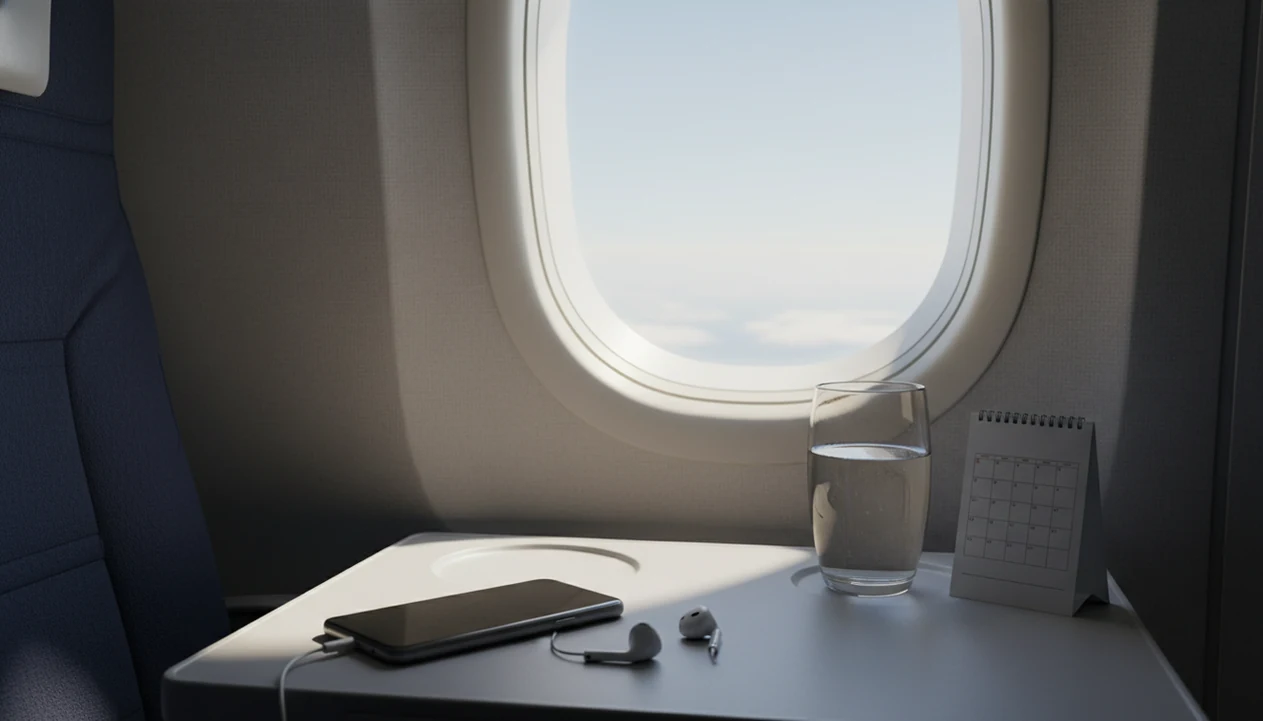
If you only have five minutes, practice the exact tool you would use once seated. Earbuds in, phone on airplane mode, track already downloaded.
Severe panic symptoms, fainting, chest pain, unclear shortness of breath, or medical concerns should be discussed with a clinician before relying on app practice alone.
30-Day Method We Tracked For Nervous Flyers
“What did you actually track for 30-day flight anxiety results?” We tracked a representative practice pattern, not a clinical trial: breathing, guided meditation, hypnosis-style audio, CBT-style reframing, and light exposure rehearsal across one month.
The signals were practical. We looked at pre-flight dread, body symptoms, avoidance, turbulence reaction, and recovery time after anxiety spikes. A user might notice that the phone charger is still coiled by the tickets at midnight, but the search spiral ends after one planned exercise instead of two hours of reading aircraft incidents.
Practice quality mattered more than simply opening an app. Someone who used one breathing session daily and rehearsed takeoff twice a week had a clearer learning loop than someone who tried four tracks only after panic started.
This is an outcome guide, not a guarantee of identical results. If you are supporting someone else, the companion plan in how to help someone with flight anxiety may be more useful than pushing extra practice.
Three Fear Of Flying App Results Vignettes After 30 Days
These vignettes show realistic patterns, not guaranteed clinical outcomes. The point is to compare improvement types: booking behavior, takeoff symptoms, and partial progress with severe avoidance.
Maya: less dread before booking
Maya had mild anticipatory anxiety. After 30 days, she still checked seat maps twice, but she booked earlier and stopped delaying the purchase until prices rose. Her main gain was less dread before committing.
Jon: steadier breathing during takeoff
Jon’s fear showed up as panic symptoms during taxi and climb. By week four, he used a breathing track before the engines spooled up and recovered faster after the first pressure change. Shoulders still braced against the seat, then released.
For first flights, the practical sequence in first flight anxiety tips can help match exercises to each travel stage.
Priya: partial progress with severe avoidance
Priya had avoided flying for six years. After one month, she could watch takeoff videos and discuss a short route, but she was not ready to book. That still counts as partial progress, especially when avoidance has been protecting the fear for years.
Common Flight Anxiety Practice Outcomes By Week Four
By week four, breathing and grounding often improve faster than fear-based beliefs. The person may still dislike flying, but they recover sooner and avoid less.
| Outcome area | Week-one change | Week-four marker |
|---|---|---|
| Symptom relief | Calmer breathing during practice | Shorter panic duration and less muscle tension |
| Behavior change | Opens an exercise when anxious | Less checking, less reassurance seeking, fewer trip delays |
| Belief change | Notices catastrophic thoughts | Challenges “turbulence means danger” more often |
| Flight-day performance | Uses one tool before boarding | Returns to baseline faster after takeoff or turbulence |
The most common medically supported way to reduce phobic avoidance is gradual exposure combined with cognitive and relaxation skills. Apps can support that rhythm, but they do not replace specialist care when fear is severe.
For people who fly often, a repeating plan may matter more than a one-time countdown; the flight anxiety app for frequent travelers guide focuses on that pattern.
What 30-Day Flight Anxiety Results Do Not Prove
There is limited direct research on exact 30-day outcomes for specific flight anxiety apps. A better month does not prove a permanent cure, and it does not prove that one feature caused the change.
Improvement can come from several sources at once: skill practice, increased familiarity with flight cues, positive expectation, reduced avoidance, or simply having a plan. A nervous flyer opening the app in the departure lounge with 18% battery and ten minutes before boarding may feel calmer because the decision is already made: play the takeoff track, breathe, board.
One month of progress is still useful. It just needs the right label.
Severe phobia may require exposure therapy, CBT with a clinician, or medical guidance beyond an app. For some families, a flight anxiety app for nervous partners helps the support person stop over-reassuring and start prompting skills.
Limitations
Thirty days can be meaningful, but it has real limits.
- Direct app-specific 30-day research is limited, so expectations rely partly on broader CBT, mindfulness, and digital anxiety evidence.
- Inconsistent practice may produce little or no meaningful change, especially if the app is only opened during panic.
- Severe flying phobia, panic disorder, trauma history, or multiple anxiety conditions may need professional treatment.
- Exposure-style exercises can temporarily increase anxiety early in the process because the brain is facing cues it usually avoids.
- Medication may reduce acute distress, but it is not a standalone long-term learning strategy.
- Chest pain, shortness of breath, fainting, or unclear panic-like symptoms need medical evaluation.
- Thirty days may improve coping without making turbulence, takeoff, enclosed spaces, or landing feel comfortable.
- Hypnosis-style relaxation may help some users settle, but others prefer plain breathing or CBT prompts.
For teens, parents should be careful with self-guided exposure and use age-appropriate support; the flight anxiety app for teens page covers that distinction.
FAQ
Can flight anxiety improve in 30 days?
Yes. Many people can improve coping, body symptoms, and willingness to fly within 30 days, but cure is not guaranteed.
Will fear of flying disappear after 30 days?
Full disappearance of fear is uncommon after only 30 days. A more realistic result is feeling anxious but better prepared.
How often should I practice for fear of flying?
Short daily practice is the most realistic schedule. Five to twelve minutes a day usually supports learning better than one long session before a flight.
Do fear of flying apps work for nervous flyers?
Fear of flying apps can help when they use evidence-aligned breathing, mindfulness, exposure rehearsal, and cognitive techniques. Results depend on consistency and symptom severity.
What flight anxiety changes happen first?
Early changes often include calmer breathing, less muscle tension, and faster recovery from anxious spikes. Belief change about flying usually takes longer.
Why am I still anxious after practicing for 30 days?
Remaining anxiety does not mean failure. Symptom regulation often improves before deeper catastrophic predictions change.
Is medication better than flight anxiety practice?
Medication may reduce short-term distress for some flyers, but skill practice supports longer-term learning. Medication decisions should be made with a clinician.
When should I get therapy for fear of flying?
Consider therapy if you avoid needed travel, have panic attacks, have trauma history, or see little improvement after consistent practice. Exposure-based CBT is commonly used for specific phobias.