
CBT Techniques For Flight Anxiety Before And During Flying
CBT techniques for flight anxiety help you identify the danger thought behind panic, test it against evidence, and replace it with a more realistic flying thought before and during the flight. The method works best when cognitive reframing is paired with breathing, reduced checking, and gradual practice with flight-related cues.
> Definition: CBT for fear of flying is a structured self-help or therapy approach that uses thought testing, behavior changes, body-calming skills, and gradual exposure to reduce panic around flying.
TL;DR
- The goal is not to force positive thinking; it is to build a more accurate thought when your brain treats flying as immediate danger.
- A useful reframe compares the worst-case, best-case, and most-likely explanations for turbulence, takeoff sensations, noises, or delay announcements.
- Self-help tools can support mild to moderate flight anxiety, but severe or disabling fear may need a licensed therapist.
CBT Techniques For Flight Anxiety At A Glance
CBT-style flight anxiety work means thought testing plus coping behavior, not simple reassurance. It asks, “What danger story is my brain telling, and what would be a more accurate response right now?”
The core targets are catastrophic thoughts, body panic, avoidance, checking, and safety behaviors. A nervous flyer might notice a brief dip through cloud layers, think “something is wrong,” grip the armrest, scan the crew, and feel calmer only after repeated checking. That loop is the work.
The aim is reduced panic and better coping, not loving flying. Some people still dislike airports, queues, and takeoff. That can be fine.
Self-help tools can sit alongside CBT-style practice when they provide saved breathing, audio, and thought-reframing prompts; they should not be treated as a substitute for therapy when fear is disabling.
Five Facts About CBT For Fear Of Flying
- CBT works best when it targets the exact thought driving panic, such as “turbulence means danger,” rather than the broad label “I hate flying.”
- Thought reframes usually work better when paired with breathing, muscle relaxation, and pre-flight practice. Your body needs a cue too.
- Gradual exposure matters because avoidance teaches the brain that escape is what kept you safe.
- CBT skills can be reused after a flight and on future trips, especially when you write down what happened.
- Severe aviophobia may require clinician-guided therapy, exposure treatment, medication advice, or combined care.
Clinicians typically recommend matching the intensity of treatment to the level of disruption, especially when panic causes cancelled trips or repeated inability to board.
Not every fear needs the same tool.
Before You Start CBT For Flight Anxiety
Before you start CBT for flight anxiety, make the work smaller than “fix my fear of flying.” Choose one cue, prepare your tools early, and decide what level of support fits the severity of the problem.
- Pick one upcoming flight moment. Work with boarding, takeoff, turbulence, landing, or being unable to leave the aircraft. A narrow cue gives your brain something testable.
- Save your coping materials before travel day. Put the reframe, breathing track, and quick notes somewhere you can reach without airport Wi-Fi or calm concentration.
- Set one realistic goal. Aim for boarding, staying seated through takeoff, reducing reassurance seeking, or checking updates less often. The goal is practice, not a perfect mood.
- Decide when self-help is enough. Mild to moderate anxiety may respond to structured practice. If you cancel trips, cannot board, panic intensely, or avoid major life events, therapist support is the safer plan.
- Avoid experimenting on flight day. Do not test new medication, alcohol, sedatives, or combinations without clinician guidance. A new substance can add uncertainty right when you need predictability.
How CBT For Fear Of Flying Works In The Brain And Body
CBT for fear of flying works by interrupting the learned cycle between flight cues, danger interpretations, body alarm, and avoidance. The mechanism is not “calm down”; it is threat prediction updating.
A cue starts it: engine noise, a takeoff angle, a delay announcement, or the wing flexing outside the window. The brain interprets the cue as danger. The body answers with dry mouth, tight chest, shaking, or heat. Then checking, reassurance seeking, or avoidance gives short-term relief. Next time, the brain treats the same cue as even more important.
Cognitive restructuring means testing the interpretation rather than arguing with the emotion. Exposure means meeting flight-related cues often enough for the brain to learn, “This feeling can be present without danger.” An NIH-hosted review reported that CBT methods including systematic desensitization, flooding, implosion, and relaxation have been associated with reduced flying anxiety after treatment source.
How To Use CBT Techniques For Flight Anxiety Before Flying
Use CBT before flying by preparing one specific thought, one realistic reframe, and one body-calming response before airport stress narrows your attention. If you only have five minutes, write the thought and reframe in your notes app.
- Name the specific flying trigger. Pick one moment, such as boarding, takeoff, turbulence, landing, or being unable to leave.
- Write the automatic danger thought. Use plain words: “The plane is dropping,” or “I will panic and lose control.”
- Test evidence for and against the thought. Include facts, past flights, crew behavior, and alternative explanations.
- Build a most-likely reframe. Make it believable, not cheerful: “Turbulence feels awful, but it is a normal flight condition.”
- Pair the reframe with breathing or an audio practice. A saved track helps when airport Wi-Fi drops.
For many nervous flyers, a realistic reframe is easier to use than broad reassurance because it answers the exact fear in the moment.
Step 1: Identify The Flight Anxiety Thought Behind Panic
“What thought is making this flight feel dangerous?” Start there, because cognitive techniques for fear of flying work best when the target thought is specific.
Common thoughts include: “Turbulence means danger,” “Takeoff feels wrong,” “The pilot sounds concerned,” “I cannot escape,” or “Panic will make me lose control.” Those are interpretations. They are not the same as sensations.
A tight seatbelt across the lap is a sensation. “I’m trapped and something bad will happen” is the interpretation. CBT works with the second sentence.
Write one line beginning with: “I am afraid that…” Keep it narrow enough to test. “I am afraid that the engine sound means a problem” is more useful than “I am afraid of planes.” The pocket note matters when boarding starts and your attention gets noisy.
Step 2: Reframe Flight Anxiety Thoughts With Scenario Testing
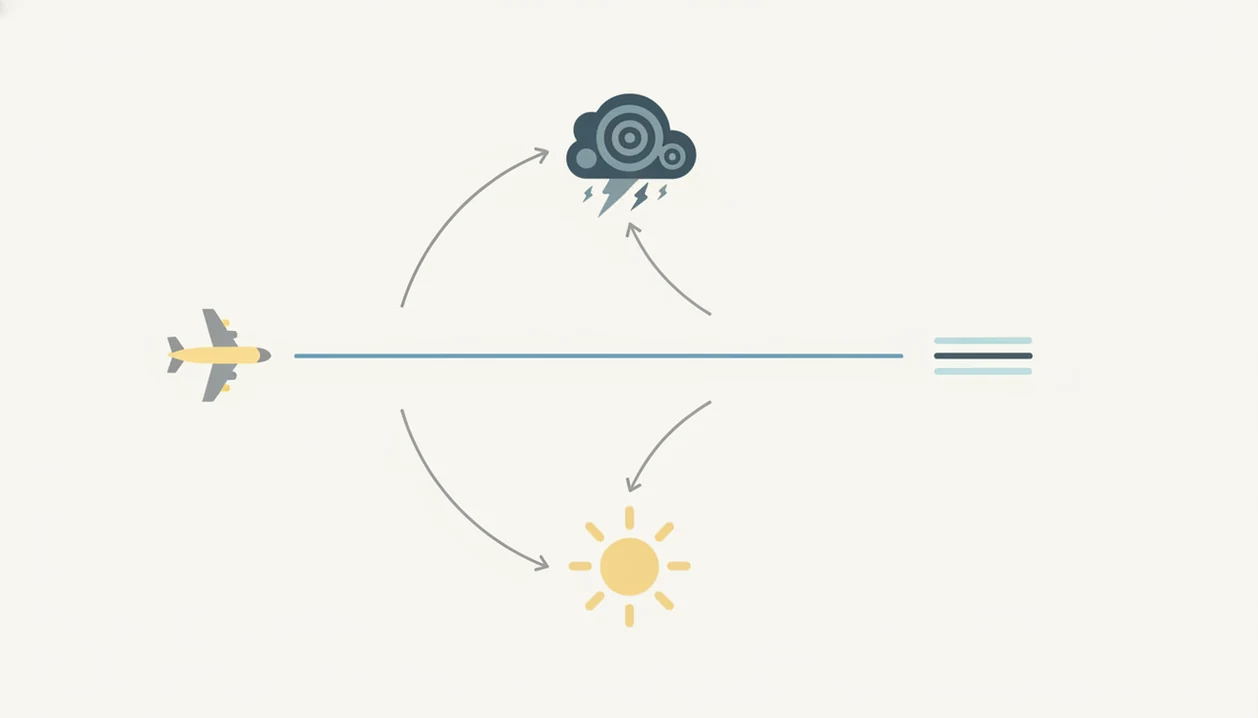
To reframe flight anxiety thoughts, compare the worst-case, best-case, and most-likely explanation for the same trigger. This prevents fake positivity and stops the reassurance loop of asking, “Are we safe?” every two minutes.
Worst-case, best-case, most-likely example
| Flight trigger | Worst-case thought | Best-case thought | Most-likely reframe |
|---|---|---|---|
| Turbulence starts | “The plane is in danger.” | “Nothing is happening at all.” | “The air is uneven, and the plane is built to handle this. I can feel scared without treating it as an emergency.” |
| Loud takeoff sound | “The engine is failing.” | “I love this part.” | “Takeoff uses strong engine power. Loud does not automatically mean unsafe.” |
| Seatbelt sign returns | “The crew knows something bad.” | “It means nothing.” | “The crew is reducing risk from bumps. I can stay seated and breathe.” |
A medically supported way to reduce phobic fear is cognitive restructuring combined with gradual exposure and relaxation practice; the NHS describes CBT and exposure therapy as common treatments for phobias source.
Step 3: Reduce Flight Anxiety Checking And Safety Behaviors
Safety behaviors are actions that make you feel safer for a moment but keep fear in charge. In flying, they often include scanning crew faces, repeatedly checking turbulence maps, gripping armrests, asking for reassurance, and monitoring every sound.
These behaviors bring short-term relief. However, they can teach your brain that flying was only safe because you checked hard enough. That makes the next trip feel just as threatening, or worse.
Try planned checking limits instead. For example: one weather check before leaving home, one gate update at the airport, and no turbulence-map refreshing once seated. Then use a coping card: “My job is not to monitor the aircraft. My job is to ride the anxiety wave.”
Pair the card with slow breathing or a saved exercise from flight anxiety breathing exercises. Less checking feels strange at first. Expected.
Step 4: Practice CBT For Fear Of Flying During The Flight
Practice CBT during the flight by matching one script and one body skill to each stage. CBT-based treatment is commonly described as most effective when combined with gradual exposure rather than thought work alone, and fear-of-flying support guidance also emphasizes psychoeducation and thought restructuring for mild flight anxiety source.
- Board with a role. Say, “I am practicing staying present, not proving I feel calm.”
- Use takeoff words. Say, “Strong acceleration is expected; discomfort is not danger.”
- Answer turbulence once. Say, “This is uncomfortable air, not evidence of catastrophe.”
- During cruise, loosen one muscle group. Drop shoulders, unclench jaw, and return to the reframe.
- On descent, review the prediction. Say, “My fear rose and fell while I stayed seated.”
Breathing or muscle relaxation is the companion tool, not the whole intervention. If takeoff is your hardest stage, an app that helps with takeoff anxiety can make that practice easier to find once earbuds are in.
Common Mistakes When Using CBT For Flight Anxiety
The most common CBT mistakes for flight anxiety are trying to sound calm instead of believable, starting too late, and treating fear as failure. The fix is to practice earlier and measure success by staying engaged while anxiety moves.
- Choose believable thoughts. Replace “Everything is perfect” with something your anxious brain can test, such as “This feels rough, and rough air is not automatically danger.”
- Practice before boarding. Rehearse the script at home, in the taxi, or at the gate, because first-time CBT is harder when announcements, queues, and body alarm are already loud.
- Limit preparation checking. Use one or two practical checks, then stop refreshing turbulence apps. Repeated scanning usually becomes reassurance seeking, not planning.
- Stay with the exercise when anxiety rises. A fear spike does not mean the technique is broken. Keep breathing, repeat the reframe, and let the wave pass without adding more monitoring.
- Judge success by participation. Count boarding, staying seated, reducing checks, and returning to the skill after panic as wins. Zero fear is not the entry fee.
Common Myths About Cognitive Techniques For Fear Of Flying
Myth 1: CBT is just positive thinking. CBT tests a scary thought against evidence; it does not ask you to pretend turbulence feels pleasant.
Myth 2: Meditation alone is the same as CBT. Meditation can calm attention, but CBT also changes interpretations and avoidance patterns. The meditation vs hypnosis for flying question is separate from thought testing.
Myth 3: One breathing exercise should fix severe aviophobia. Breathing may reduce body alarm, but intense phobia often needs exposure-based work.
Myth 4: Success means having no anxiety at all. Success can mean boarding, staying in your seat, and recovering faster after a fear spike.
Myth 5: Aviation safety facts are always enough. Facts help some people, but panic often needs behavior practice too.
After-Flight CBT Review For The Next Trip
Do a brief CBT review within 24 hours of landing, before the brain stores only the worst five minutes. The review should take less than one phone note.
Record four lines: feared prediction, what happened, what you did, and what you learned. For example: “I predicted turbulence would mean danger. We had bumps. I breathed, stopped checking faces, and stayed seated. The fear peaked, then dropped.”
That review matters because anxiety memory is sticky. The calendar square circled in red for the next trip can pull back the fear peak, not the full outcome.
A follow-up study of CBT-based fear-of-flying treatment found that participants continued using CBT skills after treatment ended source. Reusable practice is the point. Flight anxiety relief through meditation, hypnosis, and cognitive techniques delivered via the calmflying app can support practice between trips, not replace clinical care when fear is disabling.
Limitations
CBT techniques can be useful, but they are not instant control buttons. Use them with realistic expectations.
- CBT techniques do not usually work instantly; repeated practice is often needed before flight cues feel less threatening.
- Thought reframing alone may be insufficient for intense phobia, severe avoidance, or frequent panic attacks.
- App-based tools are not a substitute for a licensed therapist when fear causes major life disruption.
- Some people need exposure-based therapy, medication guidance, or combined treatment from qualified professionals.
- Not every technique works for every nervous flyer; some people respond better to body-first calming, others to structured thought work.
- Online advice often mixes evidence-based CBT with general wellness tips, which can make the method look simpler than it is.
- If you cancel important trips, cannot board, or fear harming yourself, seek professional support rather than relying on self-help.
Compare features, not promises, when asking do flight anxiety apps actually help.
FAQ
Does CBT help flight anxiety?
CBT can help many nervous flyers by changing threat interpretations, reducing avoidance, and building repeatable coping skills. It usually works better with practice than as a one-time exercise.
What is flight anxiety reframing?
Flight anxiety reframing means replacing a catastrophic flying thought with a more evidence-based and balanced thought. For example, “turbulence means danger” becomes “turbulence feels uncomfortable, but it is a normal flight condition.”
Is CBT better than breathing exercises for flight anxiety?
CBT and breathing exercises do different jobs. CBT targets danger thoughts and avoidance, while breathing helps reduce body alarm.
Can I do CBT for fear of flying by myself?
Self-help CBT-style exercises may be reasonable for mild to moderate fear. Formal therapy is safer when fear causes cancelled trips, panic attacks, or major life disruption.
How do I reframe turbulence thoughts?
Compare the worst-case, best-case, and most-likely explanation. A balanced reframe is: “The bumps feel scary, but the most likely explanation is normal turbulence, and I can use my coping plan.”
Why do I keep checking flight updates and crew reactions?
Checking gives short-term relief because it feels like control. Over time, it can maintain fear by teaching your brain that flying is safe only when you monitor it.
How long does CBT take for fear of flying?
CBT for fear of flying usually requires repeated practice across days, weeks, or multiple flights. The timeline varies by severity, avoidance, and whether exposure work is included.
Is fear of flying treatable?
Fear of flying can often improve with CBT, gradual exposure, relaxation skills, or professional treatment. Severe aviophobia may need clinician-guided care.
When should I see a therapist for flight anxiety?
Consider seeing a therapist if you cancel trips, have panic attacks, cannot board, or avoid important life events because of flying. Professional help is also appropriate when self-help tools are not enough.