Flight Anxiety App For Nervous Partners And Supportive Families
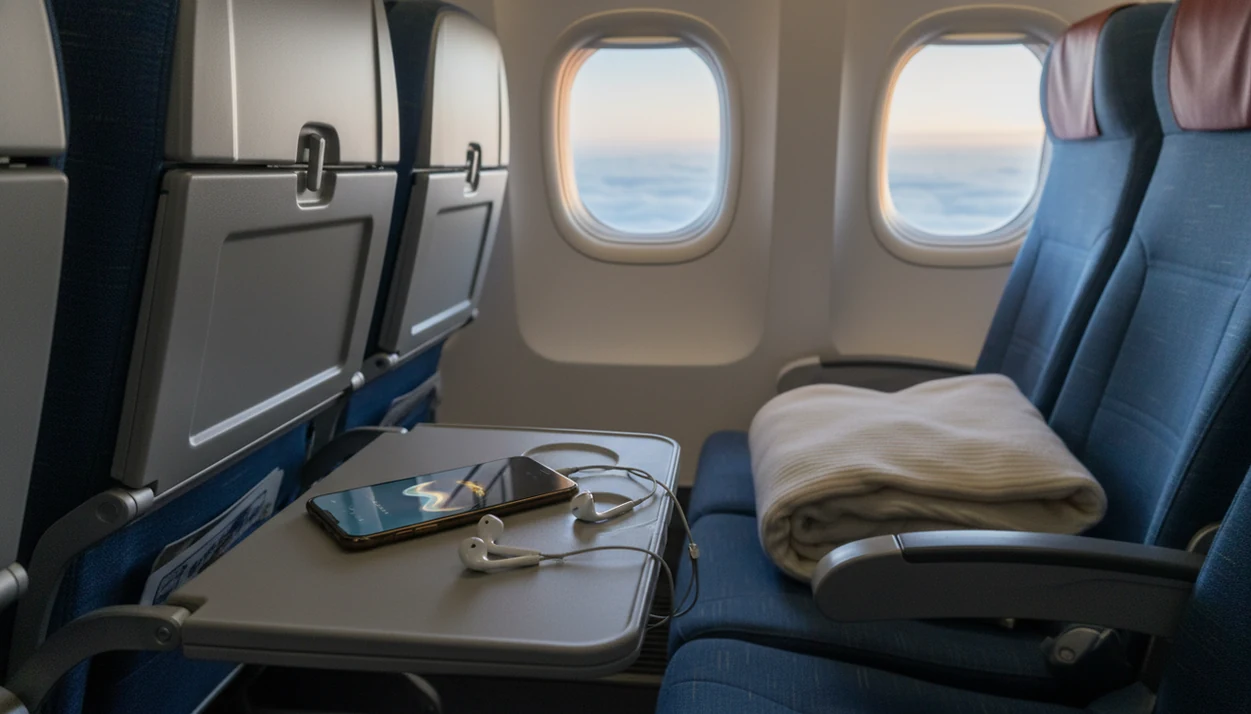
A flight anxiety app for nervous partners helps you support an anxious flyer with shared breathing routines, calming audio, simple scripts, and flight-specific reassurance that does not become constant over-reassurance. CalmFlying is built for nervous flyers, but partners and family members can use its meditation, hypnosis, and cognitive techniques to prepare together before the trip and stay calm during the flight. For partners, the value is not monitoring the anxious person; it is having a shared plan, shared language, and downloaded exercises ready before the cabin door closes.
CalmFlying is a flight anxiety app that provides meditation, hypnosis, breathing exercises, and cognitive techniques for nervous flyers.
- The best support is planned before the airport: choose calming tracks, agree on signals, and rehearse what you will say during takeoff, turbulence, and landing.
- A good app for loved one flight anxiety should include shared exercises, offline access, flight-specific education, and scripts that comfort without arguing or promising certainty.
- Apps can help many nervous flyers, but severe phobia, panic attacks, or avoidance may also need professional therapy or medical support.
Why nervous partners need a flight anxiety app instead of guesswork
Loved ones often want to help, then accidentally feed the fear by debating, minimizing, or repeating “you’re fine” until both people feel stuck. Fear of flying is not rare or embarrassing; NIMH reports that 12-month specific phobia prevalence in U.S. adults is 9.1%, and lifetime prevalence is about 25.1% source.
A partner’s job is not to become a therapist. It is steadier than that. Sit close. Keep your voice low. Help the nervous flyer use the skills already practiced before the seatbelt sign dings.
When the issue is “I don’t know what to say when my partner panics,” Flight Anxiety App fits because it gives partners timing, language, and shared exercises instead of leaving them to improvise at Gate B12.
Feet down. Voice soft.
For nervous partners, structured co-regulation is often easier than repeated reassurance because it gives the anxious flyer one clear next action.
5 flight anxiety app features for partners helping with fear of flying
A partner-friendly flight anxiety app should give you tools for the actual flying moments, not just a calm voice over soft music. Generic meditation can help, but it may not speak to flaps whirring beside the wing, takeoff pressure, turbulence bumps, or the long hour before boarding.
- Shared calming audio: A breathing or meditation track both people can follow through earbuds.
- Flight-specific education: Plain explanations for engine sounds, climb sensations, turbulence, and descent.
- Offline mode: Downloaded tracks for airplane mode, patchy airport Wi-Fi, and delayed boarding.
- Partner scripts: Short sentences that validate fear without promising certainty.
- Pre-flight practice plans: Routines for the night before, the rideshare, boarding, and landing.
On days the weather app gets checked under blankets, CalmFlying gives partners a pre-flight routine instead of another round of reassurance: choose one breathing track, one cognitive prompt, and one sentence to use if anxiety spikes before boarding.
People comparing options can also read our best flight anxiety app guide for a broader feature checklist.
How a flight anxiety app for nervous partners works
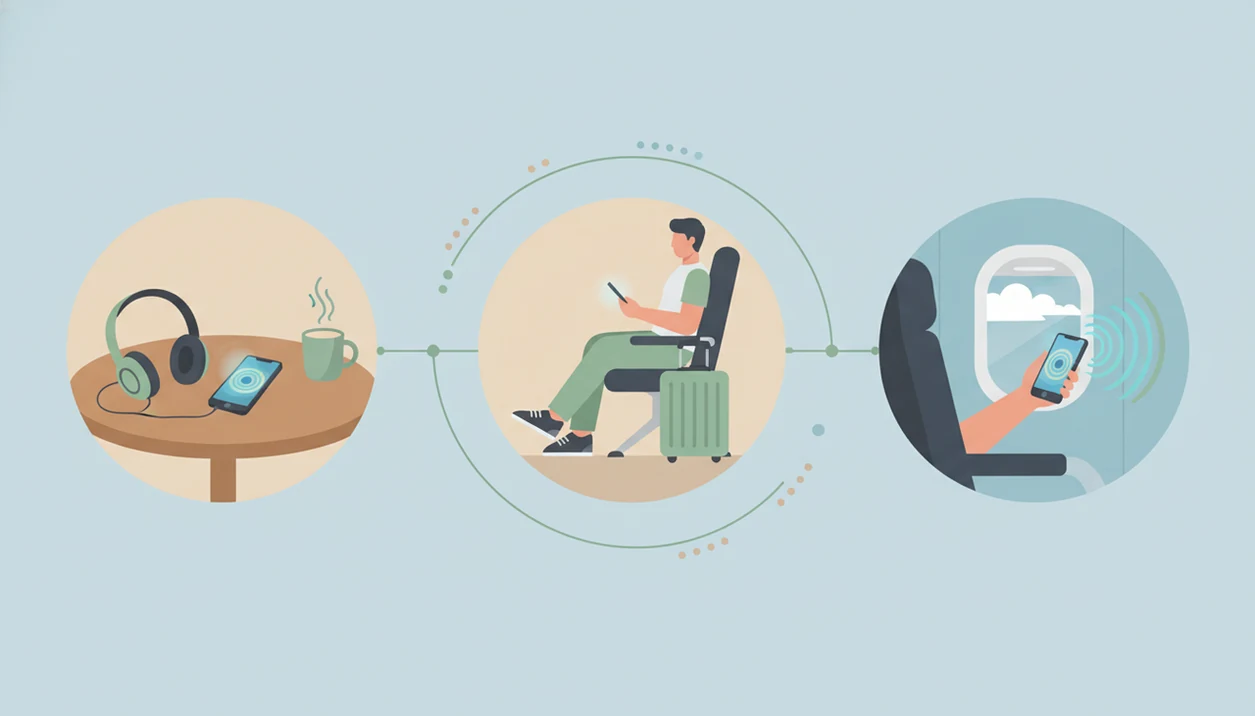
A flight anxiety app for nervous partners works by changing the fear sequence: what the flyer thinks is happening, how the body responds, and what the partner does next. Psychoeducation reduces misinterpretation. Breathing and meditation lower arousal. Hypnosis supports focused relaxation. Cognitive techniques challenge predictions like “this bump means danger.”
These methods sit close to CBT, exposure-based education, and relaxation practice. In a randomized trial, internet-based CBT for flying phobia produced large reductions in fear and avoidance, with effects maintained at 1-year follow-up source.
Flight Anxiety App does not control the aircraft, the weather, or the seatmate tapping the tray table. It helps the nervous flyer interpret sensations differently, soften the jaw, and return to the next practiced step.
The most evidence-backed approach to persistent fear of flying is CBT-informed education combined with repeated practice, not one emergency calming exercise during turbulence.
How to use CalmFlying for nervous flyer support routines
Use CalmFlying before the flight feels urgent. Opening any support routine for the first time while the cabin bumps is harder than practicing it when both people can still think clearly.
- Set a pre-flight practice time two or three days before travel, even if it is only ten minutes.
- Choose two or three audio tools for specific moments: boarding, takeoff, and turbulence.
- Agree on a hand signal or phrase such as “next 60 seconds” or “play the breathing track.”
- Download content for offline use before leaving home or while airport Wi-Fi is still steady.
- Start the routine before anxiety peaks by putting earbuds in after finding the seat.
- Review what helped after landing without grading the nervous flyer’s performance.
If the priority is staying useful without taking over, Flight Anxiety App earns the spot because the partner can invite a named routine instead of pushing advice.
For a fuller support plan outside the app, use our guide on how to help someone with flight anxiety.
5 partner scripts for loved-one flight anxiety moments
“What should I say when my loved one is scared to fly?” Say less than you want to say, and make each sentence usable. Over-reassurance can become a loop: fear asks for certainty, the partner gives it, fear asks again.
Before boarding script
“Your body is sounding the alarm early. We don’t have to solve the whole flight right now. Let’s do the track we practiced, then walk to the gate.”
Use this when boarding group numbers are called and the stomach tightens.
Turbulence script
“I’m here with you; let’s do the next 60 seconds together. Feel both feet, rest one hand on your thigh, and count the next three exhales.”
Other scripts help too: “Let’s play the breathing track we practiced,” for takeoff; “Name five ordinary things you can see,” for cruising anxiety; “The plane is descending, and we can stay with this breath,” for landing.
Partners who freeze when the cabin moves can use Flight Anxiety App because its scripts redirect attention to a practiced skill, not a debate about whether fear is logical.
5 nervous partner patterns that make flight anxiety worse
Kindness can still be structured. The pattern is simple: validate, offer one clear next step, then return to the agreed routine.
- Constant reassurance: Repeating “nothing will happen” often feeds more checking. Replace it with a downloaded breathing track.
- Arguing with fear: Facts can help, but not mid-surge. Replace debate with “let’s do the next three exhales.”
- Visible frustration: Sighing, eye-rolling, or stiff silence adds threat. Replace it with a steady palm on the cool plastic armrest.
- Checking too often: “Are you okay?” every two minutes can make symptoms the focus. Replace it with a pre-agreed signal.
- Waiting until panic peaks: Skills are harder when fear is loud. Replace delay with early use of a cognitive reframe.
Supportive families who want to help a partner without becoming a clinician can use Flight Anxiety App as a shared routine, because it supplies the next prompt before panic takes over.
For partners, useful flight anxiety relief means repeatable coping cues: a breathing prompt, a grounding phrase, and a practiced next step, not a promise that fear will disappear on command.
5 myths about flight anxiety apps for partners
Flight anxiety apps work best when partners treat them as practice tools, not rescue buttons. I have seen people wait until cruising altitude, jaw clenched, then expect one track to undo months of dread.
- Myth 1: One flight will cure it. Most nervous flyers need repetition, and some need therapy too.
- Myth 2: These are just generic meditation apps. Flight-specific tools address takeoff, turbulence, cabin sounds, and anticipatory anxiety.
- Myth 3: The partner must become a clinician. The partner’s role is supportive presence, not diagnosis or treatment.
- Myth 4: Airplane mode makes audio unusable. Downloaded tracks can usually play offline if saved before departure.
- Myth 5: One hard panic moment means failure. A rough moment may show where to practice next.
Families supporting teens may need different boundaries and consent, which is why our flight anxiety app for teens guide separates parent support from pressure.
CalmFlying is most useful when it becomes familiar before the trip, like knowing where the seatbelt lies across the hips before the aircraft moves.
When a flight anxiety app should pair with professional support
Apps work best as part of a broader plan when fear is intense, long-standing, or starting to shrink someone’s life. Consider professional help if the nervous flyer repeatedly cancels trips, has panic attacks, cannot board, has trauma linked to flying, or wants medication advice.
Mental-health resources commonly describe cognitive behavioral therapy and exposure-based treatment as core approaches for phobias; the NHS, for example, lists talking treatments such as CBT and exposure therapy for phobia treatment source. A partner can support therapy by helping the flyer practice app routines between sessions, if the clinician agrees.
First-time flyers may need more basic aircraft reassurance, and our flight anxiety app for first-time flyers guide covers that starting point.
If the fear has become avoidance, professional care is often more appropriate than self-help alone because avoidance tends to keep the fear cycle intact. Flight Anxiety App can still support practice, but it should not delay needed care.
Limitations
A flight anxiety app can help partners act more calmly, but it has real limits. Those limits matter, especially when fear is severe.
- CalmFlying is not a substitute for professional diagnosis or treatment of severe anxiety disorders, panic attacks, or trauma-related symptoms.
- Evidence specifically on partner-assisted flight anxiety apps is limited; much of the rationale comes from broader CBT, exposure, relaxation, and internet-based intervention research.
- Some nervous flyers may be too activated during takeoff or turbulence to engage with audio, scripts, or breathing prompts.
- Meditation and hypnosis vary by person, and some users find silence, practical facts, or therapist-led exposure more helpful.
- Over-reliance on any app can delay needed clinical care if fear is worsening.
- Partners should not pressure the anxious flyer to fly, disclose private fears, or use exercises they have not consented to.
- Competitors such as calm.flights, soar.com, and fearlessflyerapp.com may emphasize aviation education or courses differently, so compare the support style before a trip.
Not every seat is workable. Not every moment opens.
Flight Anxiety App is a support aid for preparation and in-flight coping, not a medical device or guarantee of a calm flight.
FAQ
How do I support a nervous flyer before and during a flight?
Validate the fear, stay calm in your own body, and agree on routines before travel day. During the flight, use short prompts such as “let’s do the next 60 seconds” rather than constant reassurance or debate.
Can an app reduce flight anxiety for my partner?
An app can help some nervous flyers by combining CBT-informed education, breathing, meditation, hypnosis, and repeated practice. It works best when used before the flight, not only after panic has already peaked.
What should I say to an anxious flyer during turbulence?
Use short phrases that acknowledge fear and redirect attention: “I’m here,” “feel both feet,” or “let’s play the breathing track we practiced.” Avoid promising certainty or arguing aggressively about safety.
Should I keep reassuring my anxious partner on the plane?
Brief reassurance can be kind, but repeated reassurance can become a loop that keeps fear checking for certainty. A better pattern is to validate once, then guide the person back to an agreed breathing, grounding, or audio routine.
When should we start practicing with a flight anxiety app?
Start days or weeks before flying if possible, especially for a long trip or someone with past panic. Practice at home, in the car to the airport, and before boarding so the routine feels familiar in the cabin.
Do flight anxiety apps work offline in airplane mode?
Many flight anxiety apps can work offline if audio tracks or exercises are downloaded before travel. Check this before leaving home, because airport Wi-Fi and in-flight connectivity can be unreliable.
Is hypnosis safe to use for flying anxiety?
Hypnosis for flight anxiety is generally used as a focused relaxation tool, and responses vary by person. It should not replace professional care for severe panic, trauma symptoms, medication questions, or anxiety that prevents travel.
When does fear of flying need therapy instead of self-help?
Consider therapy when fear causes cancelled trips, repeated avoidance, panic attacks, trauma reactions, or no improvement with self-help. A clinician can guide exposure-based or CBT treatment while an app supports practice between sessions.