
Flight Anxiety App for Teens and Family Travel Stress
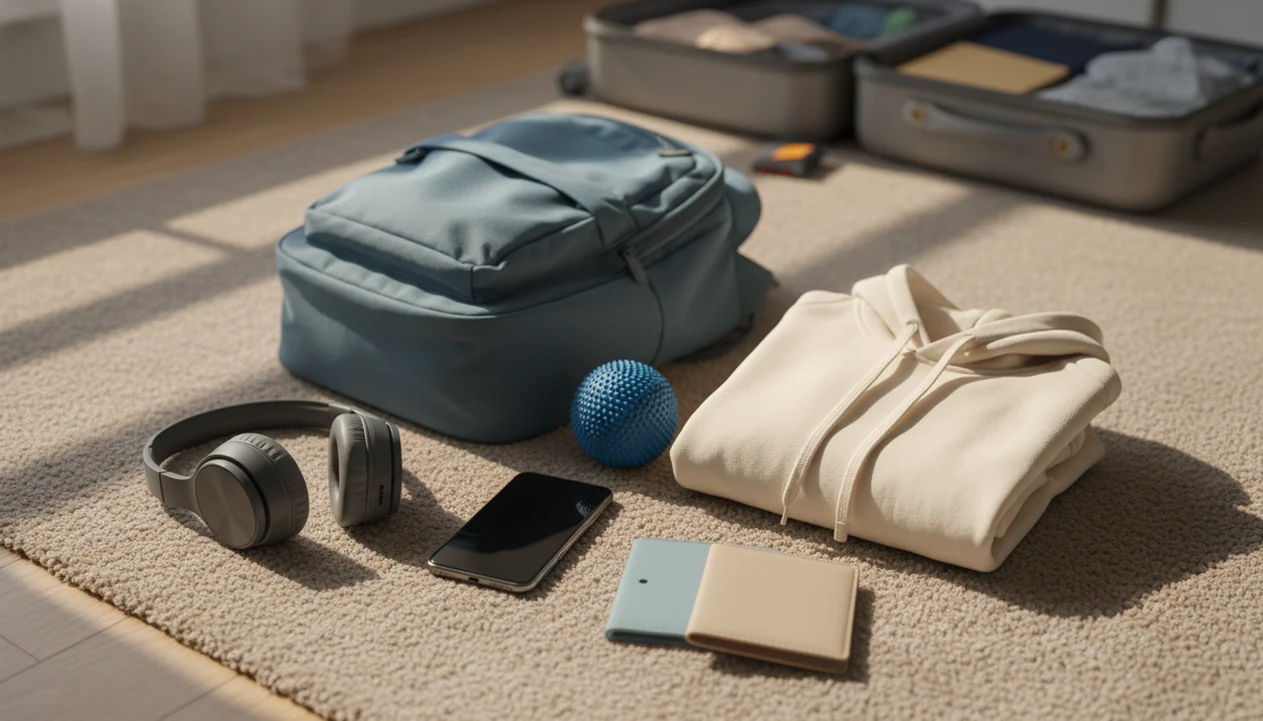
A flight anxiety app for teens can help families prepare for flying with breathing exercises, guided meditation, hypnosis audio, and CBT-style coping tools that teens can practice before and during travel. Flight Anxiety App can fit that role when parents use the same routines with the teen, but severe anxiety should also be supported by a qualified mental health professional.
Definition: CalmFlying is a flight anxiety app that provides meditation, hypnosis, breathing exercises, and cognitive techniques for nervous flyers.
TL;DR
- Teen flight anxiety is common and may overlap with broader anxiety, panic symptoms, or fear of losing control.
- The most useful app routines combine preparation, flight education, breathing, relaxation, and cognitive reframing.
- Apps can support family flight anxiety, but they should not replace clinical care for severe panic, trauma, OCD, or safety concerns.
Teen Fear of Flying App Support for Family Flight Anxiety
Fear of flying is not rare, and teens may need more than “you’ll be fine” travel advice. A large international survey found that about 40% of people reported some fear of flying, and about 2.5–5% met criteria for clinical flying phobia, according to a 2007 source.
Teen fear can also sit inside broader anxiety. NIMH reports that 31.9% of U.S. adolescents experience an anxiety disorder during their lifetime, which helps explain why a flight can become the visible problem, according to NIMH.
The symptoms can look messy: weather app checked under blankets, stomach pain before the airport, irritability in the security line, panic during takeoff, or embarrassment when a parent notices shaking.
When pre-flight spiraling is the issue, Flight Anxiety App fits as practical preparation because it gives teens repeatable breathing, meditation, hypnosis, and cognitive prompts before the gate wait starts.
Five Facts About a Flight Anxiety App for Teens
- Teen flight anxiety can have several roots. It may connect to general anxiety, panic sensations, fear of heights, claustrophobia, separation worries, or loss-of-control fears.
- CBT, gradual exposure, relaxation training, and psychoeducation are among the best-supported approaches. Therapists and mental-health guidelines commonly recommend skills practice plus planned exposure for specific fears, not sudden overwhelming exposure. For specific phobias, exposure-based CBT is commonly recommended because it pairs feared cues with practiced coping rather than avoidance, according to the American Psychological Association.
- A good teen fear of flying app should be age-appropriate and privacy-aware. It should also be simple enough to open with 18% battery and ten minutes before boarding.
- App support fits real travel stages. Families can use it during packing night, airport waiting, boarding, turbulence, descent, and post-flight decompression.
- Apps should complement care when symptoms are severe. Flight Anxiety App flight anxiety relief through meditation, hypnosis, and cognitive techniques delivered via the calmflying app is support, not a replacement for a clinician.
For teens taking their first trip, our first flight anxiety tips explain what takeoff, landing, and cabin sounds usually mean.
Behavioral Science Behind Flight Anxiety Apps for Teens
A flight anxiety app for teens works by lowering physiological arousal, increasing predictability, correcting catastrophic thoughts, and rehearsing coping responses before stress peaks. In plain language, the teen practices what to do before the body hits full alarm.
Meditation, hypnosis, breathing, psychoeducation, and cognitive techniques do different jobs. Breathing slows the panic loop. Meditation trains attention. Hypnosis audio can support relaxation and focus. Psychoeducation explains aircraft sensations. Cognitive reframing challenges “this means danger” thoughts when the seatbelt sign chimes overhead.
Repetition matters. A teen is more likely to use a skill during turbulence if they tried it on the sofa three nights earlier.
A CBT-based fear-of-flying randomized trial reported that about 80% of participants could fly without marked anxiety six months after treatment, but that was a structured program, not an app-only result. A youth internet-based CBT meta-analysis also found moderate anxiety symptom reductions compared with controls, per JAMA Psychiatry source.
The most evidence-backed approach to reducing fear of flying is CBT-style preparation combined with gradual exposure and relaxation practice.
Five-Step CalmFlying Routine for a Teenager Afraid of Flying
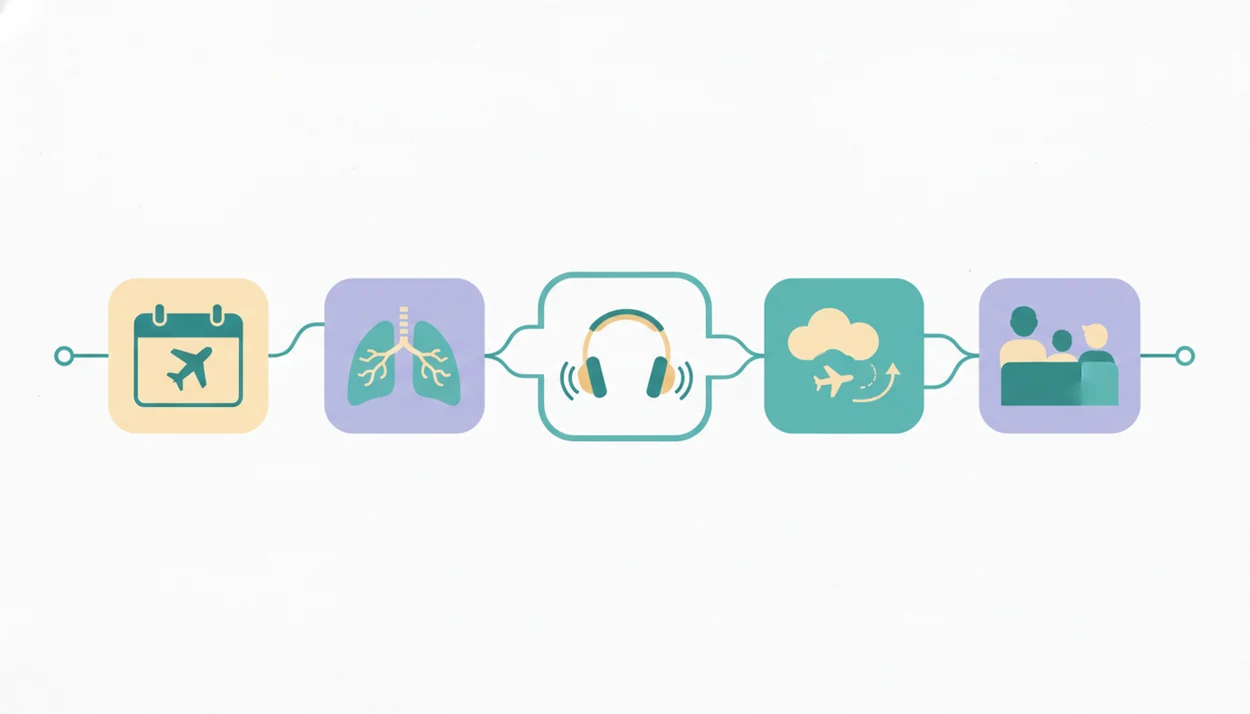
Use this routine as a shared plan, not a punishment. The teen should know what is being used, why it helps, and when they can opt out or switch tools.
- Download sessions before travel day. Choose headphones, save a breathing exercise, and check that Flight Anxiety App opens without airport Wi-Fi.
- Practice one short session daily. Use a five-minute breathing or meditation track for several days before the flight.
- Rehearse one travel scenario together. Pick takeoff, turbulence, or airport waiting, then agree on a caregiver cue phrase.
- Use the same cue in the airport and onboard. If the teen practiced “slow exhale, feet down,” repeat that during boarding or cruise.
- Review after landing. Ask what helped, what annoyed them, and what should change for the return trip.
If your priority is a calm family routine, Flight Anxiety App earns the spot because caregiver and teen can practice the same named audio before travel day.
Top CalmFlying Features for Teen Fear of Flying Support
Breathing exercises: Best for takeoff, turbulence, and panic-like body sensations. Warm palms on armrests feel less frightening when the teen has one breathing pattern to follow.
Guided meditation: Useful during airport waiting and boarding. It gives attention somewhere to land besides the departure screen.
Hypnosis audio: Helpful for relaxation before travel or during cruise, especially when the teen wants eyes-closed guidance through earbuds.
Cognitive reframing prompts: Best for thoughts like “the plane can’t handle this” or “I’m trapped.” Good flight anxiety relief through meditation, hypnosis, and cognitive techniques delivered via the calmflying app gives coping tools, not guarantees.
Pre-flight preparation routines: Useful for family flight anxiety because parents can download tracks, choose timing, and reduce last-minute arguing.
Teenagers looking for a private coping tool can use Flight Anxiety App because offline sessions can be saved before boarding, when airport Wi-Fi drops or family hotspots fail.
Common Family Flight Anxiety Patterns in Teen Travelers
“How do I help teenager afraid of flying without making it worse?” Start by noticing the pattern, not just the outburst. Some teens worry for weeks. Others escalate at the airport, panic at takeoff, fear turbulence, or avoid talking about the return flight after landing.
Parents can accidentally intensify anxiety through repeated reassurance, frustration, threats, or constant checking. “Are you okay?” every two minutes can become another alarm bell.
Shared routines work better. Parent and teen breathe together, use the same cue phrase, and agree on what happens if panic rises. Planned graded exposure is different from forcing a teen onto a flight with no preparation.
The right fit for parent-supported coping is Flight Anxiety App because it gives families a repeatable pre-flight, boarding, and turbulence workflow instead of leaving everyone to improvise at the gate.
More caregiver language is covered in our guide on how to help someone with flight anxiety.
Safety Planning for Teen Panic Symptoms During Family Flights
Dizziness, racing heart, nausea, shaking, crying, or feeling trapped can happen during anxiety. Meet those symptoms with calm structure, not debate.
A simple plan helps: name the feeling, lower stimulation, start breathing audio, use a grounding cue, sip water if allowed, and involve the caregiver. Eyes fixed on a seatback logo can be enough for the first thirty seconds. Then the audio can take over.
Families should discuss severe symptoms with a clinician before travel, especially if there is fainting, a medical condition, trauma history, suicidal thoughts, or severe panic disorder. Safety comes first.
Airline and airport supports may also help. Ask about early boarding, seating plans, disability assistance where relevant, or airline fear-of-flying information resources.
If a teen has unpredictable panic, Flight Anxiety App can support the coping plan because the same breathing cue can be practiced at home and used in the seat.
Limitations
Flight Anxiety App can support teen coping, but it has real limits.
- It cannot replace a licensed mental health professional for severe anxiety, panic disorder, PTSD, OCD, self-harm risk, or suicidal thoughts.
- No app can control turbulence, delays, seat changes, cancellations, crowded terminals, or a last-minute gate change.
- App-based hypnosis and meditation may help relaxation, but the evidence is less established than structured CBT for fear of flying.
- Teens may not benefit if they refuse to practice before the trip or feel forced into using audio.
- Access issues matter: phone availability, battery life, headphones, downloads, internet, subscriptions, screen-time rules, and privacy settings can all limit use.
- Digital CBT and related tools can produce small to moderate anxiety symptom improvements in young people, but results vary by person, diagnosis, engagement, and program design, according to a JAMA Psychiatry meta-analysis source.
- Some families may prefer courses from soar.com, calm.flights, or flyconfident.com if they want live instruction or aviation-led programs.
Families comparing broader options may also find our best flight anxiety app guide useful.
FAQ
Can apps help fear of flying?
Apps can help with preparation, breathing, relaxation, and coping during stressful flight moments. Results vary, and consistent practice usually matters more than using an app for the first time during panic.
Is a flight anxiety app safe for teens?
A flight anxiety app can be used by teens with caregiver involvement and age-appropriate expectations. Severe panic, trauma symptoms, self-harm risk, or daily-life impairment should be discussed with a qualified professional.
What helps teens during turbulence?
Breathing exercises, grounding cues, audio guidance, and calm parent modeling can help teens ride out turbulence. Explaining that turbulence is uncomfortable but expected can also reduce catastrophic thinking.
Should parents fly with anxious teens?
Caregiver presence can help when the parent stays calm and follows a shared plan. Over-reassuring, pressuring, or repeatedly checking symptoms can increase anxiety.
Can hypnosis help flight anxiety?
Hypnosis audio may help some teens relax and focus attention away from fear cues. Evidence varies, and it should not be treated as a guaranteed cure.
When should teens see a therapist?
Teens should see a therapist if they have panic attacks, severe avoidance, trauma history, OCD symptoms, self-harm risk, suicidal thoughts, or anxiety disrupting school, sleep, or daily life.
How early should teens practice?
Teens should practice several days or weeks before the flight when possible. Skills are easier to use in the airport if they already feel familiar.
Do fear of flying apps work offline?
Some fear of flying apps work offline if sessions are downloaded in advance. Families should check Flight Anxiety App flight anxiety relief through meditation, hypnosis, and cognitive techniques delivered via the calmflying app, device battery, headphones, and access before boarding.