Flight Anxiety Month 1: What to Practice First
Quick answer: Flight anxiety month 1 should focus on short daily practice: breathing, guided audio, simple thought reframes, and low-pressure airport routines before you fly. The goal is not to erase fear in 30 days, but to build repeatable skills your body can use when flight-related anxiety rises.
> Definition: Flight anxiety month 1 is the first 30 days of structured practice where a nervous flyer builds calming, cognitive, and gradual exposure skills before a flight.
TL;DR
- Practice 5–20 minutes a day instead of forcing long, intense sessions.
- Start with breathing and guided CalmFlying audio before moving into flight images, sounds, and airport routines.
- Track anxiety before and after each session so you can see progress even when fear is still present.
Flight Anxiety Month 1 Plan: The First Five Facts to Know
- Month one is training, not a cure. Treat the first 30 days like learning a skill, the same way you would rehearse a route to the airport before travel day.
- Fear of flying is common and treatable. A U.S. YouGov survey found that about 40% of adults were at least somewhat afraid to fly, with a smaller group reporting extreme fear source.
- Consistency beats intensity. Five calm minutes after lunch usually teaches more than one exhausting hour when you are already panicking.
- The core tools are simple. A first month fear of flying practice plan should combine breathing, guided audio, cognitive reframes, and light digital exposure.
- Fear can remain while coping improves. The early win is often faster recovery, not zero anxiety.
A tight seatbelt across the lap may still feel loaded. That does not mean the practice failed.
How Flight Anxiety Month 1 Works in the Nervous System
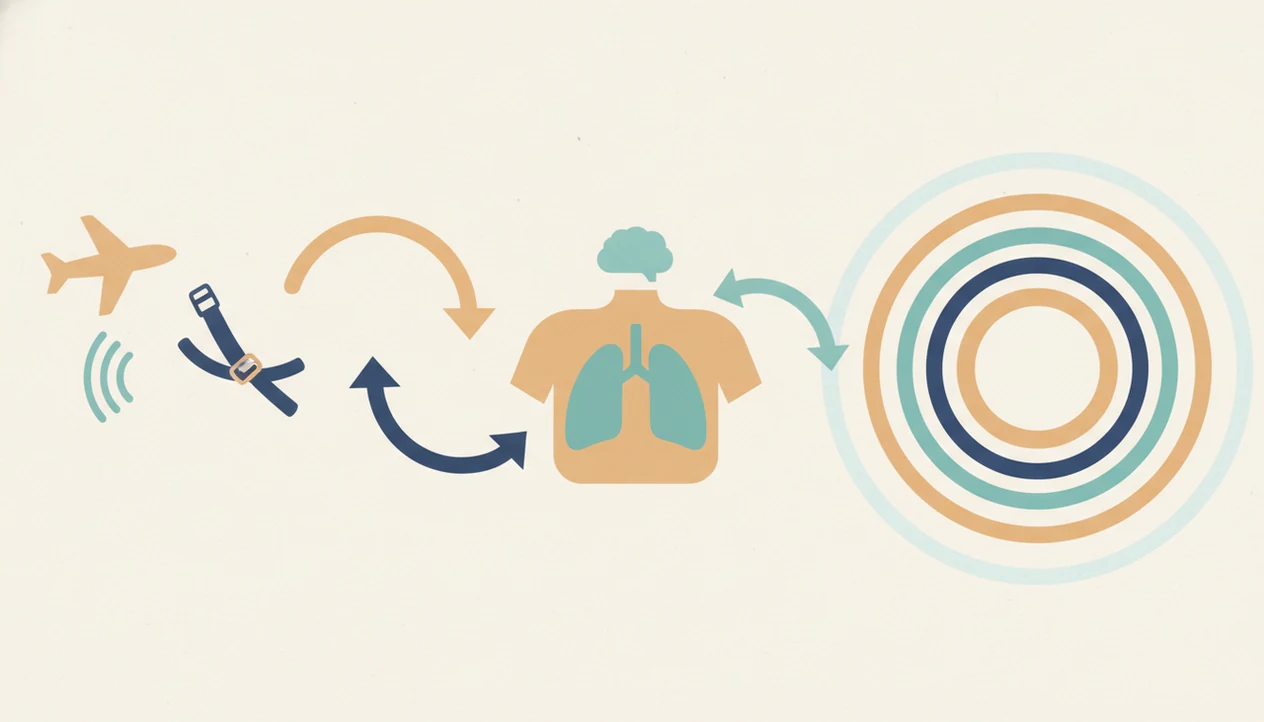
Flight anxiety is a learned threat response where body sensations, anxious predictions, and avoidance start reinforcing each other.
In month one, repeated calm practice pairs flight cues with safety. Your brain learns that an aircraft sound, a boarding image, or the thought of takeoff can appear without needing escape. Two useful terms are interoception, noticing internal sensations, and threat prediction, the brain’s guess that something bad is coming. In plain English, you are teaching your body to read cues more accurately.
Breathing supports physiological downshifting by slowing the stress response. CBT-style reframes help update predictions like “turbulence means danger” into more balanced statements. Clinicians typically recommend gradual exposure and cognitive-behavioral tools for phobias, often alongside relaxation skills.
Tools like Flight Anxiety App can deliver meditation, hypnosis, breathing exercises, and cognitive techniques for nervous flyers, not a promise that fear disappears on command.
Before Your 5-Minute First Month Fear of Flying Practice Routine
Set up the routine before you choose exercises. A month one nervous flyer routine works better when the time, place, and tracking method are boringly clear.
Pick one practice window: morning, lunch, or bedtime. Aim for 5–20 minutes, not a heroic session that collapses after three days. Use a 0 to 10 anxiety rating before and after each practice. Write it in Notes, a paper planner, or the same place you keep your boarding details.
Choose a quiet spot and headphones. If your flight is soon, this may be the departure lounge with 18% battery and ten minutes before boarding, but home practice is easier at first. For travel-day structure, a separate pre-flight anxiety routine can help.
Do not start with your hardest trigger. Leave severe turbulence videos alone for now.
How to Use a Flight Anxiety Training Plan in Month One
Use a flight anxiety training plan by repeating the same small sequence until it feels familiar. The order matters because body-calming comes before harder thinking work.
- Set a daily practice window. Choose one time you can protect for 5–20 minutes.
- Start with a body-calming exercise. Use diaphragmatic breathing or a slow-count breath before any flight cue.
- Play one guided Flight Anxiety App meditation or hypnosis session. Pick a takeoff, general calm, or sleep-focused track and keep it short.
- Write one anxious thought. Then write one balanced reframe that is believable, not sugary.
- End by rating anxiety. Note the number, the trigger used, and what helped most.
- Repeat rather than escalate. Stay with mild cues until your recovery gets quicker.
If you only have five minutes, breathe for two, listen for two, and rate for one. Reset the plan.
Week 1 Flight Anxiety Month 1 Breathing Foundation
Week 1 should build a breathing foundation before you test flight triggers. Practice diaphragmatic breathing when you are calm, because panic is a poor classroom.
Try five minutes once a day. Place one hand low on your ribs, breathe in gently through the nose, and let the exhale run slightly longer than the inhale. Add brief guided audio if silence makes you scan your body too much. Rate anxiety before and after each session.
Research on diaphragmatic breathing found reductions in cortisol and negative feelings compared with baseline in healthy adults, supporting its use as an anxiety-reduction tool source. That does not mean one breath fixes panic. It means repeated breathing practice can give your body a clearer downshift signal.
The thumb rubbing a smooth phone edge is often the first sign you need to start.
Week 2 Month One Nervous Flyer Routine With Guided Audio
Week 2 adds guided audio after breathing, so the nervous system gets repetition plus structure. Use meditation or hypnosis sessions that rehearse safety, steadiness, and body relaxation.
Hypnosis in this setting is focused relaxation and guided rehearsal. It is not loss of control, unconsciousness, or someone taking over your choices. Many nervous flyers do better repeating the same track for several days because the body learns the pacing.
Mindfulness-based interventions, including guided meditation, have shown moderate improvements in anxiety symptoms in randomized trials, according to a 2014 JAMA Internal Medicine review source. For a practical setup, an app that gives pre-flight calming routine can keep the sequence simple when airport Wi-Fi drops.
For nervous flyers, repeated guided audio is often easier than silent meditation because the next instruction is already chosen.
Week 3 Flight Anxiety Training Plan for Thought Reframes
Week 3 introduces thought reframes, but not as forced reassurance. The goal is prediction updating: noticing what your brain expects, then giving it a more accurate forecast.
Start with one anxious prediction. Common examples are “turbulence means danger,” “I will panic and lose control,” or “takeoff sensations mean something is wrong.” Write one balanced response that uses evidence without spiraling into research. For example: “Turbulence is uncomfortable, but aircraft are designed to handle it, and I can return to breathing while it passes.”
Keep aviation safety education brief. Ten minutes of learning can help; two hours of doom-scrolling usually feeds the loop. CBT-based fear-of-flying courses have reported clinically significant improvement in roughly 80–90% of participants, with benefits sustained at follow-up source. Reviews of internet-delivered CBT for anxiety disorders have also found meaningful symptom improvement, although outcomes vary by diagnosis, adherence, and therapist support source.
Thought work usually works best when it is written down, while mental arguing fits people who want to stay stuck in the loop.
Week 4 First Month Fear of Flying Practice With Airport Cues
Week 4 should use mild digital and imaginal exposure before real-flight pressure. This means photos, airport videos, boarding sounds, seat maps, engine audio, or a short visualization.
Pair each cue with breathing and guided audio. Keep the exposure mild to moderate, around a 3 to 6 out of 10, rather than forcing yourself into overwhelm. Visualize check-in, the security line, the boarding queue, taxi, takeoff, cruise, descent, and landing. Stop after the planned time, not after you feel perfectly calm.
Early digital exposure is safer than forcing a flight too soon because you can pause, lower the intensity, and repeat the same cue tomorrow. If airport waiting is your main trigger, the guide to airport anxiety before boarding can help you separate gate stress from in-flight fear.
An overhead announcement echoing above the seats may become a practice cue, not a command to panic.
Common Flight Anxiety Month 1 Mistakes That Slow Progress
Common mistakes in flight anxiety month 1 usually come from rushing, avoiding, or measuring the wrong outcome. Watch for these patterns early.
- The 30-day cure expectation. Month one is for coping skills, not guaranteed fear removal.
- The panic-only practice habit. Skills stick better when rehearsed on ordinary days.
- The no-notes problem. Without anxiety ratings, progress becomes hard to see.
- The reassurance spiral. Safety facts help in small doses, but compulsive checking keeps doubt alive.
- The exposure leap. Jumping straight to intense turbulence clips can teach your body to avoid harder.
- The false failure story. Fear still showing up does not cancel progress.
A structured audio routine can support daily practice, but the routine still needs repetition from you.
Month One Nervous Flyer Routine Progress Check
“Is my first month fear of flying practice working?” Compare week-one and week-four patterns, not one bad session.
Look at your anxiety ratings first. Maybe your starting number stayed at 7, but your after-practice number now drops to 4 instead of 6. That is progress. Notice whether you recover faster, view flight cues for longer, or plan airport steps with less avoidance. You might also find that one breathing exercise and one audio track do most of the work.
Name the two practices that helped most. Then decide your next step: continue app practice, add real-world exposure such as visiting an airport, or seek professional help if panic remains severe. The guide on what happens when you prepare for flight anxiety explains why preparation can feel uneven before it feels stable.
Faster recovery counts.
When to Seek Professional Help for Flight Anxiety
Seek professional help for flight anxiety when panic blocks necessary travel, disrupts daily functioning, or keeps shrinking your choices. A month-one routine can support practice, but severe fear deserves care from someone trained to assess anxiety safely.
PTSD, a trauma history, agoraphobia, repeated panic attacks, or years of severe avoidance are all signs to involve a clinician rather than trying to push through alone. A therapist, psychologist, psychiatrist, or primary-care clinician can help sort out what is driving the fear and discuss options such as CBT, therapist-guided exposure, skills practice, and medication when appropriate.
If you are unsure where to start, use a simple next-step sequence:
- Write down what anxiety is preventing. Include cancelled trips, work limits, sleep loss, or panic symptoms.
- Contact a qualified clinician. Ask specifically about anxiety, phobias, trauma, or panic.
- Bring your practice notes. Anxiety ratings and triggers help make the conversation concrete.
- Ask about a plan. Discuss therapy, exposure pacing, and whether medication is worth considering.
If anxiety includes thoughts of self-harm, feeling unsafe, or crisis symptoms, seek urgent support now through local emergency services or a crisis line.
Limitations
A month-one plan can help many nervous flyers build skills, but it has real limits. Use it as preparation, not as a medical guarantee.
- It is not a substitute for professional care if you have severe panic, PTSD, trauma history, or complex mental health needs.
- Not everyone responds to app-guided meditation, hypnosis, or cognitive tools.
- Month one rarely removes all fear, especially if you have avoided flying for years.
- At-home exposure cannot fully recreate turbulence, confinement, takeoff acceleration, or the feeling of being unable to leave.
- Research specific to flight-anxiety apps is more limited than broader CBT, mindfulness, and anxiety research.
- Medication questions should be handled by a qualified clinician, not an app or article.
- Some people need therapist-guided exposure, especially when travel is unavoidable soon.
If your flight is tomorrow and you cannot sleep, a plan for sleep before flight anxiety may be more useful than adding new exposure late at night.
FAQ
Can flight anxiety improve in one month?
Yes, many people can build better coping, faster recovery, and lower anxiety intensity in one month. Complete resolution is not guaranteed.
How long should I practice daily?
Practice for 5–20 minutes a day. Consistency matters more than long sessions.
Should I book a flight immediately?
Month one usually starts with breathing, guided audio, thought reframes, and digital exposure. Booking immediately may be too much if your anxiety is severe.
Does breathing help flight anxiety?
Diaphragmatic breathing can calm the body’s stress response and make other coping skills easier to use. It works best when practiced before panic.
Is hypnosis safe for nervous flyers?
App-guided hypnosis is focused relaxation and rehearsal. It is not mind control, unconsciousness, or loss of personal choice.
What if I still panic during practice?
Continue structured practice at a lower intensity. Seek professional support if panic is severe, frequent, or makes necessary travel impossible.
What should I track first?
Track anxiety ratings, triggers used, practice completed, and which exercise helped most. These notes show progress that memory often misses.