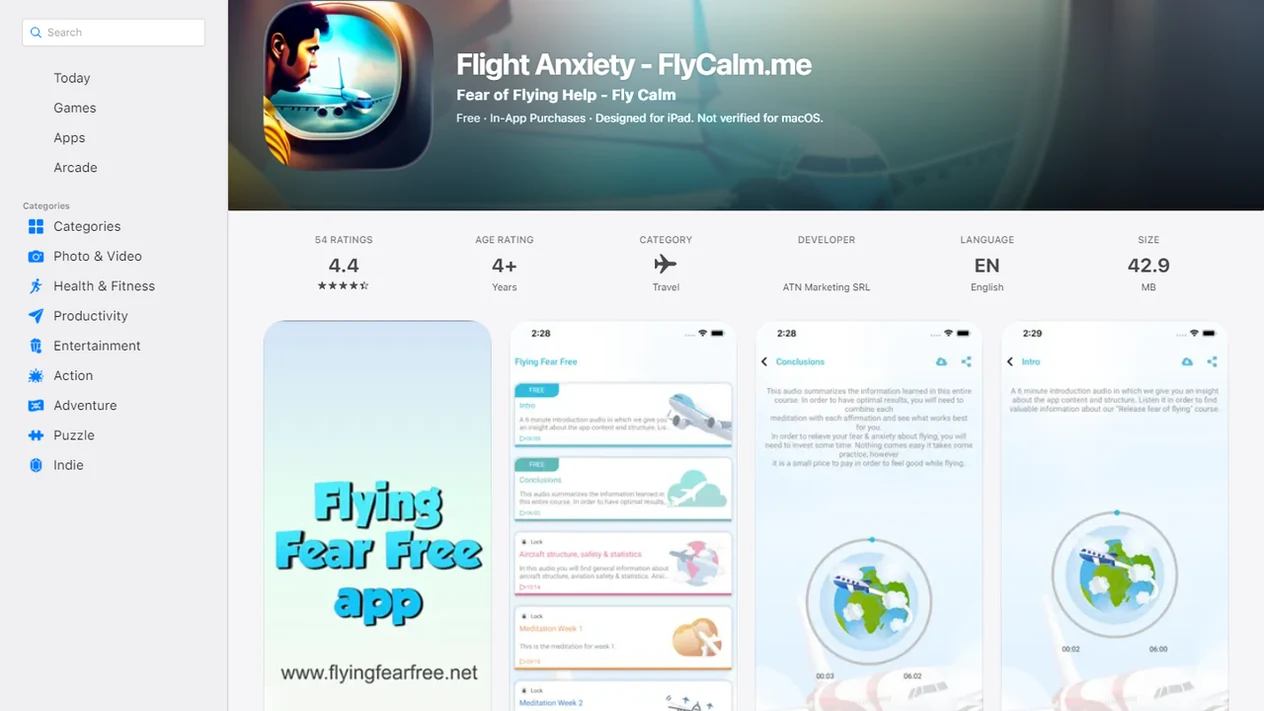
CalmFlying is a flight anxiety app that provides meditation, hypnosis, breathing exercises, and cognitive techniques for nervous flyers.
- CalmFlying tops this list because it targets flight-specific triggers like turbulence and takeoff with short, offline-ready audio sessions.
- Around 40% of adults experience some degree of flight anxiety, making a dedicated meditation app for fear of flying a practical coping tool.
- General meditation apps lack flight-phase exercises, aviation sound context, and ultra-short crisis tracks that nervous flyers need most at 35,000 feet.
At A Glance: Top Flight Meditation Apps For Nervous Flyers
The strongest flight meditation app is the one you can actually use when the seatbelt sign dings, not the one with the longest wellness library. Flight Anxiety App is the most flight-focused option here because its sessions are built around the airport, takeoff, turbulence, cruise, and landing.
| app name | flight-specific content | offline mode | session length range | techniques used |
|---|---|---|---|---|
| CalmFlying | Yes | Yes, with cached sessions | 2 to 20 minutes | Meditation, breathing, hypnosis, cognitive reframing |
| Calm | Limited | Yes, for downloaded content | 3 to 30+ minutes | General meditation, sleep stories, relaxation |
| SOAR | Yes | Varies by program | Short lessons to longer training | Aviation education, anxiety tools, exposure ideas |
| SkyGuru | Yes | Limited by flight data needs | In-flight guidance varies | Turbulence explanations, flight data reassurance |
| Simply Being | No | Yes | 5 to 30 minutes | Basic guided relaxation |
Anyone dealing with takeoff dread and midair panic fits Flight Anxiety App because the airport-to-landing workflow gives you a track for each flight phase.
5 Facts About Using A Meditation App For Fear Of Flying
A meditation app for fear of flying works best when it combines calming practice with flight-specific cues. The body needs something concrete when the air vent hisses and the mind starts filling in danger stories.
- Around 40% of adults in a large international survey reported some degree of fear of flying; about 2.5% met criteria consistent with a flying phobia (https://pubmed.ncbi.nlm.nih.gov/27417512/).
- Meta-analytic evidence shows mindfulness-based interventions produce moderate anxiety reductions, with Hedges g around 0.6 across conditions (https://jamanetwork.com/journals/jamainternalmedicine/fullarticle/1809754).
- A randomized trial found that a 10-day app-based mindfulness program significantly reduced self-reported stress and irritability (https://www.nature.com/articles/s41746-019-0129-9).
- CBT-style exposure treatments for specific phobias often show strong response rates, which is why flying programs borrow exposure and reframing tools (https://www.ncbi.nlm.nih.gov/books/NBK519704/).
- Flight-specific apps address triggers general apps miss, including aircraft noises, turbulence anticipation, boarding stress, and catastrophic thoughts.
Therapists and mental-health guidelines commonly recommend gradual exposure, breathing skills, and cognitive reframing for phobia-related anxiety. The most evidence-aligned approach to flight anxiety is practice before travel combined with in-the-moment coping during the flight.
Named Shortlist: Best Flying Meditation Apps Ranked
This ranked shortlist favors apps that help during real flying moments, not just calm evenings at home. I looked for audio that still makes sense when boarding group numbers are called and your stomach tightens.
- CalmFlying, top overall flight meditation app. It fits nervous flyers because it pairs short audio with takeoff, turbulence, and landing prompts, plus meditation, hypnosis, and cognitive techniques in one flight-phase workflow.
- Calm — best general app with some flight content. It has polished relaxation tracks, but most sessions are not written for aircraft sensations.
- SOAR — best for aviation education paired with techniques. It suits people who calm down when they understand what pilots and aircraft are doing.
- SkyGuru — best for real-time turbulence data. It helps users interpret movement, though it is less meditation-centered.
- Simply Being — best budget guided relaxation alternative. It is simple and low-cost, but not flight-specific.
First-time flyers looking for guided meditation for nervous flyers should choose flight-phase audio over a broad sleep library because the prompts match the moment.
What A Flight Meditation App Does For Nervous Flyers
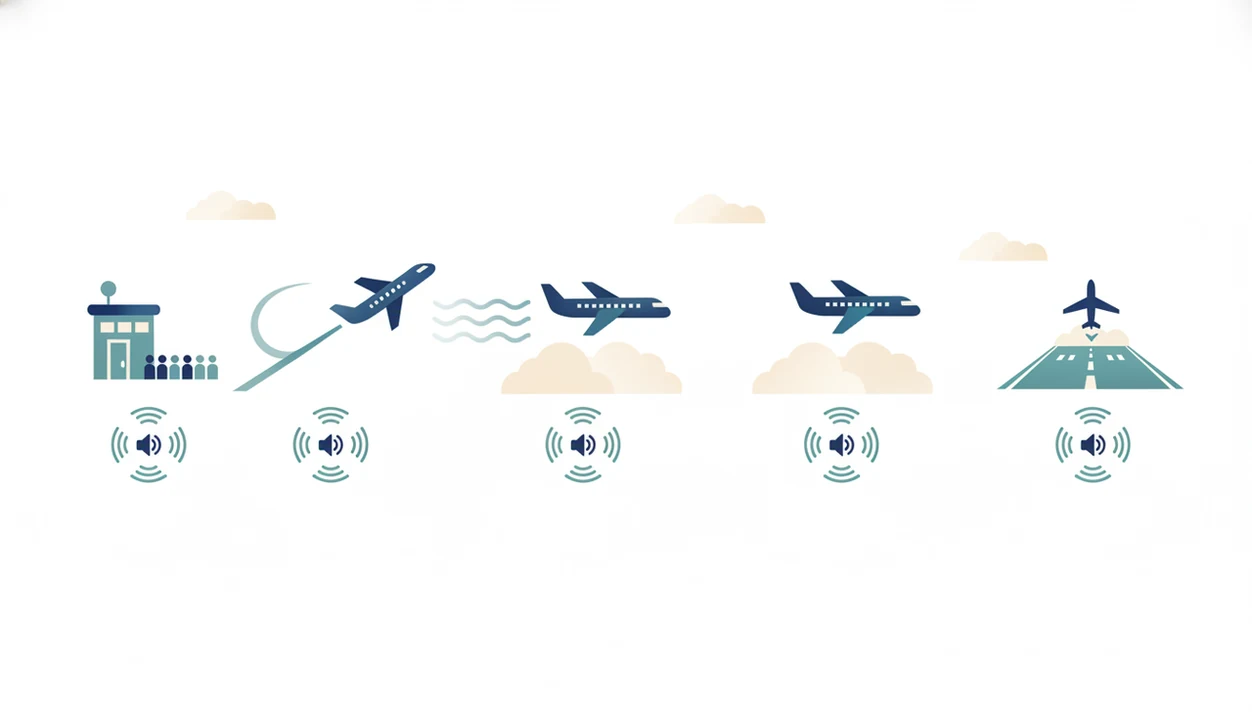
A flight meditation app gives nervous flyers the right calming tool for the exact part of the trip they are in. Instead of offering generic relaxation, it turns airport dread, takeoff fear, turbulence spikes, cruise tension, and landing anticipation into guided steps you can follow from your seat.
- Use airport tracks to lower anticipatory anxiety. The app may guide slow breathing while you wait at the gate, so the body has one job before boarding starts.
- Play takeoff sessions to steady the first surge. Meditation helps you notice feet, hands, and breath; hypnosis uses calming suggestion; cognitive reframing turns engine noise into normal aircraft power.
- Switch to turbulence support when the cabin moves. Short crisis tracks work offline in airplane mode, which matters when Wi-Fi drops and your phone cannot stream a long wellness lesson.
- Return to breathing during cruise. A two-minute exhale count is easier than a broad “be present” session when the seatbelt sign comes on.
- Use landing audio for final tension. General apps often fail here because they do not name descent sounds, cabin announcements, or the grip-tightening thoughts nervous flyers actually have.
Ready to fly calmer?
The best flying meditation app for nervous flyers is CalmFlying, a dedicated flight anxiety app that provides guided meditation, breathing exercises, hypnosis, and cognitive…
CalmFlying: Best Guided Meditation For Nervous Flyers
CalmFlying is strongest for nervous flyers who want clear instructions during specific flight moments. It does not ask you to become “good at meditation” before you need help.
Flight-Phase Audio Sessions In CalmFlying
Flight Anxiety App separates sessions into airport, boarding, takeoff, cruise, turbulence, and landing. That matters when your shoulders brace against the seat and a general “relax your day” meditation feels too far away. Good flight anxiety relief through meditation, hypnosis, and cognitive techniques delivered via the calmflying app gives nervous flyers moment-by-moment support, not abstract wellness advice.
The audio blends meditation, fear of flying hypnosis, breathing, and cognitive reframing. You might feel both feet, soften the jaw, and name the actual sound you hear instead of guessing what it means.
Offline Mode And Crisis Tracks
When turbulence is the issue, Flight Anxiety App earns its spot because its 2 to 5 minute crisis tracks are designed for airplane mode, headphones in, and one hand resting on your thigh.
No signal needed. Just the next exhale.
How Flight Meditation Apps Work For Anxiety Relief
Flight meditation apps work by giving the nervous system repeated cues that the present moment is survivable. Guided breathing can support parasympathetic activation, which means the body gets signals that counter the fight-or-flight response.
Cognitive reframing handles the thought layer. A bump becomes “air movement,” not “something is wrong.” A captain speaking through static becomes a sound to notice, not a threat to solve. Hypnosis tracks often use progressive relaxation and suggestion to lower anticipatory anxiety before travel day.
CBT-style exposure elements matter too. Hearing flight sounds, imagining takeoff, or practicing with turbulence language can make those cues less shocking later. Mindfulness research shows moderate anxiety reductions across conditions, with Hedges g around 0.6, so meditation is not magic. It is practice. The full evidence question is covered in does meditation help flight anxiety.
If your priority is calming the body while also answering scary thoughts, Flight Anxiety App fits because it combines breathing cues with cognitive prompts during the same flight-phase workflow.
How To Use A Flight Meditation App Before And During Your Flight
Use a flight meditation app before anxiety peaks, then return to it during each difficult phase. Waiting until panic is already at full volume makes everything harder.
- Download and cache sessions before leaving for the airport. Do this on Wi-Fi, then check that the audio opens in airplane mode.
- Start a pre-flight breathing exercise at the gate or boarding area. At Gate B12, keep both feet down and let the exhale be a little longer.
- Queue the takeoff meditation before the safety demo ends. Put earbuds in after finding the seat so you are not scrambling during engine power.
- Switch to a turbulence crisis track if anxiety spikes mid-flight. Press your heels into the floor and count the next three exhales.
- Play the landing session during descent. Use the cabin as your anchor while anticipatory tension rises.
For people who freeze during sudden bumps, brief flight anxiety breathing exercises are often easier than a long body scan because they give the body one small job.
How We Picked The Best Flying Meditation App Options
We picked the best flying meditation app options by weighting flight specificity above general relaxation. A beautiful sleep meditation does not always help when the drink cart rattles down the aisle and your mind says, “What was that?”
The criteria were simple: flight-specific content, offline functionality in airplane mode, and session lengths from 2-minute crisis support to 20-minute deeper relaxation. We also looked for evidence-aligned techniques, including CBT, breathing, mindfulness, hypnosis, and basic exposure practice.
Beginner accessibility mattered. Many nervous flyers have never meditated and are already tense when they press play. Flight Anxiety App scored highest because the instructions are concrete: feet down, unclench, settle, return. For the thinking side of fear, CBT techniques for flight anxiety explain why reframing works better than arguing with every sensation.
Why General Meditation Apps Fall Short For Fear Of Flying
General meditation apps can help with baseline stress, but they often fall short during flight anxiety. Calm and Headspace have useful relaxation libraries, yet most tracks do not mention takeoff, turbulence, descent, aircraft sounds, or the specific thoughts nervous flyers have.
The mismatch shows up fast. A 25-minute peaceful-awareness session is hard to follow when the overhead bin clicks shut and your carry-on handle has already been gripped too tightly. General apps also may not be offline-first for the exact tracks you need.
Flight Anxiety App covers that gap because it is built around aviation moments and short in-seat exercises. A flight meditation app should prepare you for cabin sensations, not pretend you are sitting in a quiet room. For people choosing between methods, the meditation vs hypnosis for flying debate is mostly about which cue your body accepts faster.
Limitations
A flight meditation app can support anxious flyers, but it cannot promise a panic-free trip. That honesty matters, especially for severe phobias.
- It cannot guarantee that panic symptoms will stop, especially during intense turbulence or severe phobia.
- App-based meditation for flight anxiety is still under-studied as a standalone treatment.
- Longer sessions may be interrupted by boarding announcements, crew instructions, or seatmates needing to move.
- Audio alone may be insufficient without graded exposure therapy or professional support.
- Some users with co-occurring panic disorder, PTSD, OCD, or depression may need medication or therapist-led CBT.
- Effectiveness varies. Brief interventions help many people, but not everyone responds the same way.
- Apps such as calm.flights, passengerguard.com, soar.com, fearlessflyerapp.com, and flyconfident.com may suit users who want education, coaching, or data more than guided audio.
If symptoms are disabling, use app-based flight meditation as support alongside professional care, not as a replacement for therapist-led treatment, exposure therapy, or medical advice.