Do Flight Anxiety Apps Actually Help Nervous Flyers?
So, do flight anxiety apps actually help? Yes, many nervous flyers can get partial relief from evidence-aligned tools like breathing, meditation, CBT-style reframing, hypnosis-style relaxation, and flight reassurance, but severe fear of flying often needs therapy or medical guidance too.
> Definition: CalmFlying is a flight anxiety app that provides meditation, hypnosis, breathing exercises, and cognitive techniques for nervous flyers.
TL;DR
- Flight anxiety apps can help, especially when they use evidence-based techniques and are practiced before travel day.
- The evidence is stronger for app-based anxiety tools, mindfulness, breathing, CBT, and psychoeducation than for any single fear of flying app brand.
- Apps are not enough for everyone; severe aviophobia, panic attacks, trauma history, or broader anxiety symptoms may call for clinician-guided care.
Flight anxiety app evidence at a glance
Quick answer: Flight anxiety apps can help some nervous flyers, but they should be treated as coping tools, not cures. The stronger evidence is for the techniques inside many apps, such as breathing, mindfulness, relaxation, CBT-style reframing, and flight education.
Fear of flying is common enough that “just get over it” is poor advice. In a large U.S. survey, 27.0% of adults reported some fear of flying, and 5.7% reported extreme fear of flying, according to a 2005 source.
The evidence gap matters. We have more research on anxiety apps, mindfulness, CBT, and relaxation than on flight-specific app brands. That means fear of flying app effectiveness depends on the method, the content quality, and how often you use it.
The gate is late.
Repeated practice usually matters more than opening an app for the first time while boarding group two crowds the carpet.
How flight anxiety apps work in the nervous system
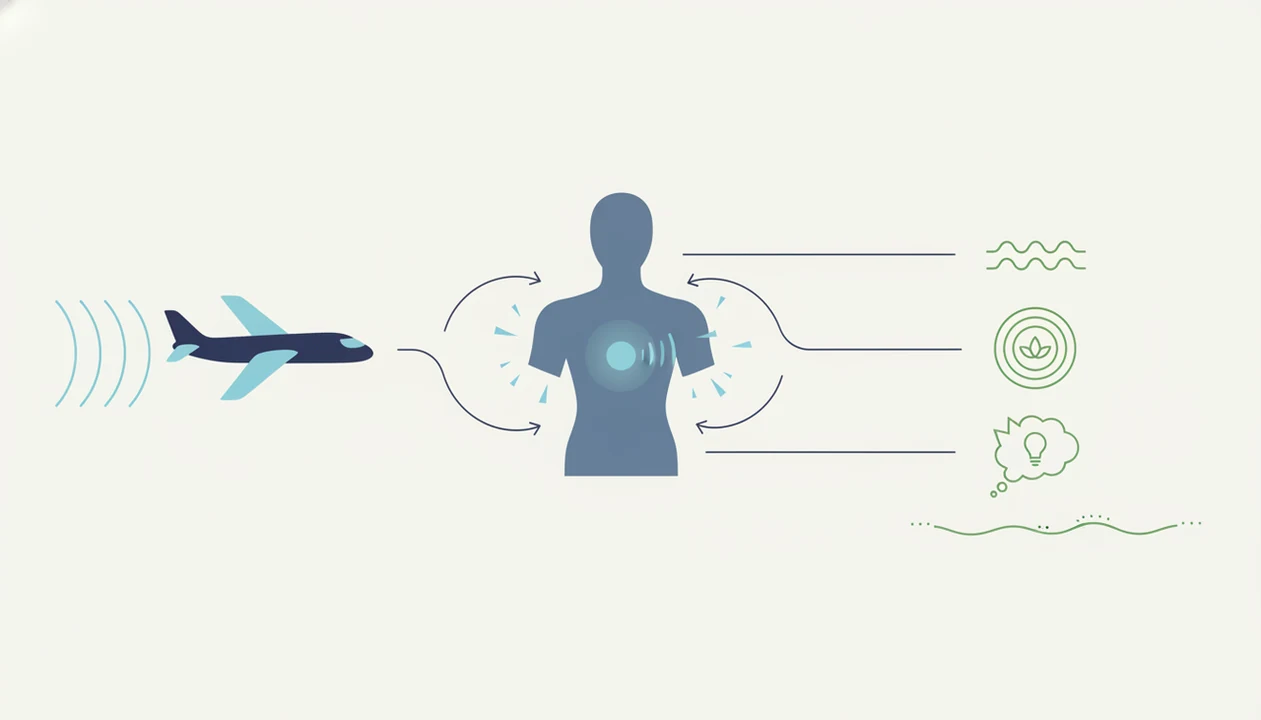
Flight anxiety apps work by targeting threat perception, body arousal, attention, and the meaning a nervous flyer gives to normal aircraft sensations. In plain English, they try to help your brain stop reading every sound, bump, or body symptom as danger.
Breathing and relaxation exercises aim to downshift physiological arousal. Slower exhaling, muscle release, and guided body scans can reduce the “alarm” feeling that comes with a racing heart or tight chest. If you want the practical version, our flight anxiety breathing exercises guide breaks those skills into takeoff-friendly steps.
CBT-style prompts work differently. They challenge catastrophic predictions like “turbulence means the plane is unsafe” or “panic means I’ll lose control.” Psychoeducation adds another layer by explaining cabin noises, takeoff sensations, descent changes, and rough air.
A useful app gives you a job when your mind wants a threat story. Count, breathe, label, reframe. Then repeat.
How to use a flight anxiety app before and during a flight
Use a flight anxiety app as a rehearsed routine, not a last-minute rescue button. The goal is to make the same few actions familiar before your body is already flooded with airport stress.
- Start practicing several days before travel. Open the app at home, preferably at the same time of day you tend to worry, and learn where your breathing, grounding, CBT prompts, and saved tracks live.
- Choose one takeoff routine. Pick a single breathing or grounding track for taxi and takeoff so you are not scrolling through options while the engines spool up.
- Label your fear predictions. Use CBT-style prompts to write or name the thought: “I think turbulence means danger” or “I think I will panic and not cope.” Then test it against what you know about normal flight sensations.
- Repeat the routine at each stress point. Use the same sequence during turbulence, descent, and landing: breathe, ground, label the prediction, and return attention to the next instruction.
- Review your anxiety after landing. Rate the peak, the ending level, and what actually happened. This helps your brain store the safe outcome instead of only remembering the fear spike.
Five facts about fear of flying app effectiveness
- Apps do not usually cure flight anxiety alone. Most nervous flyers should expect partial relief, faster recovery, or better coping, not guaranteed calm from booking to baggage claim.
- The evidence supports the techniques more than the labels. Breathing, mindfulness, CBT-style exercises, relaxation, and psychoeducation have a stronger research base than most individual fear-of-flying app brands.
- Smartphone mental health interventions can reduce anxiety symptoms. A 2019 meta-analysis of 66 randomized controlled trials found small but significant anxiety reductions from smartphone mental health interventions compared with controls source.
- Mindfulness and meditation have moderate evidence for anxiety reduction. A JAMA Internal Medicine systematic review found moderate evidence that mindfulness meditation programs can improve anxiety symptoms source.
- Engagement changes results. An app sitting unopened beside your boarding pass is not the same as a practiced routine. If you only have five minutes, choose one track before the seatbelt sign chimes overhead.
Features that make a fear of flying app work better
Look for named techniques, not vague comfort promises. A better fear of flying app usually includes guided breathing, progressive muscle relaxation, meditation, hypnosis-style audio, cognitive restructuring, and turbulence education.
Guided breathing: Good breathing tools tell you exactly when to inhale, exhale, pause, and restart. That is easier than improvising while your fingers tingle during rough air.
Cognitive restructuring: CBT-style prompts help you test scary predictions against facts. The full skill set is covered in our guide to CBT techniques for flight anxiety.
Relaxation and hypnosis-style audio: These can help before sleep, during taxi, or in cruise, especially when they avoid cure claims. Our fear of flying hypnosis guide explains the difference between suggestion, relaxation, and evidence.
Anxiety tracking: Logging fear before, during, and after flights helps your brain learn that anxiety can peak, fall, and leave no disaster behind.
Tools like Flight Anxiety App can fit this pattern when they use meditation, hypnosis, breathing exercises, and cognitive techniques, not panic-button theater.
Does a fear of flying app work for severe anxiety?
Does a fear of flying app work for severe anxiety? It may help as support, but severe aviophobia, panic disorder, trauma-related fear, or broad anxiety symptoms often need clinician-guided care.
Mild-to-moderate nervous flying might look like tense shoulders, poor sleep before travel, or needing a breathing track during takeoff. Severe fear can mean cancelling trips, avoiding family events, panicking repeatedly, or feeling unable to board at all. In the U.S., 19.1% of adults reported an anxiety disorder in the past year, according to national survey data from NIMH source.
Clinicians typically recommend CBT, exposure-based therapy, trauma-informed therapy where relevant, and sometimes a medication discussion for severe anxiety. An app can sit between those supports. For severe fear of flying, structured exposure with CBT is often more appropriate than self-guided calming alone because avoidance keeps the threat loop alive.
Flight anxiety relief through meditation, hypnosis, and cognitive techniques delivered via the calmflying app can offer repeatable coping practice, not a medical diagnosis or a promise that panic will never happen.
Flight anxiety app evidence versus common myths
A flight anxiety app is most useful when expectations are realistic: partial relief, skill practice, and better coping during known stress points. The calendar square circled in red still may feel heavy, but the plan gets less vague.
| Common myth | What the evidence suggests instead |
|---|---|
| Downloading an app will completely cure flight anxiety. | Apps can reduce anxiety for some people, but most users need repetition and some need therapy. |
| Every nervous flyer app is evidence-based. | App quality varies widely; named CBT, breathing, relaxation, and education features matter more than soothing claims. |
| If it fails once, app-based tools cannot work. | Anxiety skills often need practice over days or weeks before travel day. |
| Using an app means therapy or medical help is unnecessary. | Severe avoidance, panic attacks, trauma history, or broad anxiety symptoms may need professional care. |
| Turbulence audio will make turbulence feel fine. | Education can reduce uncertainty, but it cannot control weather or guarantee comfort. |
The most common medically supported way to reduce phobic avoidance is gradual exposure combined with cognitive and calming skills; clinical guidance for specific phobias commonly includes exposure-based CBT source.
Privacy and safety questions for flight anxiety apps
Anxiety data can be sensitive even when an app feels lightweight. Before you type panic notes, flight dates, symptom logs, or medication details into any app, check the privacy policy, data sharing language, analytics tools, account requirements, and deletion options.
Small things count. Does the app require an account when it does not need one? Can you delete your data without emailing support three times? Does it share usage data for advertising or product analytics?
A safety-minded app should also be clear about its limits. It should not describe itself as emergency care, a medication replacement, or a guaranteed panic stopper. Clear disclaimers are a trust signal, not a weakness.
If you are opening a tool in the departure lounge with 18% battery and ten minutes before boarding, you should not have to decode a privacy policy written for lawyers.
Limitations
Flight anxiety apps have real limits, and those limits matter before you rely on one for a long-haul flight.
- Very few flight-specific apps have randomized clinical trial evidence.
- Most claims are extrapolated from broader anxiety app, mindfulness, CBT, psychoeducation, and relaxation research.
- Self-guided apps can be insufficient for severe aviophobia, panic attacks, trauma history, or comorbid anxiety disorders.
- Benefits depend on repeated use and correct technique, not one-time use at boarding.
- Apps cannot guarantee a calm flight, prevent turbulence, diagnose disorders, or replace professional care.
- Privacy practices and feature quality vary widely across app stores.
- Generic soothing sounds may help some people relax, but they are weaker than structured tools for fear predictions.
- Offline access matters, because airport Wi-Fi often drops just when you want the takeoff session saved.
For many nervous flyers, app-based tools work best when they are part of a plan that starts before packing night and continues through taxi, takeoff, cruise, descent, and landing.
FAQ
Do flight anxiety apps work?
Flight anxiety apps can help some people, especially when they include evidence-aligned features and are practiced before the flight. They are coping tools, not universal cures.
Can apps cure fear of flying?
Apps rarely cure aviophobia on their own. Severe fear may need therapy, structured exposure, or medical guidance.
Which app features matter most?
The most useful features are breathing, meditation, CBT-style reframing, relaxation, flight education, and anxiety tracking. Generic calming sounds alone are usually less targeted.
Are flight anxiety apps evidence-based?
Some flight anxiety apps use evidence-aligned techniques such as meditation, hypnosis-style relaxation, breathing exercises, and CBT-style prompts. That does not mean every app has app-specific clinical trials proving it can cure fear of flying.
Can apps stop panic attacks?
Apps may help people ride out panic symptoms with breathing, grounding, and cognitive prompts. They cannot guarantee panic prevention or replace urgent clinical care.
When should I start practicing?
Start days or weeks before the flight if possible. Waiting until boarding makes the skill harder to use under stress.
Are flight anxiety apps safe?
Most are low-risk for general coping, but users should check privacy practices, safety disclaimers, and data deletion options. Severe symptoms should be discussed with a clinician.
Do turbulence apps reduce fear?
Turbulence education and reassurance can reduce uncertainty about normal aircraft movement. They cannot eliminate anxiety for everyone or prevent turbulence.
Should I choose therapy instead?
Therapy is wiser if fear causes avoidance, repeated panic, trauma reactions, or broader anxiety symptoms. Apps can still support practice between sessions.