
Does Meditation Help Flight Anxiety for Nervous Flyers?
Yes, does meditation help flight anxiety is best answered as: it can help many nervous flyers reduce anxiety symptoms and feel more in control, but it is not a standalone cure for severe fear of flying or panic attacks. The strongest evidence supports mindfulness and meditation for general anxiety reduction, while flight-specific meditation evidence is still limited.
> Definition: Meditation for flight anxiety means using breathing, mindfulness, guided relaxation, or calming audio before and during a flight to regulate the body’s stress response and relate differently to fearful flying thoughts.
TL;DR
- Meditation can support flight anxiety by calming breathing, muscle tension, and anxious thought spirals.
- The evidence is strongest for general anxiety and stress, not large flight-anxiety-specific trials.
- Meditation works best when paired with flight education, cognitive techniques, exposure-based therapy when needed, and regular practice before the trip.
This article is educational and is not medical advice. If flight anxiety causes panic attacks, repeated trip cancellation, trauma symptoms, or major life disruption, consider support from a licensed mental health professional.
Meditation for Flight Anxiety: The Plain-English Definition
Meditation for flight anxiety means practicing attention and body-calming skills around specific flying moments, not forcing a blank mind or pretending the fear is silly. The goal is to notice “I’m scared” without letting that thought run the whole flight.
Common formats include breathwork, mindfulness, body scans, guided audio, hypnosis-style relaxation, and eyes-open grounding. A nervous flyer might use a two-minute breathing track in the boarding queue, then an eyes-open grounding cue once seated.
The seatbelt sign can still feel loud.
Tools like Flight Anxiety App can organize these practices into flight stages. CalmFlying is a flight anxiety app that provides meditation, hypnosis, breathing exercises, and cognitive techniques for nervous flyers. Still, meditation is a supportive tool. It can lower arousal and improve coping, but it cannot guarantee a calm flight or cure a severe phobia.
At-a-Glance Answer on Whether Meditation Helps Nervous Flyers
Yes, meditation helps many nervous flyers, but it is not enough for everyone. The practical answer to “does meditation help flight anxiety” is strongest for mild-to-moderate anxiety, anticipatory worry, and spiraling thoughts during normal aircraft sensations.
A large U.S. survey found that 5.7% of adults reported a strong fear of flying, and 18.7% reported at least minimal flying anxiety source. That range matters. Someone tense during takeoff needs different support from someone unable to board.
| Question | Balanced answer |
|---|---|
| Best for | Anticipatory worry, shallow breathing, muscle tension, rumination |
| Less reliable for | Severe phobia, repeated panic attacks, trauma symptoms, total avoidance |
| Evidence level | Stronger for general anxiety than flight-specific trials |
| When to practice | Daily before travel, then briefly at the gate and in the seat |
| Combine with | Flight education, CBT skills, exposure therapy when needed |
For mild-to-moderate fear, meditation is often easier to use in the seat than complex thought work because the next cue is simple: breathe, notice, return.
Five Evidence Facts About Mindfulness for Fear of Flying
Mindfulness for fear of flying is evidence-informed, not proven as a standalone flight-phobia treatment. The strongest case comes from anxiety research, then careful application to flying.
- Direct trials on meditation for flight anxiety are limited, so claims should stay modest.
- A meta-analysis of 163 mindfulness-based intervention studies found moderate reductions in anxiety symptoms, with effects around half a standard deviation source.
- Mindfulness-based stress reduction has randomized-trial evidence for generalized anxiety disorder, with greater anxiety reduction than stress education in one trial source.
- Transcendental meditation research has reported about a 0.5 standard deviation reduction in trait anxiety, especially in people starting with higher anxiety source.
- Meditation is mainstream; the CDC reported that 14.2% of U.S. adults used some form of meditation in the past year source.
The evidence summary is simple: meditation can reduce anxiety processes that show up during flying, but flight anxiety meditation evidence is still not as direct as exposure-based phobia research.
How Meditation for Flight Anxiety Works in the Body and Mind
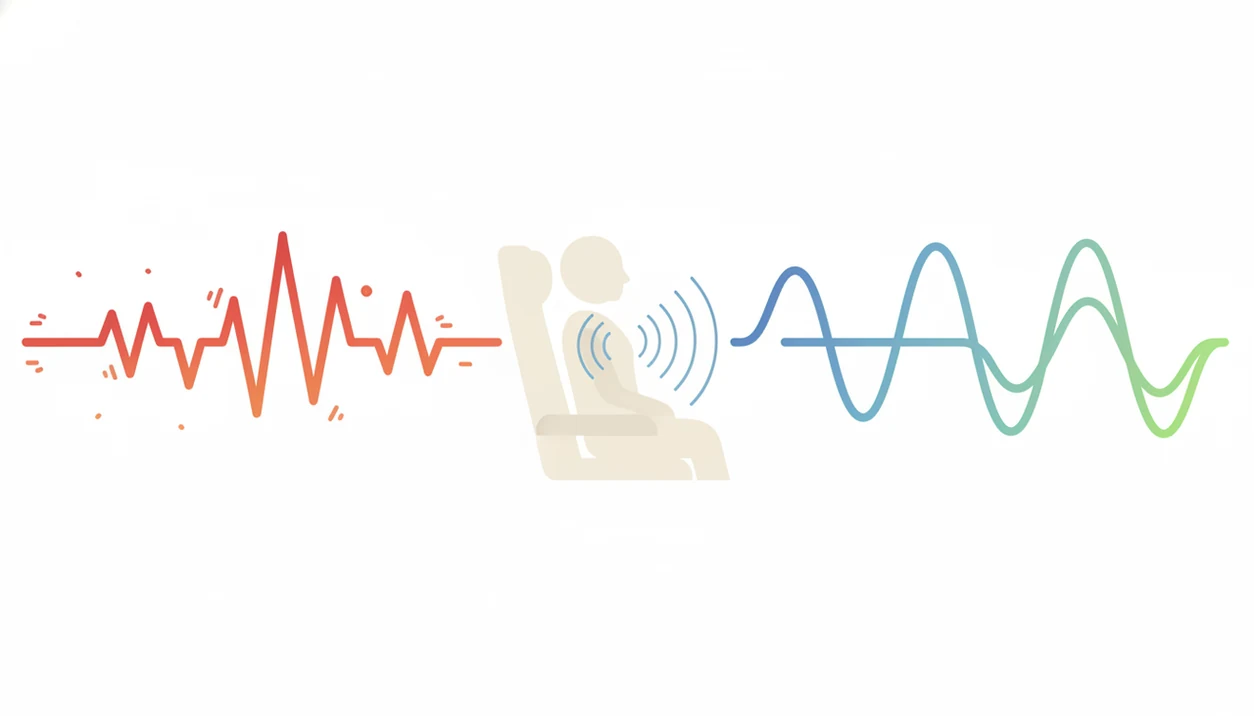
Meditation for flight anxiety works by training the stress system and attention system at the same time. During flight anxiety, sympathetic arousal can bring shallow breathing, a racing heart, tight shoulders, and constant scanning for danger.
That body alarm then gets interpreted. A brief dip through cloud layers becomes “something is wrong.” A normal engine sound becomes a threat. The heartbeat felt through a sweater may feel like proof that panic is taking over.
Breathing practices can lengthen the exhale, which may help downshift arousal. Mindfulness adds cognitive defusion, a clinical term for seeing thoughts as thoughts instead of facts. In plain English: “turbulence means danger” becomes “my anxious brain is predicting danger.”
Meditation does not remove uncertainty. It does not control the plane, the weather, or the person coughing across the aisle. It changes the nervous flyer’s relationship to sensations and thoughts, which can reduce secondary panic.
Meditation for Nervous Flyers vs Therapy, Medication, and Aviation Education
Meditation is one tool for nervous flyers, not the whole treatment map. For severe phobia or repeated panic patterns, exposure-based CBT is commonly recommended because exposure therapy is a core treatment for specific phobias source.
| Tool | Best fit | Main limitation |
|---|---|---|
| Meditation | Calming arousal and relating differently to fear thoughts | May be too weak for severe avoidance |
| Exposure-based CBT | Severe phobia, panic cycles, inability to board | Takes planning and professional guidance |
| Anti-anxiety medication | Short-term symptom support for selected people | Requires medical advice and may not teach coping |
| Aviation safety education | Misread turbulence, sounds, takeoff, and safety systems | Facts alone may not calm the body |
| Hypnosis or guided relaxation | Imagery, rehearsal, sleep before early flights | Evidence and response vary by person |
Aviation education can be especially useful when wing flexing outside the window gets misread as danger. For thought patterns, our guide to CBT techniques for flight anxiety explains the cognitive side in more detail.
Best Flight Anxiety Meditation Examples Before and During a Flight
Good meditation for nervous flyers is tied to the travel stage. It should answer a real question, such as “Which track should I play during turbulence?”
Pre-flight breathing rehearsal
Use this on the packing night, in the rideshare, or before airport security. It targets shallow breathing and anticipatory dread. Try four seconds in, six seconds out, for five minutes. If breathing is your main trigger, our flight anxiety breathing exercises page gives more variations.
Turbulence grounding practice
Use this when the plane bumps or your thoughts jump ahead. Keep your eyes open, press both feet flat on the carpet, and name three neutral objects. It targets catastrophic interpretation, not the movement itself.
Other useful formats include a gate mindfulness check-in during delay announcements, a seated body scan after boarding, and landing decompression after the wheels touch down. Eyes-open practice is completely valid, especially if closing your eyes in public makes you feel less safe.
When Mindfulness for Fear of Flying Applies and When It Does Not
“Can mindfulness help my fear of flying, or do I need more support?” It may fit if your main problems are anticipatory worry, mild-to-moderate nervousness, stress before boarding, or spiraling thoughts during normal flight sensations.
It may not be enough if you repeatedly cancel trips, have intense panic attacks on planes, feel trauma-related symptoms, or cannot board even with support. In those cases, professional care is not overreacting. It is the practical next step.
Timing matters. Practicing for several weeks before flying is more useful than opening a brand-new audio track at peak panic. The boarding pass glowing at midnight is a better training moment than minute eight of a panic surge.
The most common medically supported way to treat severe specific phobia is exposure-based therapy combined with skills that help the person tolerate feared sensations.
When to Seek Professional Help for Flight Anxiety
Seek professional help when flight anxiety stops being occasional discomfort and starts limiting your life, safety, or ability to travel. Meditation can support coping, but severe flight phobia often needs a clinician-guided plan.
Red flags include panic attacks before or during flights, avoiding airports entirely, repeatedly cancelling important trips, feeling trapped by trauma memories, or needing major reassurance just to book a ticket. A licensed mental health professional can assess whether exposure-based CBT, trauma-informed therapy, or another approach fits your situation. Exposure work is usually gradual: the point is not to “tough it out,” but to learn that feared sensations and flight cues can be tolerated safely.
A practical next step list:
- Track what happens: panic symptoms, avoided flights, cancelled plans, and specific triggers.
- Contact a licensed therapist if avoidance, panic, or trauma symptoms are recurring.
- Ask about exposure-based CBT if you cannot board, fly, or recover without major distress.
- Discuss medication questions only with a qualified prescriber, especially if you take other medicines, drink alcohol, are pregnant, or have medical conditions.
- Seek urgent emergency help if anxiety includes self-harm thoughts, unsafe behavior, or feeling unable to stay safe.
Common Myths About Flight Anxiety Meditation Evidence
Misunderstanding the evidence makes people either overtrust meditation or dismiss it too quickly. Both reactions can leave a nervous flyer with the wrong plan.
- Myth: meditation can completely cure fear of flying on its own. Reality: severe flight phobia often needs exposure-based CBT, professional treatment, or other supports.
- Myth: one bad flight proves meditation does not work. Reality: meditation is a skill. One rough landing day does not measure weeks of practice.
- Myth: guided flying meditations are only placebo. Reality: direct flying trials are rare, but mindfulness and breathing practices have broader anxiety evidence.
- Myth: meditation means emptying the mind during turbulence. Reality: the job is to notice fear, label it, and return to an anchor.
Not blank. Just less fused.
If hypnosis-style relaxation suits you better than breath-focused work, the fear of flying hypnosis guide compares that route with practical flight use.
A Practical CalmFlying Routine for Meditation Before a Flight
Structured practice is more promising than a random relaxing track because it targets the specific fears behind flying anxiety. A good routine covers the flight before it starts, not only the anxious moment in seat 22A.
Structured tools such as SOAR, calm.flights, and flight-specific audio libraries can help some users organize audio, education, and coping tools. A useful program should offer repeatable practice and flight-stage prompts, not a promise that fear disappears on command.
- Practice 10 minutes daily for one to two weeks before travel.
- Rehearse airport triggers such as security lines, boarding calls, and waiting at the gate.
- Download offline audio before airport Wi-Fi drops or your battery hits 18%.
- Use a seat-based breathing track after boarding, during taxi, and at takeoff.
- Review thoughts after landing so the next flight starts with better evidence.
For app comparison questions, the best flying meditation app guide covers feature differences without treating apps as therapy replacements.
Limitations
Meditation is useful for many nervous flyers, but the limits matter.
- There are very few randomized controlled trials specifically testing meditation for fear of flying.
- Most claims are extrapolated from general anxiety, stress, and mindfulness research.
- Meditation is not a reliable emergency fix for a full panic attack at cruising altitude.
- Severe flight phobia often needs exposure-based CBT or professional treatment.
- Some people with trauma histories feel worse with eyes closed or body-focused practices.
- Some people with severe inward-focused anxiety may over-monitor heartbeat, breath, or dizziness.
- Medication, aviation education, and therapy may still be appropriate depending on symptom severity.
- Meditation can fail if first attempted only during peak panic with no prior practice.
If meditation makes you feel trapped inside your body, switch to eyes-open grounding. Look at the seatback logo. Name what is stable. Reset the plan.
FAQ
Can meditation stop a flight panic attack?
Meditation may reduce panic intensity for some people, especially if they have practiced before. It is not a guaranteed in-the-moment cure for a full panic attack.
How soon before a flight should I meditate?
Start practicing daily at least one to two weeks before the flight if possible. Trying meditation for the first time during peak anxiety is less reliable.
Is mindfulness useful during turbulence?
Mindfulness can help you notice sensations and fearful thoughts during turbulence without automatically treating them as danger. It does not make turbulence pleasant or remove aircraft movement.
Should I close my eyes while meditating on a plane?
No, eyes-open meditation is acceptable. It is often better for people who feel unsafe closing their eyes in public or during turbulence.
Do breathing exercises help fear of flying?
Breathing exercises can help regulate arousal and reduce shallow-breathing panic cycles. They work best when practiced before the flight, not only during panic.
Is meditation better than medication for flight anxiety?
Meditation and medication serve different purposes. Medication decisions should be made with a qualified clinician, especially if panic is severe or recurrent.
Can apps help with flight anxiety?
Structured apps can help when they combine flight-specific meditation, education, breathing, and cognitive techniques. Flight Anxiety App is one example, but apps should not replace therapy for severe phobia.
What if meditation makes my flight anxiety worse?
Stop or modify the practice if it increases distress. Use eyes-open grounding, external focus, or professional support if symptoms are intense or worsening.