
Flight Anxiety Success Stories From Nervous Flyers
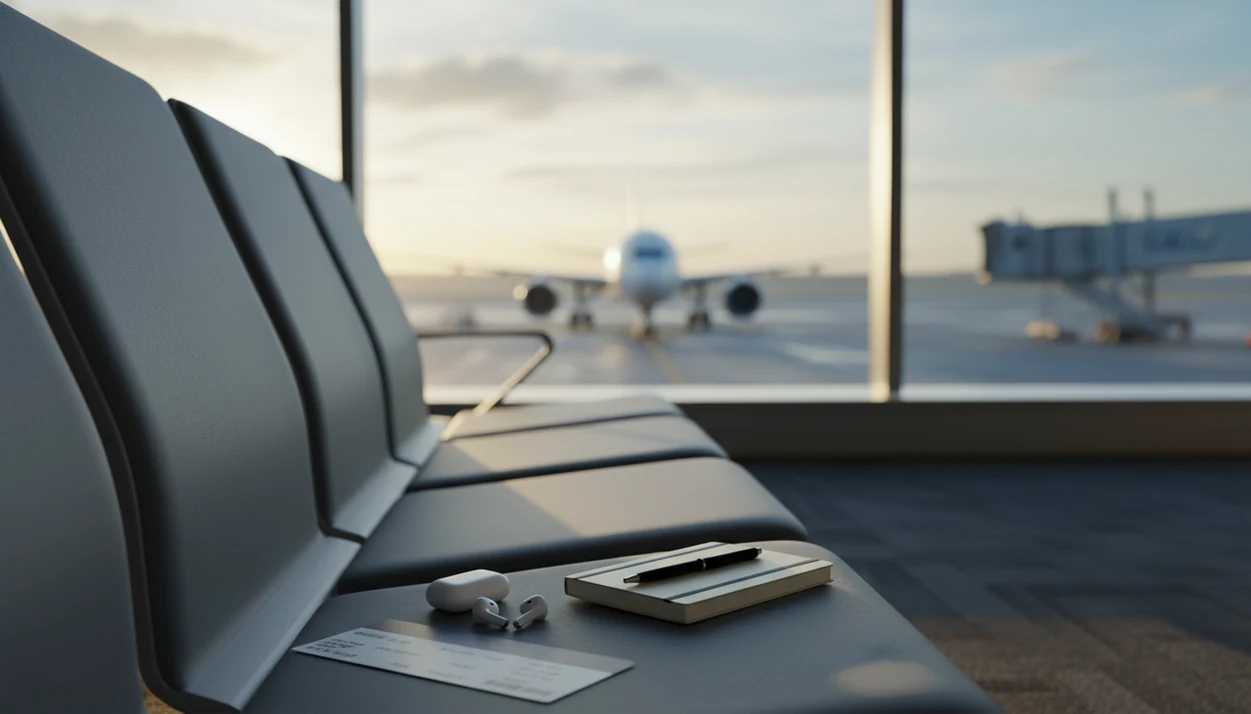
Quick answer: Flight anxiety success stories are most useful when they show realistic progress: fewer panic symptoms, better coping during turbulence, and the ability to fly again even if some anxiety remains. The examples below focus on gradual change with breathing, preparation, guided audio, cognitive techniques, and support rather than promising a cure.
> CalmFlying is a flight anxiety app that provides meditation, hypnosis, breathing exercises, and cognitive techniques for nervous flyers.
TL;DR
- Real progress often looks like booking a flight, boarding with less dread, or recovering faster after turbulence.
- The strongest nervous flyer stories combine preparation before travel, in-flight coping tools, and reflection after landing.
- Success stories can motivate you, but severe or disabling fear of flying may still need therapy, medical support, or a structured fear-of-flying course.
How flight anxiety success stories work as realistic proof
Flight anxiety success stories are realistic proof when they define success as improved functioning, not the total removal of fear. A nervous flyer may still feel a racing heart during takeoff and still count the minutes to landing, but they board, cope, and recover.
That matters because stories use social proof and normalization. They show, “Someone like me got through this,” without claiming the same result for everyone. They also help with memory updating, which means the brain gets a newer flying memory that competes with the old panic memory.
Fear of flying often overlaps with specific phobias. In a large U.S. survey, specific phobias had a 12.5% lifetime prevalence among adults, according to the National Comorbidity Survey Replication source.
The most useful success story is not “I felt nothing.” It is “I felt fear, used a plan, and stayed with the flight.”
How these nervous flyer stories were selected
How were these nervous flyer stories tracked? The examples below are representative composites and anonymized-style vignettes, not medical claims, diagnosis, or proof that one tool works for every person.
For each story, we looked at four practical markers: before-flight worry, in-flight symptoms, tools used, and after-flight reflection. That gives a cleaner picture than a dramatic “I’m cured” headline. It also matches what people actually ask before travel, such as “Can I use this if my flight is tomorrow?” or “Which track should I play during turbulence?”
Selection bias matters here. People who improve are more likely to tell the story than people who tried something and felt no change. That does not make the stories useless, but it does mean they should be read as examples of flight anxiety progress, not guarantees.
Small wins count.
Structured anxiety tools can help people organize breathing, guided audio, and CBT-style prompts, but the story is still the flyer’s own practice.
Flight anxiety success story 1: Maya’s first short flight after avoidance
Maya avoided flying for several years after a panic episode on a crowded evening flight. She could book train tickets without thinking, but even opening an airline app made her stomach drop.
Her first step was not a long vacation or a high-pressure work trip. She chose a short, low-stakes route where she could stay one night, return the next day, and treat the flight as practice. That kind of graded step is often easier than forcing a major trip too soon.
The night before, Maya used a pre-flight meditation and saved a breathing exercise for boarding. Her plan was plain: arrive early, use the restroom mirror before boarding to reset, play one audio track at the gate, and keep breathing through taxi.
During takeoff, she felt heat in her chest and wanted to unbuckle. She stayed seated. After ten minutes, her breathing slowed and the panic peak passed.
For first trips like Maya’s, our first flight anxiety tips page covers the same kind of short, practical planning.
Fear of flying success story 2: Daniel’s turbulence coping plan
Daniel’s main trigger was turbulence. The moment the plane bumped, he scanned the cabin crew, gripped the armrest, and watched other passengers for signs that something was wrong.
His progress started with changing what the sensations meant. He learned that bumps are uncomfortable air movement, not automatic evidence of danger. During one flight, when the flaps whirred beside the wing, he noticed the old alarm response starting and labeled it as interpretation, not fact.
Then he added a short in-flight routine. He put in earbuds once seated, used guided audio during cruise, and practiced paced breathing when the seatbelt sign chimed overhead. His phrase was simple: “Uncomfortable is not unsafe.”
The rough patch still came. His palms tightened and his breath caught during a bank, but the fear did not become a full panic spiral. That was the success.
For turbulence-heavy fear, cognitive reframing usually works best when paired with a body-based skill like paced breathing, because the mind and nervous system need the same message.
Nervous flyer story 3: Priya’s long-haul flight with support
Priya’s anxiety began weeks before an international flight. She checked the route late at night while her partner slept, then woke tired and more convinced she could not cope.
Her plan used support instead of secrecy. She listened to hypnosis-style sleep audio before the trip, wrote three coping cards, and agreed on a seat-support plan with her partner. He would take the window seat, remind her when to start audio, and avoid giving constant reassurance unless she asked.
Mid-flight, she cried quietly under a blanket pulled over tense knees. She told her partner she wanted the plane to land early, even though she knew it could not. That moment did not erase her preparation. It became the part where she used it.
After landing, Priya wrote down what happened: panic rose, she stayed seated, she drank water, she rested, and the flight ended normally. Post-flight journaling helped her reinforce the calmer memory before the old fear rewrote the story.
Partners can make a real difference; the practical scripts are covered in how to help someone with flight anxiety.
Five patterns in flight anxiety progress stories
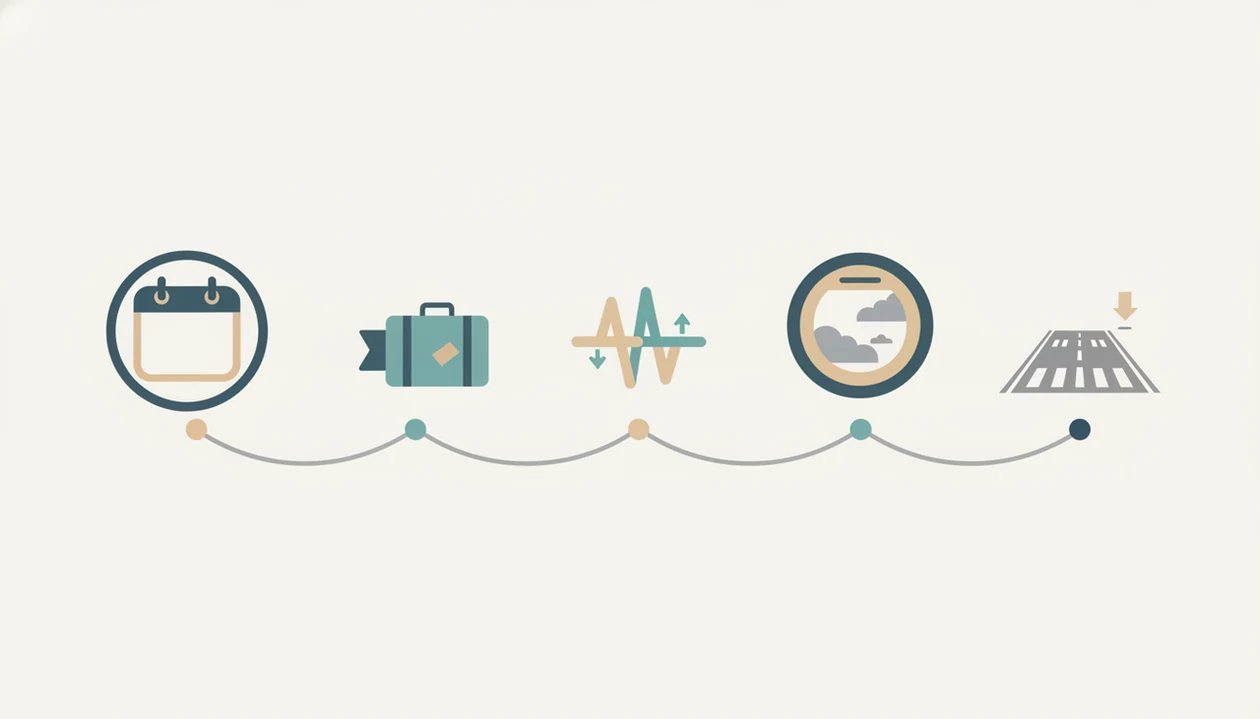
Across fear of flying success stories, the same patterns show up more often than one dramatic breakthrough. These patterns are useful because they turn inspiration into a plan you can repeat.
- Progress begins before the airport. People often improve after choosing a flight plan, downloading audio, and rehearsing one coping skill before travel day.
- The goal is riding the anxiety wave, not deleting it. Panic symptoms can rise and fall without requiring escape.
- Breathing works best when practiced before panic. A saved breathing exercise is easier to use at 18% battery in the departure lounge if you have tried it at home first.
- Post-flight reflection helps build new evidence. Writing down what actually happened gives the brain a fresher record than “I barely survived.”
- Setbacks are part of maintenance. CBT group treatment follow-up and Internet-based CBT studies have found sustained improvements for many participants, but not a straight line for everyone.
Good flight anxiety relief through meditation, hypnosis, and cognitive techniques delivered via the calmflying app should provide repeatable coping practice, not a promise that fear will vanish on command.
How to use fear of flying success stories before your flight
Fear of flying success stories work better when you turn them into one action before travel. Reading ten stories at midnight can become reassurance-seeking if you never practice a skill.
- Choose one similar story that matches your main trigger, such as takeoff, turbulence, panic symptoms, or long-haul worry.
- Identify the trigger that changed in the story, then name your own version in one sentence.
- Select one technique to test, such as paced breathing, guided audio, a coping card, or a CBT-style reframe.
- Practice before travel for five minutes a day, especially during the packing night and rideshare to the airport.
- Use it in flight at a specific moment, such as boarding, taxi, takeoff, turbulence, or descent.
- Log what changed after landing, even if the win was only “I recovered faster.”
Do not binge-read stories as a substitute for action. Pick one, borrow the method, and test it on a manageable flight.
If you travel often, a repeatable plan matters more than a single inspirational story; our flight anxiety app for frequent travelers guide breaks that down by travel stage.
What flight anxiety success stories do not prove
Success stories do not prove that one app, one audio session, or one flight cures aviophobia. They show what happened for a person, or a representative type of person, under specific conditions.
Results differ by severity, trigger type, practice consistency, travel pressure, and co-occurring conditions such as panic disorder, PTSD, health anxiety, or claustrophobia. A first-time flyer with mild anticipatory worry may need a different plan from someone who has avoided flights for fifteen years.
Evidence is stronger for structured approaches than for anecdotes alone. Exposure-based treatment and cognitive behavioral techniques have formal research behind them. A randomized one-day CBT fear-of-flying group found that 80% of participants took at least one commercial flight during two-year follow-up. Internet-based CBT research has also reported reduced flight anxiety maintained at one year. Add inline source URLs for both claims here, ideally linking the one-day CBT follow-up study and the internet-based CBT fear-of-flying study directly rather than describing them without citations.
Virtual reality exposure therapy meta-analyses and controlled-breathing or mindfulness studies add useful context, but each claim should be linked to a source URL in the same sentence. Still, a story should motivate practice, not replace evidence or clinical care.
Limitations
Flight anxiety success stories are helpful, but they have limits. Some of those limits matter most for people whose fear is severe, medical, trauma-linked, or life-restricting.
- Not every nervous flyer responds to meditation, hypnosis audio, or CBT-style app exercises.
- Some people notice only modest improvement, and some notice no meaningful change.
- Severe aviophobia, panic disorder, PTSD, or medical anxiety may require professional therapy, structured exposure treatment, or medication support.
- Published research on app-based long-term outcomes is less developed than research on structured CBT and exposure therapy.
- Success stories are subject to selection bias because improved users are more likely to share.
- A technique that calms one flyer may increase anxiety in another, especially detailed aircraft-safety information.
- Stories should not replace emergency medical care or individualized clinical advice.
Clinicians typically recommend professional support when fear causes avoidance, repeated panic attacks, trauma symptoms, or major disruption to work, family, or health care access.
If a teen is struggling before a school or family trip, the flight anxiety app for teens guide gives a more age-specific starting point.
FAQ
Can flight anxiety go away?
Flight anxiety can reduce significantly for many people, especially with preparation, exposure, CBT techniques, breathing practice, and support. Complete disappearance is not guaranteed.
Do nervous flyers recover fully?
Some nervous flyers become comfortable flying, while others fly more confidently but still feel occasional anxiety. Functional progress is often a more realistic goal than never feeling fear.
What helps fear of flying?
Common helpful tools include breathing exercises, aviation education, cognitive reframing, gradual exposure, guided audio, and support from a trusted person. Severe fear may need therapy or a structured fear-of-flying program.
Are fear of flying stories real?
Realistic fear of flying stories usually include setbacks, specific coping tools, and gradual progress. Stories that promise an instant cure should be treated cautiously.
Can breathing help flight anxiety?
Breathing can reduce arousal for many people, especially when practiced before the flight rather than only during panic. It is a coping tool, not a guaranteed cure.
Does hypnosis help flying anxiety?
Hypnosis-style audio may help some people relax, sleep before travel, or rehearse calmer responses. It should not be treated as a stand-alone cure for severe aviophobia.
Why does turbulence cause panic?
Turbulence can trigger panic because the brain interprets movement, uncertainty, and loss of control as threat. Body sensations like a racing heart can then amplify the fear.
When should I get therapy?
Consider therapy when fear causes avoidance, panic attacks, trauma symptoms, or major disruption to work, family, or medical travel. Professional support is especially important if anxiety feels unmanageable or unsafe.