
FDA Regulation for Flight Anxiety App Claims and Limits
An FDA regulation flight anxiety app issue is mostly about claims: a flight anxiety app that promotes relaxation, comfort, education, or stress management is usually treated differently from software that claims to diagnose, treat, mitigate, or prevent an anxiety disorder. The safer boundary is to describe these tools as support for feeling calmer while flying, not as medical treatment for aviophobia, panic disorder, or any diagnosed condition.
> A flight anxiety app may provide meditation, hypnosis, breathing exercises, and cognitive techniques for nervous flyers without being positioned as medical treatment.
- FDA attention depends mainly on intended use, claims, and risk, not whether an app uses meditation, hypnosis, or CBT-style content.
- Low-risk general wellness claims such as relaxation, stress management, and feeling calmer are different from medical claims such as treating flight phobia or preventing panic attacks.
- App store availability is not the same as FDA clearance, clinical validation, or proof that a flight anxiety app is a medical device.
FDA Regulation Flight Anxiety App Definition
An FDA regulation flight anxiety app question asks whether a fear-of-flying app is a low-risk wellness tool or software marketed as a medical device. The FDA’s medical device rules focus on intended use, including whether the product is promoted for diagnosis, cure, mitigation, treatment, or prevention of disease.
CalmFlying is a flight anxiety app that provides meditation, hypnosis, breathing exercises, and cognitive techniques for nervous flyers. Those methods do not automatically make an app a medical device. A breathing audio for the jet bridge, or a grounding cue when the seatbelt lies across the hips, can still be wellness support.
The line changes when the app’s words change. “Feel steadier during takeoff” sits in a different place than “treats panic disorder during flight.” For users, that wording matters because it shapes what they should expect from the tool.
Feet down. Claims clear.
Five FDA Facts for Flight Anxiety App Medical Device Claims
- Software may be regulated as a medical device when it is intended to diagnose, cure, mitigate, treat, or prevent disease, including some mental health conditions.
- Low-risk general wellness products are often handled under FDA enforcement discretion when they promote healthy lifestyle or general well-being claims.
- “Feel calmer while flying” is a lower-risk wellness claim than “treat flight phobia,” because the second phrase points toward a medical condition.
- Digital therapeutics that deliver structured treatment for diagnosed anxiety are more likely to face oversight than audio coaching or travel education.
- Marketing language should not imply that an app replaces professional care, prescription medicine, emergency support, or FDA-cleared treatment.
I think of this when writing a takeoff script. “Soften the jaw as the engines rise” is support. “Prevent panic attacks on every flight” is a different claim, and users deserve that difference to be plain.
Intended Use Rules for Digital Health Flight Anxiety Apps
Intended use is the central regulatory concept for digital health app regulation. In plain language, it means what the product says it is for, not just what the code does.
How FDA regulation for flight anxiety apps works: regulators look at claims, app store copy, onboarding screens, in-app prompts, testimonials, clinical positioning, and the risk created by user reliance. A meditation timer, a turbulence grounding track, and a CBT-style worksheet may be low risk. The same tools can look different if they are presented as treatment for a diagnosed disorder.
The quiet details count. A testimonial about “I felt more settled at Gate B12” is not the same as a promise that an app manages clinical anxiety. The FDA has also described enforcement discretion for low-risk general wellness products, which means some products may not face active device enforcement when they stay within that lane.
Clinicians typically recommend professional assessment when fear of flying is severe, disabling, or tied to panic disorder, trauma, or medication questions.
General Wellness Claims for a Fear of Flying App
Does a fear of flying app have to avoid every calming claim? No. General wellness language can describe relaxation, stress management, confidence-building education, and feeling calmer before boarding when the app stays low risk and avoids disease treatment claims.
Examples include “supports relaxation,” “helps you feel calmer before boarding,” “breathing practice for stressful travel moments,” and “education to build confidence around common flight sensations.” The FDA’s general wellness guidance says the agency “does not intend to actively regulate low-risk general wellness products” when they fit that policy source.
How to use general wellness positioning:
- Describe ordinary travel stress, not a diagnosed disorder.
- Name the practice, such as breathing, grounding, or education.
- Avoid cure, prevent, treat, and replace-medication wording.
- Keep claims tied to low-risk app features, such as audio exercises.
- Tell users to seek professional support when symptoms feel unsafe.
The most common medically safe wording for non-clinical flight anxiety tools is wellness support combined with clear limits, because it avoids promising treatment.
Medical Device Boundary for Flight Anxiety App Claims
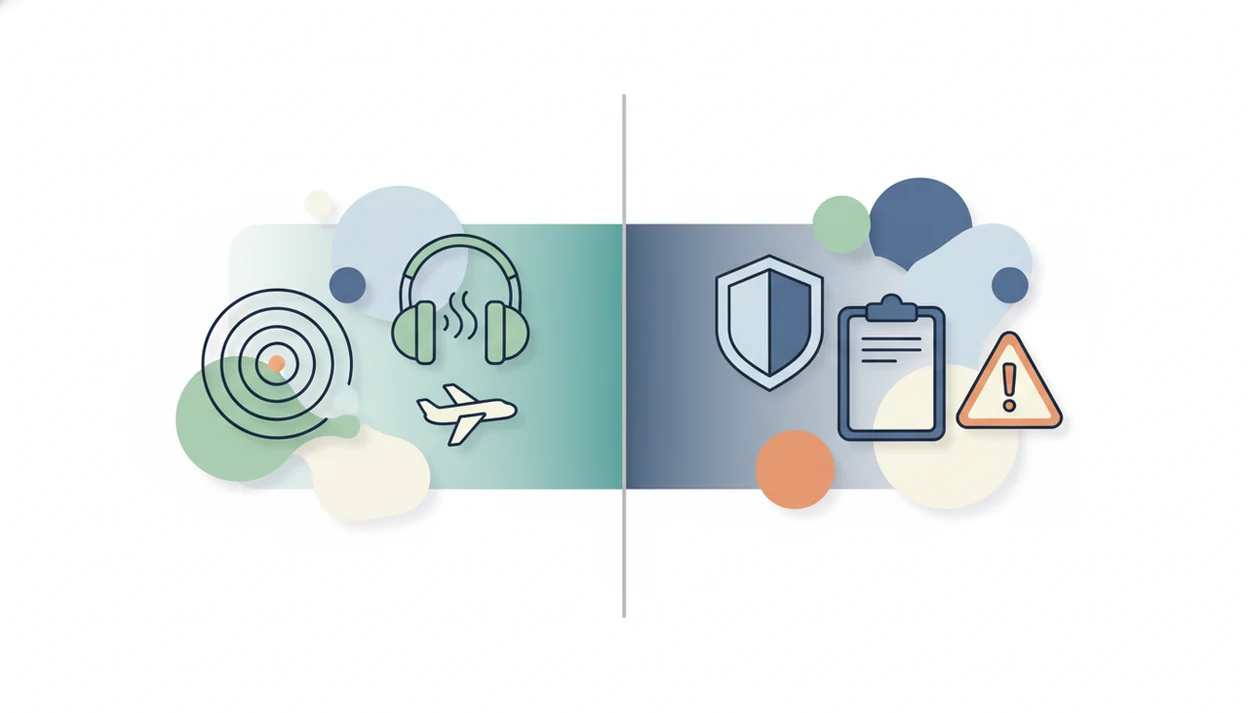
The medical device boundary is usually crossed by the total message, not one isolated sentence. A disclaimer helps, but it does not override repeated claims that a product treats or prevents an anxiety disorder.
| Claim area | Lower-risk wellness wording | Higher-risk medical-device wording |
|---|---|---|
| Flying fear | Feel calmer when you fly | Treats aviophobia |
| Takeoff | Practice breathing during takeoff | Prevents panic attacks during takeoff |
| Education | Learn cognitive techniques for flight stress | Clinically treats anxiety disorder |
| Medication | Use alongside your existing care plan | Replaces medication |
| Outcome | Build confidence with repeated practice | Cures flight anxiety |
A nervous flyer may not parse these terms while boarding group numbers are being called. They hear a promise and carry it into the cabin. That is why fear of flying app claims should be modest, specific, and easy to understand.
For people comparing self-help with clinical care, the question can an app cure fear of flying needs a careful answer, not a slogan.
Digital Therapeutics Versus Flight Anxiety App Coaching
Digital therapeutics are software products marketed as therapeutic interventions for medical conditions. Flight anxiety app coaching is usually education, meditation, relaxation, hypnosis-style audio, or CBT-informed self-help that does not claim to treat a diagnosed disorder.
That distinction matters even when the techniques overlap. Computerized or internet-based CBT has evidence for anxiety disorders; a 2017 systematic review found effect sizes comparable to face-to-face CBT in many studies source. Evidence alone, however, does not decide FDA status. Intended use still does much of the work.
A structured program for diagnosed panic disorder is different from a five-minute grounding track after the seatbelt sign ding. Both may ask you to count exhales. Only one may be positioned as treatment.
Digital CBT usually works best when it is matched to a defined clinical problem, while wellness coaching fits people seeking support for ordinary travel stress and fear.
FDA Regulation Wording Risks for Flight Anxiety App Users
Regulatory wording protects users because the audience is large, anxious, and often reading quickly. According to NIMH, about 19.1% of U.S. adults have an anxiety disorder in a given year, and about 31.1% experience one during their lifetime source.
A large U.S. survey found that about 6.5% of respondents reported fear of flying. The FAA reports roughly 2.9 million passengers moving through U.S. airports daily. Put those numbers together and the risk is not abstract. It is a person with earbuds tucked under hair, trying to decide whether an app is comfort, treatment, or proof of safety.
Many nervous flyers confuse app store availability, FDA approval, clinical validation, and wellness support. They are not the same thing. Accurate language helps users choose the right level of care, especially when they are considering flight anxiety without medication or wondering whether medication advice belongs with a clinician.
When to Seek Professional Help for Flight Anxiety
Seek professional help when flight anxiety is severe, recurring, or disabling, not just uncomfortable. Ordinary travel nerves may rise at boarding and settle with breathing or reassurance; clinical-level symptoms can stop travel, trigger intense panic, revive trauma memories, or include fainting.
A flight anxiety app can offer calming practice, education, and in-the-moment prompts, but it cannot assess emergency risk, diagnose a disorder, prescribe medication, or replace licensed care. Medication questions, exposure therapy, panic symptoms, trauma reactions, and fainting episodes belong with a qualified clinician who can look at the whole picture.
A practical safety sequence:
- Notice whether fear is occasional and manageable, or whether it repeatedly changes plans, work, family visits, or health.
- Contact a primary care clinician, therapist, or psychiatrist if panic feels extreme, symptoms connect to trauma, or you have fainted or nearly fainted.
- Ask directly about diagnosis, medication options, exposure therapy, and whether flying is safe for your specific situation.
- Use app exercises as support only when they fit the care plan and do not delay needed help.
- Seek airport, airline, crisis, or emergency services if you feel unsafe during travel or might harm yourself or someone else.
Common Myths About Flight Anxiety App Medical Device Status
Misunderstandings about a flight anxiety app medical device status often come from everyday shortcuts. “It’s in the app store” sounds official. “It uses meditation” sounds harmless. Neither phrase answers the regulatory question.
FDA approval myth
Not every mental health or flight anxiety app is FDA approved. Most meditation-style and coaching-style apps do not go through FDA premarket review unless they are marketed for a regulated medical use.
A natural method is not automatically outside oversight. Hypnosis, meditation, breathing, or CBT-style content can still raise regulatory questions if the app claims to treat anxiety, prevent panic attacks, or manage a diagnosed disorder.
Disclaimer myth
A “not medical advice” line does not solve every problem. Regulators and users look at the whole message, including headlines, testimonials, onboarding, and repeated promises.
App stores also do not check clinical effectiveness the way FDA review may. If safety is your main concern, a separate guide on are flight anxiety apps safe is often more useful than relying on store badges.
Limitations
This article is general educational information, not legal advice. FDA interpretation can change through new guidance, enforcement decisions, product-specific facts, and the exact way a claim appears to users.
- State laws, FTC advertising rules, privacy laws, and app store policies may also apply.
- A disclaimer alone cannot make a medical claim safe.
- A flight anxiety app is not a substitute for professional diagnosis, therapy, emergency support, or prescribed medication.
- People with severe panic, trauma symptoms, fainting, substance use, or safety concerns should seek qualified medical or mental health guidance.
- Evidence for digital CBT does not automatically validate every flight anxiety app, hypnosis feature, or meditation track.
- A wellness app may help someone ride the wave without arguing with it, but it cannot assess medical risk.
- Privacy matters too, especially when an app collects mood notes, symptom logs, or travel fears; the basics are covered in privacy in flight anxiety apps.
Good flight anxiety relief through meditation, hypnosis, and cognitive techniques can offer structured calming practice and in-flight prompts, not diagnosis, emergency care, or a guarantee that fear will disappear.
FAQ
Are flight anxiety apps FDA approved?
Most wellness or meditation-style flight anxiety apps are not FDA approved unless they have gone through a relevant FDA pathway. App store availability does not equal FDA clearance or clinical validation.
Is a flight anxiety app a medical device?
Based on the wellness positioning described here, a flight anxiety app is presented as support for nervous flyers, not as medical treatment. A formal legal determination would depend on the full product, claims, and context.
Can apps treat flight phobia?
An app can offer coping skills, education, and calming practice for flight anxiety. Claiming to treat a diagnosed phobia is a medical claim that may require a different regulatory pathway.
What claims trigger FDA review?
Claims such as diagnose, treat, prevent, cure, mitigate, replace medication, or manage a diagnosed disorder can raise FDA medical device questions. The overall promotional message matters.
Are wellness claims allowed?
Low-risk wellness claims such as relaxation, stress management, and feeling calmer are generally different from medical treatment claims. The claim should stay tied to comfort, education, or self-management.
Do disclaimers prevent FDA regulation?
Disclaimers can help clarify limits, but they do not override the product’s intended use. Marketing, onboarding, testimonials, and in-app content all matter.
Do app stores verify effectiveness?
App stores do not provide the same review as FDA clearance, clinical validation, or proof of medical effectiveness. A listing mainly shows that the app met platform rules.
Can hypnosis apps make medical claims?
FDA analysis depends on intended use and claims, not whether the method is hypnosis, meditation, CBT, or breathing. A hypnosis app that claims to treat a disorder may face different scrutiny than one offering relaxation support.