Flight Anxiety After a Bad Flight: How to Rebuild Confidence
Quick answer: You can recover from flight anxiety after a bad flight by debriefing the event calmly, reducing reassurance loops, practicing gentle exposure, and rebuilding a repeatable pre-flight and in-flight coping plan. The goal is not to prove you will never feel scared again, but to teach your brain that fear after turbulence or a frightening flight is survivable and not a signal that flying has become unsafe.
> Definition: Flight anxiety after a bad flight is a spike in fear, panic, avoidance, or intrusive worry about flying that begins or worsens after a frightening flight experience such as severe turbulence, a diversion, a hard landing, or a perceived onboard emergency.
TL;DR
- A scary flight can condition your nervous system to treat future flights as threats, even when the actual safety risk has not changed.
- Avoiding every flight may feel protective short term, but it usually strengthens fear; a gradual return plan works better.
- Cognitive techniques, breathing, meditation, hypnosis-style audio, and professional support can help nervous flyers rebuild confidence step by step.
Flight Anxiety After a Bad Flight Definition and Symptoms
Flight anxiety after a bad flight means your fear response starts, or sharply increases, after one frightening flying experience. It can happen to people who used to board calmly, choose a window seat, and think very little about the aircraft.
Common symptoms include a racing heart, nausea, poor sleep before travel, intrusive crash thoughts, panic before booking, checking turbulence forecasts, and strong urges to cancel. Some people also feel shame because their fear worse after bad flight does not match how they used to travel.
That mismatch is common.
The reaction does not prove the flight was actually unsafe. It means your brain tagged the experience as important and kept scanning for a repeat. You might notice the boarding pass glowing at midnight and feel your stomach drop before anything has happened.
How Flight Anxiety After a Bad Flight Works
Flight anxiety after a bad flight works by teaching your brain to treat flying cues as warning signs, even when the actual risk of the next flight has not changed. The problem is not that you suddenly know flying is dangerous; it is that your alarm system learned a fast association.
A rough descent, turbulence jolt, hard landing, or panicked passenger can become the cue. Your brain reads the cue as threat, adrenaline rises, your body feels shaky or trapped, and avoidance brings relief. That relief teaches the loop to repeat: canceling, delaying, checking seat maps, reading accident stories, or refreshing turbulence forecasts can calm you for a moment, then make the next flight feel more loaded. This is reassurance checking: short-term comfort that can become a long-term fear pattern.
Recovery works by giving the brain new safety learning. Gradual exposure lets you meet flight reminders in small, tolerable doses without escaping every time. Cognitive reframing helps separate “this feels unsafe” from “this is unsafe.” If the bad flight left flashbacks, nightmares, dissociation, severe panic, or major impairment, treat that as more than ordinary nervous flying and get licensed professional support.
Turbulence Conditioning That Makes Anxiety Worse After One Flight
Turbulence can condition the brain to link normal flight sensations with danger after one frightening experience. The seatbelt sign, engine changes, air vents hissing above the seat, or a sudden drop can become cues for alarm.
This is fear conditioning. Your nervous system pairs a sensation with threat, then reacts faster next time. Hypervigilance, memory replay, and body alarms are meant to protect you, but they can misfire after a rough flight. The body says, “Get ready,” even when the aircraft is operating normally.
A stronger fear response is not evidence that future flights are more dangerous. It is evidence that your alarm system learned fast. Specific phobias, including fear of flying, are common and treatable. The National Institute of Mental Health estimates that 12.5% of U.S. adults experience a specific phobia at some point in life source. Clinicians typically recommend gradual exposure, cognitive work, and arousal-management skills when avoidance starts to shrink someone’s life.
Five Aviation Safety Facts That Help You Recover After a Scary Flight
Safety facts do not erase fear on command, but they give cognitive reframing something solid to stand on. Use them as anchors, not as a ritual you repeat all night.
- U.S. scheduled Part 121 passenger airlines had zero fatal accidents in 2023 to 2024, according to the FAA’s aviation safety report source.
- The National Safety Council estimates lifetime odds of dying in air or space transport at about 1 in 205,552, compared with 1 in 102 for motor vehicle crashes source.
- IATA reported a 2023 all-accident rate for commercial jet aircraft of 0.80 per million sectors, or one accident per 1.26 million flights source.
- A scary flight can feel personally predictive, but aviation safety risk is measured across systems, crews, aircraft, maintenance, and procedures.
- For nervous flyers, safety facts work best when paired with breathing, exposure, and a planned response during turbulence.
Brain Loop Behind Flight Anxiety After a Bad Flight
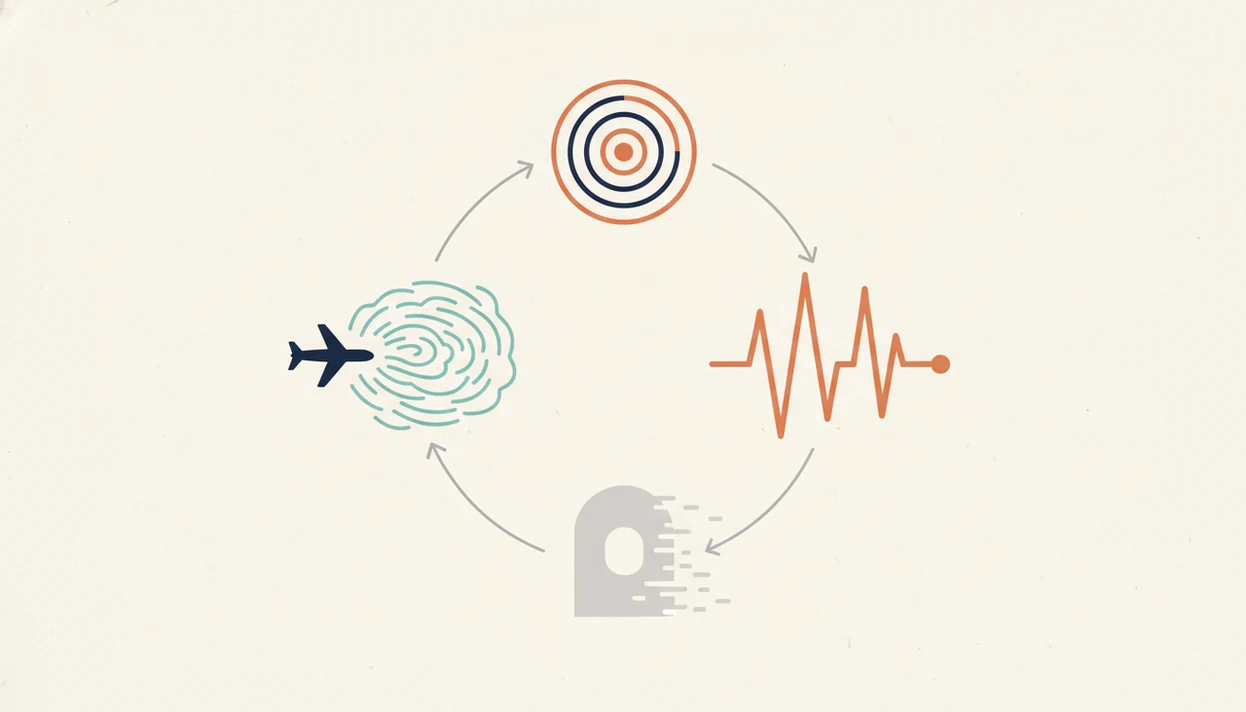
Flight anxiety after a bad flight often follows a loop: scary sensation, threat interpretation, adrenaline, avoidance, short-term relief, then stronger future fear. The brain learns, “I escaped because I avoided,” even if the original danger was not what it felt like.
Reassurance can quietly feed the loop. Checking aircraft models, weather maps, accident stories, pilot forums, and turbulence forecasts may reduce anxiety for five minutes. Then the next doubt appears. The pocket check is real.
Meditation, breathing, hypnosis-style audio, and CBT-style reframing target both parts of the loop: body arousal and fear meaning. The most common clinically supported way to reduce phobic avoidance is gradual exposure combined with cognitive and relaxation skills. A structured audio plan can help you practice the same skills before travel day and reuse them during boarding, takeoff, turbulence, and landing.
Pre-Flight Confidence Checklist Before a Rebuild Plan
“Can I rebuild confidence if turbulence made anxiety worse?” Yes, but start with one realistic flying goal, not the demand to feel fearless. A good first goal might be booking a short direct flight, sitting through a gate wait, or practicing with audio before travel day.
Write a short factual debrief before you plan exposure. Use four lines: what happened, what I feared, what actually happened, and how the flight ended. Keep it plain. No dramatic adjectives. If your jaw clenched at cruising altitude, write that down without turning it into proof of danger.
Reduce compulsive reassurance before practice. That includes doom-scrolling, aircraft deep dives, and repeated turbulence-map checks. If you have PTSD symptoms, panic disorder, inability to travel for essential needs, or severe impairment, involve a licensed clinician early. Practical tools help, but severe symptoms deserve proper care.
Five-Step Plan for Flight Anxiety After a Bad Flight
Use this plan to restart flying without making avoidance the main coping strategy. If you only have five minutes, choose step one and step three today.
- Debrief the bad flight without catastrophizing. Write the facts, the fear story, and the outcome as separate lines.
- Set a small return-to-flying goal. Build an exposure ladder, such as viewing flight details, packing, going to the airport, then taking a short route.
- Practice breathing, meditation, or hypnosis audio before the airport. Do it on ordinary days first, not only when panic peaks.
- Rehearse turbulence thoughts and coping statements. Try, “This is uncomfortable, not automatically unsafe,” while using a slow exhale into folded hands.
- Review the next flight afterward. Reinforce what you completed instead of scanning for every frightening moment.
Tools like Flight Anxiety App can keep breathing, meditation, hypnosis-style audio, and reframes in one place. For turbulence-specific practice, a guide on what to do during turbulence anxiety can help you choose a script before boarding.
Four Myths When Fear Gets Worse After a Bad Flight
When fear gets worse after a bad flight, the mind often turns a painful memory into a rule. Replace the rule before it becomes your travel policy.
| Myth | More accurate replacement belief |
|---|---|
| One bad turbulent flight proves flying is now unsafe for me. | One rough flight can make flying feel unsafe, but it does not change the safety record of commercial aviation. |
| If my fear got worse, it will only keep escalating. | Fear can increase after conditioning, and it can also decrease with repeated, tolerable practice. |
| Medication or alcohol is the only real solution. | Medication may help some people, but skills, exposure, and therapy are often central to lasting recovery. |
| Meditation or app-based practice is too soft for a fear that feels real. | Calming practice targets real body arousal and the meaning your brain assigns to flight sensations. |
Good flight anxiety relief through meditation, hypnosis, and cognitive techniques delivered via the calmflying app should offer repeatable coping practice, not a promise that fear will vanish before the gate agent calls your group.
Seven Progress Signals After a Scary Flight
Recovery means more willingness and flexibility, not total calm. A nervous but completed flight is still a confidence-building exposure.
- Booking despite nerves. You can choose a flight without waiting to feel certain.
- Fewer checking rituals. You check the itinerary once, not the weather twelve times.
- Faster recovery after turbulence thoughts. The thought arrives, spikes, then passes sooner.
- Better sleep before travel. You may still wake early, but you are not awake all night.
- Less avoidance. You stop rearranging work, holidays, or family plans around fear.
- More useful coping. You choose a saved exercise instead of scrolling accident stories.
- Clearer post-flight review. You remember what went well, not only what scared you.
A randomized controlled trial of the NO-FEAR Airlines internet-based exposure program found reductions in flying-phobia outcomes compared with a waitlist control source. That supports structured CBT-style practice, without proving every app works the same way. For acute panic symptoms, a breathing exercise for panic on plane is often easier to use than a long lesson because it gives the body one job.
Support Choices for Flight Anxiety Medication, Therapy, and Apps
Different support choices fit different levels of flight anxiety. Compare features, not promises.
| Support option | Best for | Main caution |
|---|---|---|
| Self-guided breathing and meditation | Mild to moderate anxiety, skills practice, and pre-flight routines | May not be enough for trauma symptoms or severe avoidance |
| CBT or exposure therapy | Persistent fear, avoidance, panic patterns, and confidence rebuilding | Requires time, practice, and a trained provider |
| Trauma-informed therapy | Flashbacks, nightmares, dissociation, or post-incident trauma signs | Should be guided by a licensed mental health professional |
| Medication | Short-term symptom support for some people | Discuss with a qualified prescriber; do not mix casually with alcohol |
| Flight anxiety apps | Portable prompts during packing, boarding, takeoff, cruise, and landing | Evidence varies by app and method |
Flight Anxiety App is a flight anxiety app with meditation, hypnosis, breathing exercises, and cognitive techniques for nervous flyers. If turbulence is your main trigger, an app that talks you through turbulence may be more useful than general relaxation audio.
Limitations
Self-guided recovery can help, but it has clear limits. Do not force yourself through severe symptoms just to prove a point.
- Self-guided meditation, hypnosis, and cognitive exercises may not be enough for severe aerophobia.
- People with PTSD symptoms, panic disorder, agoraphobia, or recent trauma may need licensed mental health care.
- Safety statistics can help cognition, but they may not instantly calm a sensitized nervous system.
- Avoidance can worsen fear, but exposure should still be gradual, tolerable, and planned.
- Medication decisions require medical guidance, especially with alcohol, sedatives, pregnancy, other prescriptions, or health conditions.
- Research on app-based and hypnosis-specific interventions for post-incident flight anxiety is less extensive than research on CBT and exposure therapy.
- If you feel at risk of harming yourself or cannot function after the flight, seek urgent professional support.
Before relying on any digital tool, it is reasonable to ask are flight anxiety apps safe and check whether the content encourages gradual coping rather than fear avoidance.
FAQ
Can one bad flight cause anxiety?
Yes. One frightening flight can condition your brain to treat future flying cues as threats, even if you flew calmly before.
Why am I scared after turbulence?
Turbulence can become linked with danger in memory because your body experienced fear, surprise, or loss of control. That association can remain even when the aircraft stayed safe.
Will flight anxiety go away?
Flight anxiety often improves with gradual exposure, cognitive techniques, breathing practice, and support. Some people recover quickly, while others need repeated practice or therapy.
Should I avoid flying for now?
A short pause can be reasonable if you are overwhelmed, but long-term avoidance usually strengthens fear. A gradual return plan is usually better than indefinite delay.
How soon should I fly again?
Fly again when you can make a planned, tolerable step rather than rushing to test yourself. For some people that is weeks; for others it may require therapy first.
Does turbulence mean danger?
Turbulence is uncomfortable and can feel alarming, but it is an expected part of flying. It does not automatically mean the aircraft is unsafe.
Can medication help flight anxiety?
Medication may help some people manage flight anxiety symptoms. Discuss options with a qualified prescriber and avoid mixing medication with alcohol unless specifically advised.
When should I get therapy for fear of flying?
Consider therapy if fear causes severe avoidance, panic attacks, PTSD symptoms, or major disruption to work, family, or essential travel. CBT, exposure therapy, and trauma-informed care are common options.