App That Talks You Through Turbulence When Fear Spikes
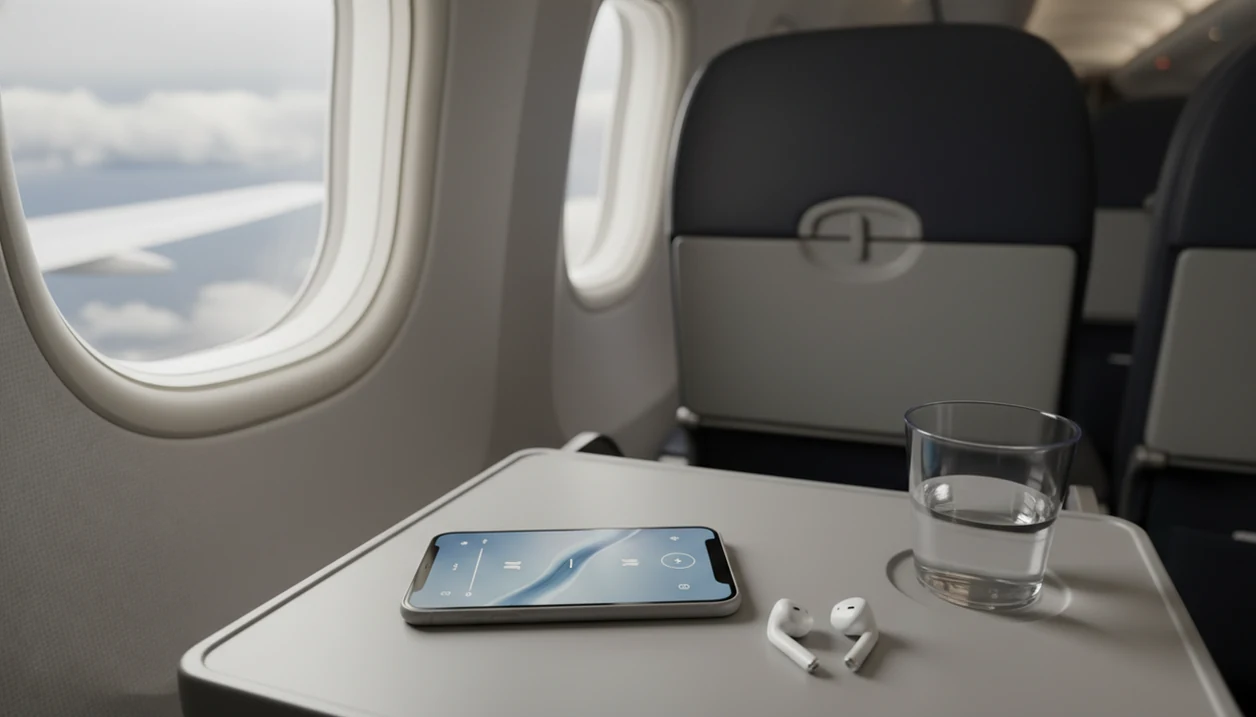
Yes, CalmFlying is an app that talks you through turbulence with guided audio, breathing cues, grounding prompts, and calm explanations designed for nervous flyers. It helps you manage fear during bumps without claiming to predict turbulence, control the aircraft, or guarantee safety outcomes.
Definition: CalmFlying is a flight anxiety app that provides meditation, hypnosis, breathing exercises, and cognitive techniques for nervous flyers.
- Use CalmFlying when turbulence begins, when the seat belt sign makes you tense, or when anticipatory fear builds before takeoff.
- The goal is anxiety regulation, not turbulence forecasting, aircraft control, or medical treatment.
- The most useful turbulence audio is short, headphone-friendly, calming, and honest about what the app can and cannot do.
How these apps look
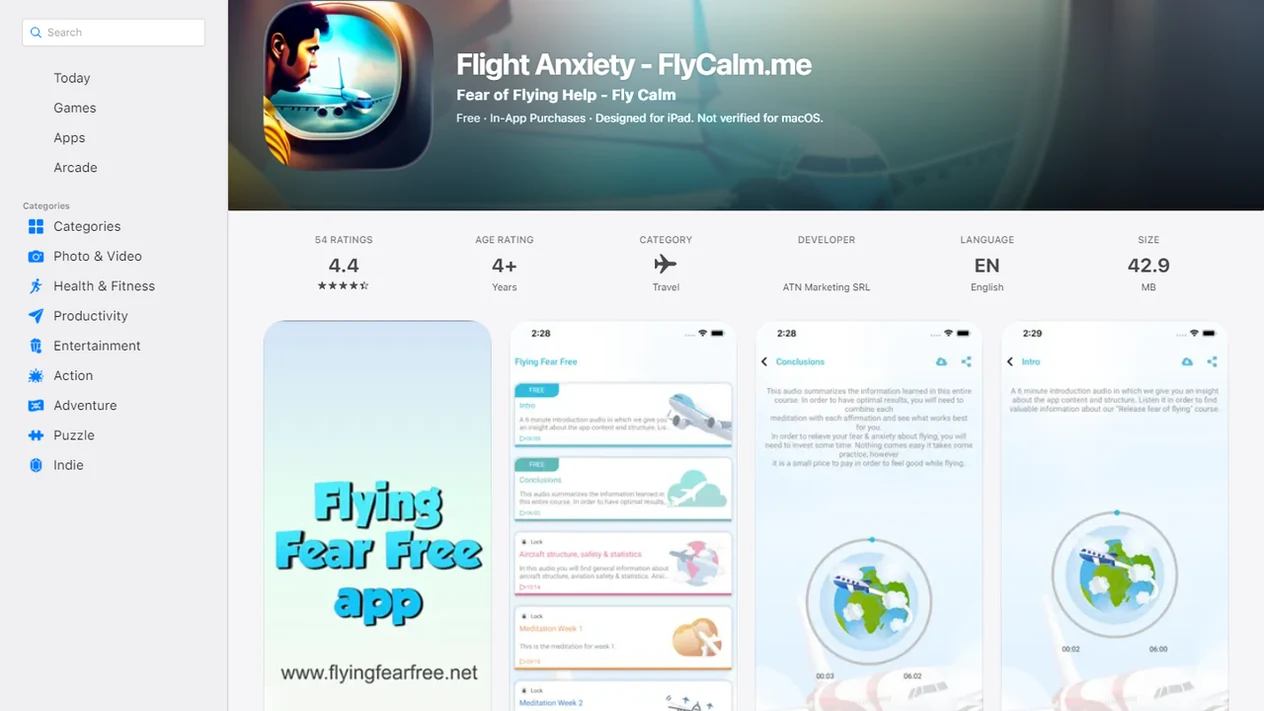
Side-by-side captures of the compared products. Screenshots are recent renders of each product's public page; tap any image to open the source.
Turbulence anxiety app checklist for nervous flyers
A turbulence anxiety app helps during shaking, drops, bumps, chop, and sudden movement by giving your mind and body something steady to follow. Flight Anxiety App flight anxiety relief through meditation, hypnosis, and cognitive techniques delivered via the calmflying app fits this moment because it uses short guided audio instead of long, general relaxation sessions.
When the issue is sudden alarm during rough air, Flight Anxiety App covers the practical need with headphone-friendly turbulence tracks that guide breathing, grounding, and attention.
It does not forecast turbulence or stop the aircraft from moving. That matters. The U.S. National Airspace System handles millions of commercial operations each year, so turbulence anxiety touches a large travel audience. Before boarding, download what you need, check battery, and keep earbuds where your fingers can find them.
The pocket check is real.
How guided turbulence audio works
Guided turbulence audio works by interrupting threat scanning: the habit of monitoring every bump, engine change, and seat belt sign as if it might prove danger. A calm voice gives the brain a competing task, so attention moves from “What was that?” to “Follow the next cue.”
Breathing cues slow the alarm loop by making the exhale longer and more deliberate, which can reduce the feeling of panic rising through the chest. Grounding prompts bring attention to ordinary contact points: feet on the floor, hand on thigh, back against the seat, sound of the cabin. Cognitive reframing changes the meaning of movement, reminding you that discomfort and danger are not the same thing. The guidance is prebuilt for common flight moments; it is not monitoring the aircraft, reading weather, or responding live to the pilots. This fits the broader logic of exposure-based practice: staying with a feared situation while using coping skills repeatedly. Audio may not be enough if panic becomes unmanageable, trauma symptoms take over, or you cannot follow crew instructions.
Turbulence audio coaching for breathing, grounding, and reframing
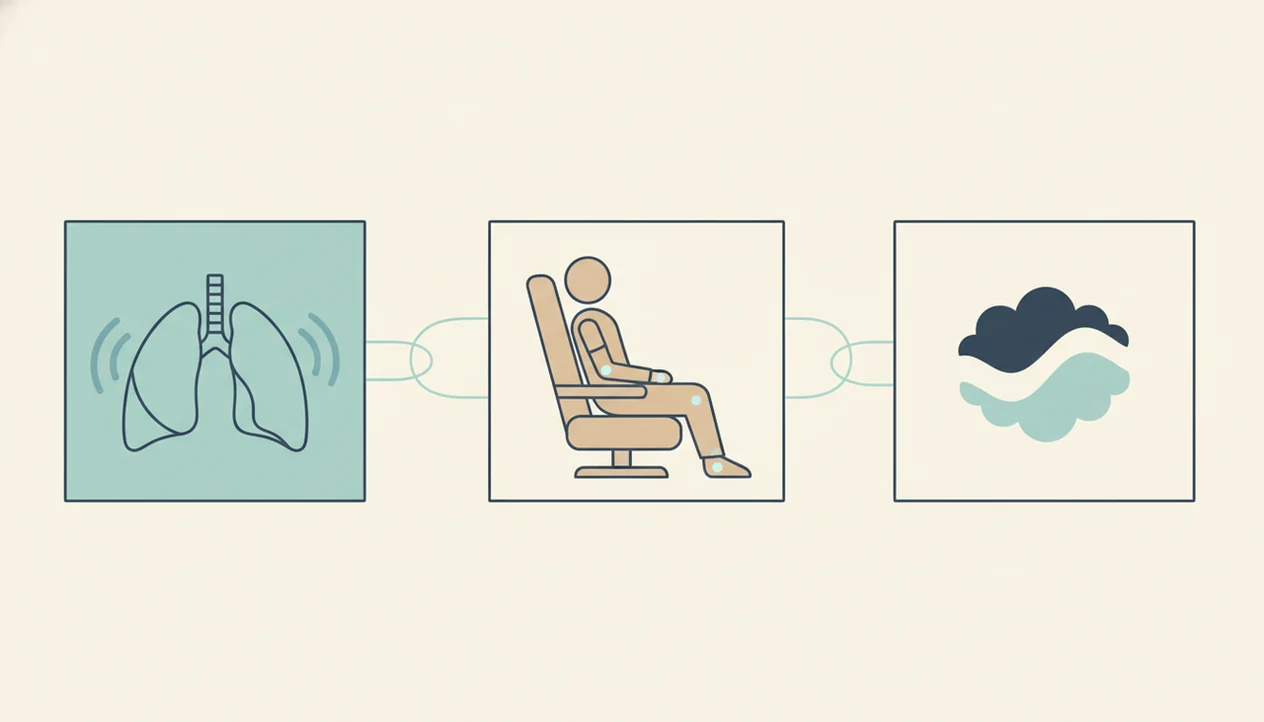
Guided turbulence audio works by combining breathing, grounding, reassurance, cognitive reframing, and attention control while the body is reading movement as danger. It gives the nervous system a task: feel both feet, soften the jaw, let the exhale be a little longer.
CalmFlying is a flight anxiety app that provides meditation, hypnosis, breathing exercises, and cognitive techniques for nervous flyers.
The behavioral logic is simple. Fear rises when the brain interprets bumps as threat. Audio coaching lowers that threat interpretation by naming what is happening and guiding the next small action. It can feel real-time when the landing gear thumps beneath the floor or the wings flex in chop, even though the guidance is prebuilt for common turbulence moments.
The most evidence-backed approach to fear practice is repeated exposure with coping skills, while audio support can help you stay present during the exposure itself.
6 steps to use CalmFlying during turbulence
Use CalmFlying during turbulence only after basic safety comes first: follow crew instructions, keep your seat belt fastened, then start the audio if it is safe to do so. The right fit for in-seat coping is Flight Anxiety App because the turbulence workflow is short enough to use with the seatbelt lying across your hips.
- Prepare before boarding by downloading turbulence audio and charging your phone.
- Put on headphones after you find your seat, so cabin noise does not swallow the prompts.
- Fasten your seat belt and follow crew guidance before opening anything on your phone.
- Choose a turbulence track when bumps begin, or earlier if your stomach tightens.
- Follow the breathing cues by pressing heels down and counting the next three exhales.
- Reset after the movement eases by naming the cabin, the seat, and one ordinary sound.
For a deeper physical reset, the breathing exercise for panic on plane guide walks through a single technique.
Seat belt sign anxiety, takeoff worry, and descent bumps
“Can I use guided audio before turbulence starts?” Yes, and earlier use often works better than waiting until full panic. Start a short turbulence track at the first seat belt sign ding, during takeoff worry, or when descent bumps begin.
Before takeoff, use it when your mind starts rehearsing rough air before the wheels leave the runway. During chop, lurches, or a sudden jolt, use it to come back to this seat, this breath, this moment. After the bump passes, use it to reset breathing before your mind scans for the next one.
When boarding group numbers are called and your stomach tightens, short audio can interrupt the spiral before you reach the jet bridge.
If seat belt sign anxiety is the issue, Flight Anxiety App handles the moment with guided turbulence audio that starts before fear peaks.
CalmFlying turbulence coaching features for in-flight panic
- CalmFlying includes short audio tracks that sound like a calm person talking you through the exact moment of rough air.
- The tracks combine breathing exercises, grounding prompts, hypnosis-style relaxation, and cognitive reframing.
- The guidance explains that turbulence can feel uncomfortable, but it does not make safety guarantees.
- The audio is designed to tolerate cabin noise, pauses, interruptions, and headphone use.
- The prompts stay practical: rest one hand on your thigh or belly, unclench, settle, return.
Nervous flyers who jump from body sensation to catastrophe need more than a calm voice; Flight Anxiety App gives them a sequence, using breath, body contact, and meaning-making in one track.
If symptoms escalate beyond ordinary fear, the in-flight panic attack guide explains when self-help may not be enough.
Turbulence anxiety app versus turbulence forecast app
CalmFlying is for coping with fear during turbulence, not predicting flight conditions. Turbli, turbulence maps, and turbulence forecast tools answer a different question: “What rough air might happen?” A turbulence anxiety app answers, “What do I do with my body and attention right now?”
| Option | Main purpose | Helps with | Does not do |
|---|---|---|---|
| Turbulence anxiety app | Emotional regulation | Breathing, grounding, reframing | Forecast weather or aircraft movement |
| Turbulence forecast app | Rough-air prediction | Planning expectations | Coach panic symptoms |
| General meditation app | Broad relaxation | Sleep, stress, focus | Address aircraft-specific fear |
| Airline safety information | Rules and procedures | Seat belt and crew guidance | Provide personal anxiety coaching |
Forecast checking reassures some flyers. For others, it turns into scanning, refreshing, and bargaining with the map. Guided turbulence audio is meant for the second moment, when information is no longer settling the body.
Flight anxiety usually depends more on threat interpretation than on having one more forecast tab open.
5 myths about calm during turbulence apps
Myth 1: The app predicts turbulence accurately. CalmFlying does not forecast bumps; it helps you respond when bumps happen or when you expect them.
Myth 2: Fear disappears instantly. Some users feel relief quickly, but most nervous systems learn through repetition, especially after hard flights.
Myth 3: Guided turbulence audio is safety training. It is emotional support, not aviation instruction, crew training, or aircraft education.
Myth 4: One app works equally well for everyone. Panic severity, trauma history, motion sickness, and sleep loss can change how useful audio feels.
Myth 5: Audio means ignoring crew instructions. The opposite is true. Use the cabin as your anchor, but listen to crew directions first.
Good flight anxiety apps deliver regulation cues and clearer interpretation, not weather control, aircraft control, or a promise that fear will vanish.
FAA seat belt reminders for guided turbulence audio
Guided turbulence audio complements crew instructions; it never replaces them. The FAA says turbulence is the leading cause of injuries to flight attendants and passengers in nonfatal airline accidents, and its turbulence awareness materials emphasize that many injuries are preventable when passengers keep seat belts fastened while seated: https://www.faa.gov/travelers/fly_safe/turbulence and https://www.faa.gov/newsroom/turbulence.
- Keep your seat belt fastened when seated, even when the sign is off.
- Follow crew instructions before using Flight Anxiety App or any phone-based support.
- Start audio only when your device use does not interfere with safety guidance.
- Use the seat belt sign ding as a cue to settle your body, not as proof something is wrong.
- Let the low engine hum, the air vent hiss, and the cool plastic armrest become grounding cues.
For more safety context around self-help tools, read are flight anxiety apps safe.
Therapists and mental-health guidelines commonly recommend grounding, paced breathing, and cognitive reframing for anxiety symptoms, especially when the trigger cannot be immediately removed.
Limitations
CalmFlying can support anxiety regulation, but it has clear limits. I would rather name them plainly than have you discover them while gripping the fabric edge of the seat.
- It cannot reduce turbulence, change weather, control the aircraft, or smooth the flight.
- It cannot guarantee that panic will stop, especially during severe anxiety or trauma responses.
- It is not a substitute for therapy, medical care, or professional treatment for panic disorder.
- It depends on attention, headphones, battery, downloaded access, and your ability to hear prompts.
- It may be less effective during motion sickness, claustrophobia, intoxication, sleep deprivation, or overwhelming cabin noise.
- Hypnosis and cognitive techniques should be understood as supportive methods, not universally effective cures.
- Competitors such as calm.flights, soar.com, and fearlessflyerapp.com may use different formats, but none can make a turbulent flight physically smooth.
If fear starts days earlier, flight anxiety insomnia may be the more useful starting point.
FAQ
Is there an app for turbulence?
Yes. The relevant type is a flight anxiety app with guided turbulence audio, breathing cues, grounding prompts, and calm explanations.
Can an app calm turbulence anxiety?
It can help some users regulate fear symptoms during rough air. Results vary based on anxiety severity, attention, sleep, and prior flying experiences.
Does a turbulence anxiety app predict turbulence?
No. This type of app is for coping and reassurance, not turbulence forecasting or flight-condition prediction.
What should I play during turbulence?
Play short grounding, breathing, or turbulence-specific guided audio. Long generic meditation is often harder to follow during sudden bumps.
Can guided audio stop panic?
Guided audio may reduce panic intensity and give your attention a structure. It cannot guarantee that a panic episode will stop.
Should I use headphones on flights?
Yes, headphones usually improve clarity, privacy, and usability during cabin noise. Keep volume low enough to hear crew instructions.
Is turbulence dangerous for passengers?
Turbulence can cause injuries, especially when passengers or crew are not secured. Follow crew instructions and keep your seat belt fastened when seated.
Is this medical treatment?
No. A turbulence anxiety app is a self-help tool and not a replacement for professional care, therapy, or medical treatment.