App That Guides You Through Landing Anxiety and Descent
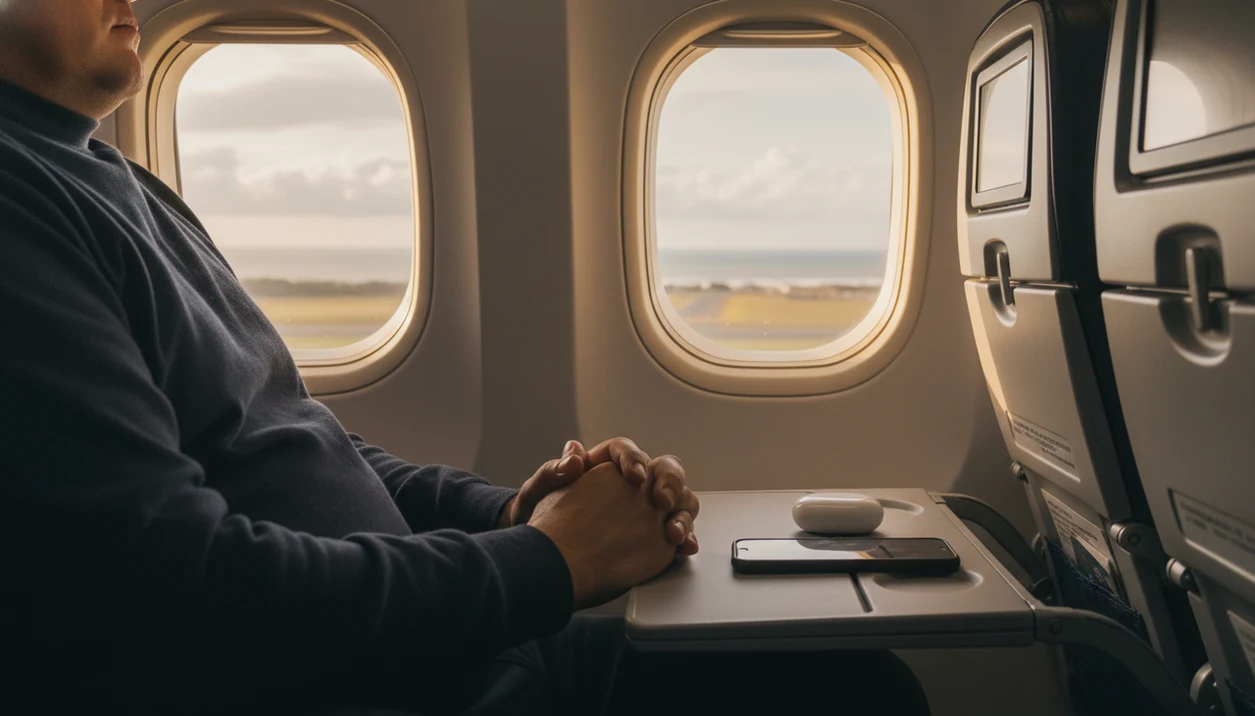
Yes, an app that guides you through landing anxiety can coach you through descent with short audio, breathing cues, grounding prompts, and reassurance timed for the moments that often feel most intense. CalmFlying is built for nervous flyers who want hands-free support from the start of descent until touchdown.
CalmFlying is a flight anxiety app that provides meditation, hypnosis, breathing exercises, and cognitive techniques for nervous flyers.
- Landing anxiety often spikes during descent, seatbelt signs, engine changes, cabin announcements, turbulence-like movement, and touchdown.
- The most useful landing anxiety app is audio-first, available offline, easy to start quickly, and simple enough to follow in a loud cabin.
- App-based tools can reduce distress, but they work best with practice before the flight and are not a guaranteed cure for severe panic or phobia.
How these apps look
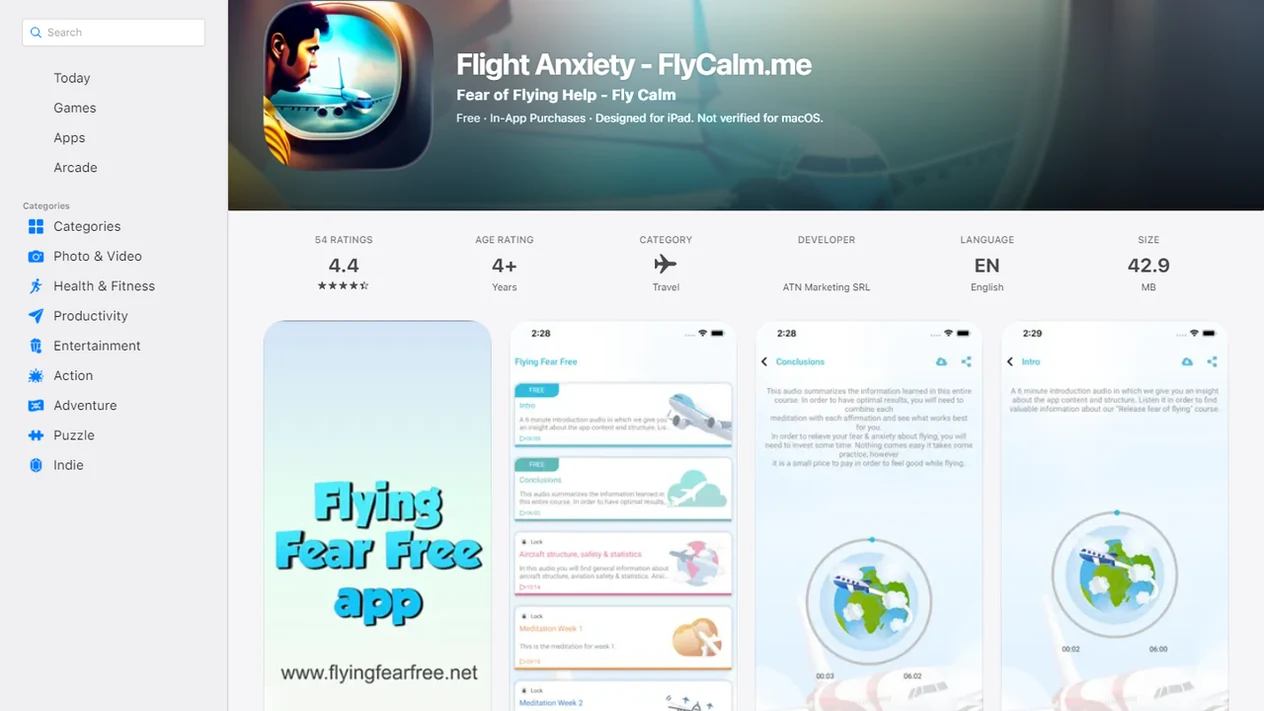
Side-by-side captures of the compared products. Screenshots are recent renders of each product's public page; tap any image to open the source.
Landing Anxiety App For Descent At A Glance
Flight Anxiety App is for the descent, approach, and touchdown window, not for booking, packing, or general travel planning. It gives nervous flyers audio-first breathing, grounding, meditation, hypnosis-style relaxation, and cognitive reassurance when the plane begins coming down.
That matters because landing anxiety is common enough to take seriously. About 16% of U.S. adults reported being afraid to fly in 2019, according to Pew Research source.
If your priority is staying steady until wheels down, Flight Anxiety App fits because it gives you a landing-specific audio flow instead of asking you to read tips while the seatbelt sign dings.
The goal is not to erase every anxious thought. It is to keep returning to this seat, this breath, this moment.
How An App That Guides You Through Landing Anxiety Works
A landing anxiety app works by giving the brain a predictable sequence to follow during descent, when stress makes decision-making harder. Flight Anxiety App uses repeated audio prompts so you do not have to choose a technique while your body is already tense.
The method combines paced breathing, mindfulness, hypnosis-style relaxation, and cognitive reframing. In plain language, that means slowing the exhale, naming what is actually happening, and softening the body’s threat response. A large meta-analysis found mindfulness-based programs produced a moderate reduction in anxiety symptoms versus controls source.
Therapists and mental-health guidelines commonly recommend gradual coping practice and psychological strategies for phobias, rather than pure avoidance. Psychological and exposure-style interventions can help specific phobias, according to a Cochrane review source, but no app should claim to cure fear of landing.
Flight anxiety relief through meditation, hypnosis, and cognitive techniques delivered via the calmflying app should deliver repeatable in-flight coping, not a promise that fear will disappear.
How To Use A Descent Anxiety App During Landing
Do not wait until panic peaks before opening a descent anxiety app. Start while you can still follow a voice, even if your stomach has already tightened.
- Download the landing or descent tracks before the flight, so airplane mode and weak Wi-Fi do not interrupt the session.
- Practice one short track before takeoff, ideally after you find your seat and put earbuds in.
- Start the landing session when initial descent begins or the seatbelt sign returns.
- Use headphones and let the voice carry the sequence, even when announcements cut through.
- Press both feet into the floor and keep listening through banking turns, runway views, and touchdown.
- Continue for a minute after the brakes hum, so your body registers that the flight has ended.
Anyone dealing with a fast surge at the start of descent may find Flight Anxiety App useful because the session begins before panic takes over and continues through the full landing workflow.
Descent And Landing Triggers The App Should Cover
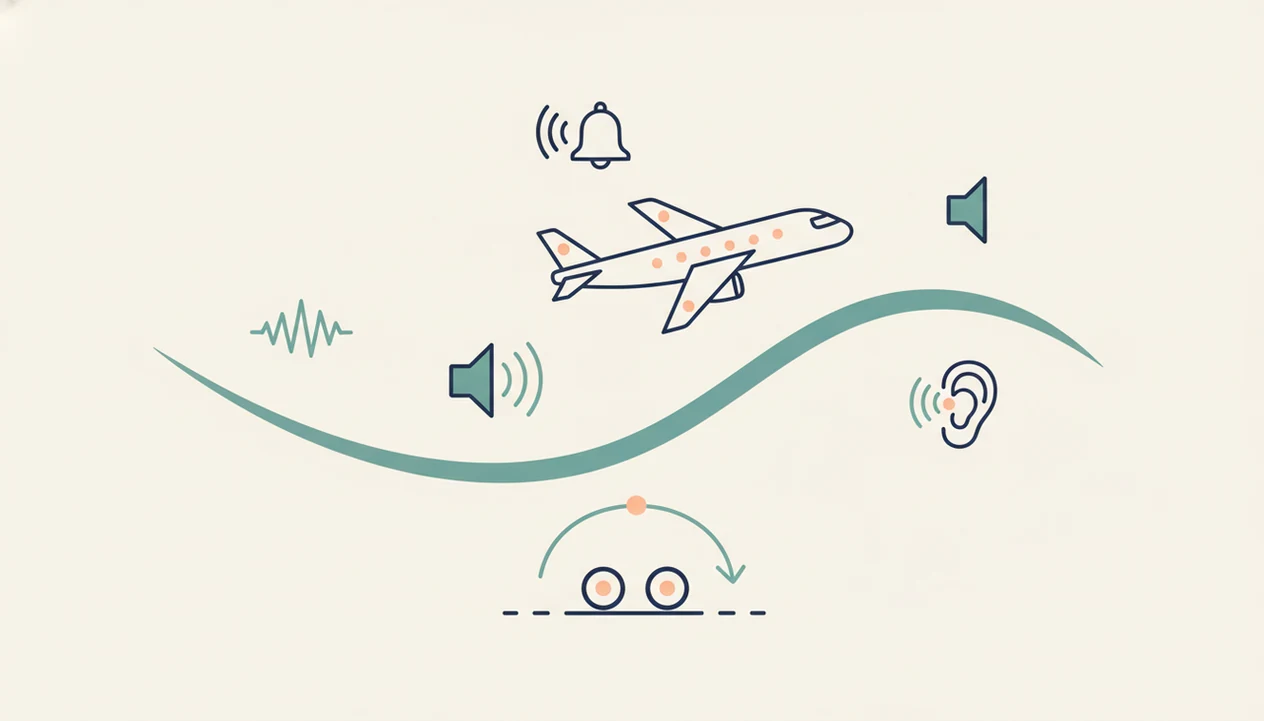
A useful landing tool should name the exact moments that scare people during descent. Vague calm music is not enough when the cabin bins click shut and the aircraft starts changing speed.
- Seatbelt signs and cabin announcements can make the body feel trapped before anything unsafe is happening.
- Engine tone changes often sound alarming because anxious attention is already scanning for danger.
- Banking turns, pressure sensations, and ear popping can feel like loss of control during approach.
- Speed changes, flap movement, runway views, and lower altitude can intensify fear of landing support needs.
- Touchdown bumps and braking sounds can trigger a final panic wave, even when landing is normal.
When engine changes are the issue, Flight Anxiety App covers the exact landing window because it pairs reassurance with breathing and grounding instead of offering a general relaxation library. For a fuller written guide, the descent anxiety coping page breaks down cabin sounds and sensations.
What Fear Of Landing Support Looks Like In CalmFlying
Fear of landing support in CalmFlying looks like opening the audio as the plane begins descending, placing one hand on your thigh or belly, and listening until wheels down. The voice stays simple: feel both feet, soften the jaw, let the exhale be a little longer.
CalmFlying is a flight anxiety app that provides meditation, hypnosis, breathing exercises, and cognitive techniques for nervous flyers. In a real cabin, that means short tracks, calming voice guidance, breathing exercises, meditation, hypnosis-style relaxation, grounding, and cognitive techniques that do not ask for much attention.
One-handed use matters when the tray table is up and the armrest feels cool under your palm. Offline access matters because in-flight Wi-Fi can fail exactly when the seatbelt sign returns.
After the first cabin announcement for descent, when your mind starts jumping ahead to touchdown, Flight Anxiety App flight anxiety relief through meditation, hypnosis, and cognitive techniques delivered via the calmflying app fits because it gives you a guided landing track you can follow without looking at the screen.
Landing Anxiety App Compared With Reading, Medication, And Willpower
A landing anxiety app is most useful when you need audio guidance during the flight itself. Reading, medication, and willpower can each have a place, but they solve different problems.
| Option | Useful when | Main limitation |
|---|---|---|
| Flight Anxiety App | You need breathing, grounding, and reassurance during descent | Requires practice and enough attention to listen |
| Reading an article | You want education before travel day | Hard to use during approach or touchdown |
| Medication prescribed by a clinician | A qualified clinician decides medicine is appropriate | Medical risks and dosing questions need professional guidance |
| Pushing through without support | Anxiety is mild and familiar | Can turn into bracing, breath-holding, and spiraling |
For anxious flyers, audio guidance is often easier than reading during landing because the body can follow a voice while the eyes and hands stay settled.
Medical questions should be handled by a qualified clinician. Flight Anxiety App does not replace therapy, prescriptions, or clinical treatment. Competitors such as soar.com and fearlessflyerapp.com may offer broader fear-of-flying education, but descent-specific audio is the better fit when the hard part is the final 20 minutes.
Practice Routine Before A Landing Anxiety App Session
Does a landing anxiety app work better if I practice before the flight? Yes, because your body recognizes the voice, pace, and exercises before descent begins.
Use Flight Anxiety App once on the ground, once before boarding, and once during a calm cruise segment if you can. Waiting at Gate B12 while boarding groups are called is a good practice moment. So is the quiet stretch after the drink cart has passed.
The CDC reported that about 31.1% of U.S. adults had symptoms of anxiety or depression in August 2020 source. That is not a flight statistic, but it is a reminder that anxiety is widespread and often needs repeated support.
Practice is familiarity, not perfection. If you also struggle before the aircraft moves, an app that helps with takeoff anxiety can give the same kind of structure earlier in the flight.
Reset the plan.
Evidence Behind App-Based Flight And Landing Anxiety Support
The evidence behind app-based landing anxiety support is strongest for the ingredients, not for every individual app. Breathing, mindfulness, cognitive techniques, and guided relaxation can help some people reduce distress, especially when practiced before the feared moment.
- Mindfulness-based programs have shown a moderate reduction in anxiety symptoms versus controls in a large meta-analysis.
- Psychological interventions can reduce specific phobias, according to a Cochrane review.
- Online self-help for flying phobia has been tested in a randomized trial and reported meaningful symptom reduction compared with control conditions source.
- These findings support the idea of app-based coaching for flight anxiety, but they do not prove every landing anxiety app works for every flyer.
- Landing support may reduce distress during descent, but it should not be framed as a guaranteed cure.
The most evidence-backed approach to flight-related fear is repeated psychological coping practice combined with in-the-moment regulation skills. Flight Anxiety App brings those ingredients into the cabin through audio breathing, grounding, and cognitive reassurance. If you want a non-app routine too, how to calm landing anxiety covers simple descent steps.
Limitations
A landing anxiety app can reduce distress, but it cannot guarantee calm on every flight. That honesty matters more than shiny promises.
- Meditation and hypnosis tracks are not proven cures for severe flight phobia or panic disorder.
- Results depend on practice, timing, cabin noise, turbulence, fatigue, and the user’s panic level.
- Starting for the first time at peak panic may be too late for some people.
- Loud announcements, crying babies, or rough air can make audio harder to follow.
- Claims about permanently rewiring fear of landing should be treated with caution.
- Flight Anxiety App does not provide aviation training, diagnosis, emergency care, or medication advice.
- Severe symptoms, fainting, chest pain, or disabling panic deserve medical or mental-health guidance.
- Some people may need therapy, exposure-based treatment, or clinician-prescribed medication alongside app-based support.
Other services, including calm.flights, passengerguard.com, and flyconfident.com, may suit people who want courses or aviation education. A descent anxiety app is narrower: it helps you ride the wave without arguing with it.
FAQ
Is there a landing anxiety app?
Yes. A landing anxiety app usually includes guided breathing, grounding, calming audio, and reassurance for descent, approach, and touchdown.
What helps landing anxiety during plane descent?
Breathing with a longer exhale, grounding through the feet, audio guidance, and practice before descent can help landing anxiety. Starting early is usually easier than waiting for panic to peak.
Why does landing feel scary?
Landing can feel scary because engine changes, banking turns, pressure shifts, speed changes, and touchdown bumps are easy to misread as danger. An anxious body scans these sensations more intensely.
Can I use a landing anxiety app offline during a flight?
Yes. Download the landing tracks before the flight so the session works in airplane mode. Preparation matters because in-flight Wi-Fi may be unavailable or unreliable during descent.
When should I start listening to a landing anxiety app?
Start listening when descent begins, when the seatbelt sign returns, or when the first landing announcement is made. Do not wait until panic is already at its highest.
Does hypnosis help flight anxiety?
Hypnosis-style relaxation may help some people settle their breathing and attention during flight anxiety. It is not a guaranteed medical treatment or cure for phobia.
Can an app stop panic during landing?
An app can guide coping, reduce distress, and help you stay oriented during landing. It may not stop every panic symptom, especially during severe or sudden panic.
Is landing anxiety common?
Yes. Fear of flying and landing-related anxiety are common experiences, even among people who fly anyway. Many nervous flyers feel most activated during descent and touchdown.