What To Listen To During Takeoff Anxiety On A Plane
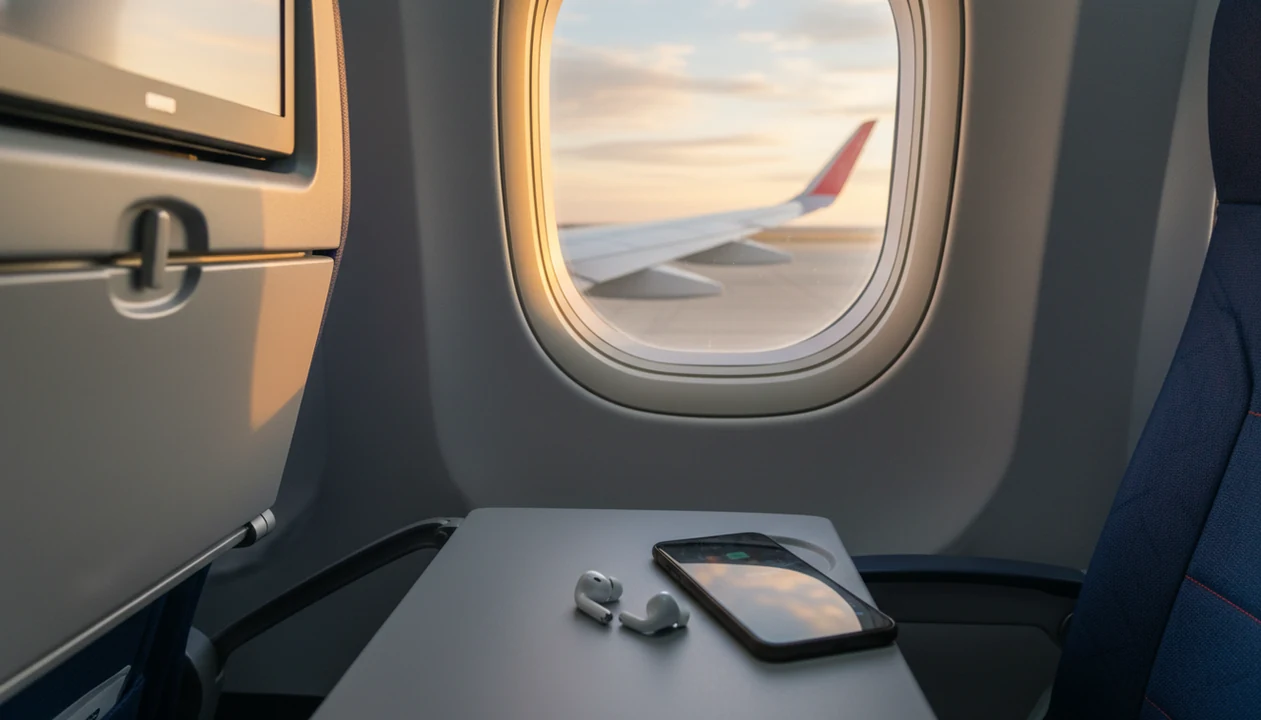
The best choice for what to listen to during takeoff anxiety is a short, offline-ready guided track that combines slow breathing, grounding, and calm reassurance about normal takeoff sensations. Music or podcasts can help, but structured audio works better when it gives your body and mind specific instructions during taxi, takeoff, and initial climb.
> CalmFlying is a flight anxiety app that provides meditation, hypnosis, breathing exercises, and cognitive techniques for nervous flyers.
This guide is educational and is not a substitute for medical or mental health care. If takeoff fear causes panic attacks, avoidance, fainting, trauma symptoms, or medication questions, use audio as support and ask a licensed clinician for guidance.
- Choose guided breathing, flight anxiety meditation, hypnosis-style reassurance, or calm education about takeoff noises and sensations.
- Download 5–15 minute tracks before boarding so they work in airplane mode during taxi, takeoff, and climb.
- Avoid scary aviation content, unfamiliar intense hypnosis, or loud distraction-only audio that makes you monitor the plane more.
Takeoff Anxiety Audio Types That Help Most
Takeoff anxiety audio works best when it gives you a job: breathe, notice, reframe, and stay seated through the first loud minutes. Takeoff fear is common, not a character flaw; in one large U.S. survey, 25% of adults reported some fear of flying and about 6.5% met criteria for fear of flying as a specific phobia source.
- Guided breathing: Best for racing heart, tight chest, or jaw tension as engines spool up.
- Fear of takeoff meditation: Best for staying present without needing to close your eyes.
- Grounding audio: Best when your attention keeps jumping to every bump or cabin sound.
- Hypnosis-style calm narration: Best for people who like steady voice-led reassurance.
- Educational reassurance: Best when you keep asking, “Was that sound normal?”
Structured audio often beats random distraction because it gives your attention a track to follow. The carry-on handle gripped too tightly at the gate is not a failure. It is a cue to start earlier.
Before You Start: Set Up Takeoff Anxiety Audio Safely
Set up takeoff anxiety audio before the airport rush so it is familiar, available, and safe to use during crew instructions. The goal is to reduce scrambling, not create another thing to manage at the gate.
- Download your chosen tracks before boarding, or before switching your phone to airplane mode, so taxi and takeoff do not depend on airport Wi-Fi or streaming.
- Use earbuds or headphones that still let you hear safety announcements, crew directions, seatbelt reminders, and any direct instruction from cabin staff.
- Test the voice, volume, and pacing at home while sitting upright, ideally in the same posture you will use on the plane.
- Choose eyes-open audio if closing your eyes makes you feel trapped, dizzy, or more afraid of losing control.
- Avoid trying a new hypnosis track for the first time in flight if dissociation, trauma memories, or “going under” language feels triggering.
A safe setup should feel boringly practical. If the track is familiar before travel day, your body has one less surprise during the takeoff roll.
Guided Audio Effects On The Takeoff Nervous System
Guided audio for takeoff anxiety works by reducing threat scanning, slowing breathing, and replacing catastrophic guesses with a predictable sequence of cues.
Takeoff can trigger the body’s alarm system because acceleration, engine noise, vibration, and pressure shifts arrive together. Your brain may treat normal aircraft sensations as danger signals. A calm voice can interrupt that loop by saying what to notice next: feet on the floor, shoulders down, longer exhale, seat beneath you.
Slow, paced breathing research suggests that controlled breathing can increase parasympathetic activity and support emotional regulation, especially when the exhale is lengthened source. In plain language, the body gets a “stand down” signal. Clinicians typically recommend breathing, grounding, and cognitive reframing as practical anxiety skills, especially when fear is tied to body sensations.
Cognitive reassurance matters too. “The engines are louder because takeoff needs more thrust” lands differently than “Something is wrong.” One sentence can change the interpretation.
Flight anxiety relief through meditation, hypnosis, and cognitive techniques delivered via the calmflying app should provide repeatable coping cues, not a promise to erase every sensation.
Takeoff Anxiety Audio Steps Before Taxi And Climb
Use takeoff anxiety audio before fear peaks, not after you are already bracing through the takeoff roll. If you only have five minutes, set up the track before the aircraft door closes.
- Test two or three tracks at home before travel so the voice and pacing feel familiar.
- Download your chosen audio before boarding, especially if airport Wi-Fi drops or airplane mode starts early.
- Start a short grounding or breathing track during pre-boarding, while you can still adjust volume calmly.
- Play a 5–10 minute guided track during taxi and keep the volume low enough to hear crew instructions.
- Switch to calm narration during the takeoff roll, then softer music or nature sounds after initial climb.
Tools like Flight Anxiety App can be one option for flight-specific tracks, alongside SOAR, the VALK Foundation, or airline fear-of-flying courses such as British Airways Flying with Confidence. The key is timing. Don’t wait until the seatbelt sign chimes overhead and your body is already on alert.
For a wider routine before the gate agent calls your group, pair this with a boarding anxiety routine.
Step 1: Choose A Fear Of Takeoff Meditation With Breathing Cues
“Which fear of takeoff meditation should I use during the first minutes of flight?” Choose a short, seated, eyes-open-friendly track designed for flying.
A useful takeoff meditation should work in a cramped economy seat. It should not ask you to lie down, close your eyes for 20 minutes, or explore deep emotional memories while the aircraft is turning onto the runway. That can be too much, too late.
Look for three cues: longer exhales, breath counting, and a simple body scan. Breath counting gives your mind a small task. A body scan helps you unclench your jaw, soften your shoulders, and notice that your feet are still supported.
For many nervous flyers, slow exhale breathing is easier than positive thinking because it starts with the body. Thought work can come after the first surge settles.
If takeoff is your main trigger, this pairs well with a practical guide on how to calm takeoff anxiety.
Step 2: Add Guided Audio For Takeoff Noises And Sensations
Guided audio for takeoff should explain normal sounds and sensations without turning the track into an aviation lecture. It helps most when facts are paired with breathing cues.
- Engines getting louder is usually normal: Takeoff uses high thrust, so the sound often rises before movement feels smooth.
- Acceleration can feel intense: Your body may read speed as danger, even when it is expected.
- Thumps and bumps can happen: Gear movement, runway seams, and cabin items can create ordinary noises.
- Turns after takeoff may feel strange: A banking sensation can be routine during departure paths.
- The climb angle can feel steep: Your inner ear may exaggerate the feeling, especially if you are tense.
This is useful for people who ask why taking off in a plane is so scary. Facts alone may not calm the body, however. Combine “that noise is expected” with “exhale slowly now.”
The blanket pulled over tense knees is information. Your body wants cues, not more doom scrolling.
Step 3: Build A Takeoff Anxiety Audio Playlist By Flight Phase
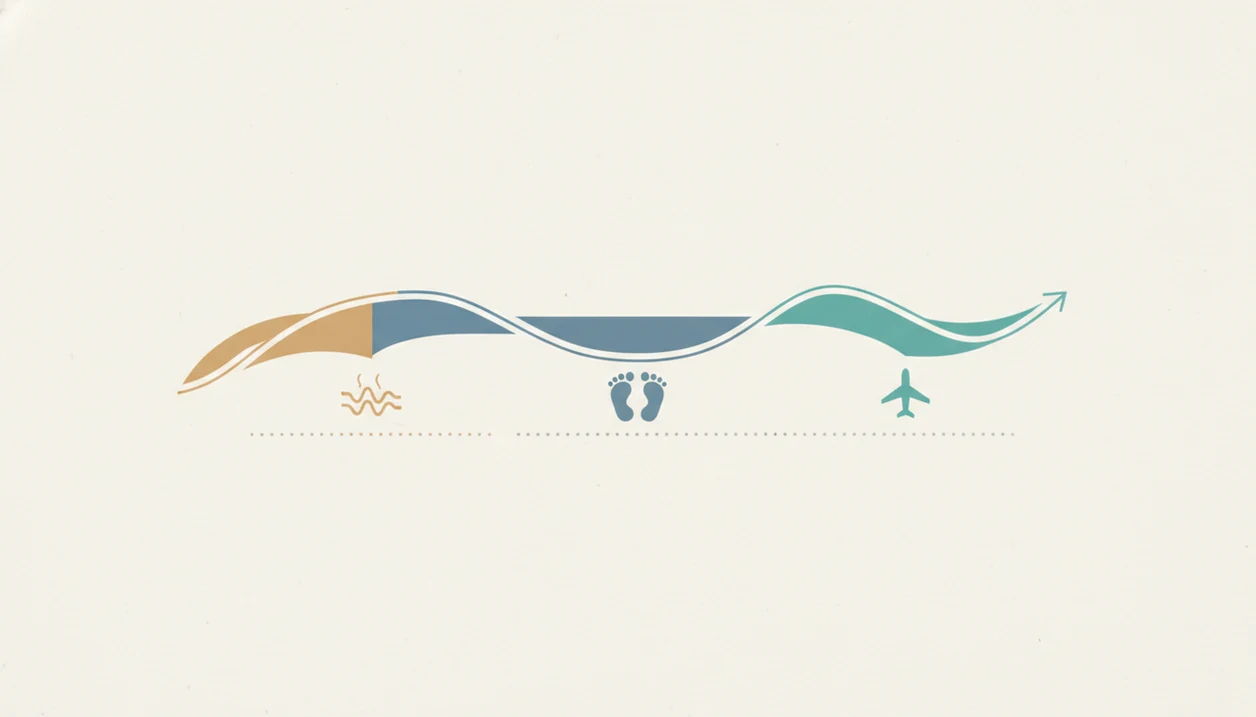
A takeoff anxiety playlist should match the flight phase instead of running one generic relaxation track from gate to cruise. Different moments create different stress points.
| Flight phase | What to play | Why it helps |
|---|---|---|
| Pre-boarding | 3–5 minute grounding track | Lowers baseline anxiety before the boarding queue forms |
| Taxi | 5–10 minute breathing audio | Keeps attention steady while waiting and turning on the ground |
| Takeoff roll | Calm narration about acceleration and engine sound | Reframes the loudest, fastest part of departure |
| Initial climb | Soft music, nature sounds, or a short body scan | Supports settling once the aircraft stabilizes |
Download the taxi and takeoff tracks offline. Those minutes are exactly when you do not want a spinning loading wheel.
Audio usually works best when the track length matches the stress window, while music fits people who feel calmer once the aircraft is already climbing.
If you want a phone-based option, an app that helps with takeoff anxiety can make the phase changes easier to plan before travel day.
Step 4: Avoid Takeoff Anxiety Audio That Backfires
Some audio makes takeoff anxiety worse because it feeds the monitoring habit. Crash stories, turbulence videos, aviation disaster podcasts, and fear-based exposure without therapeutic structure can keep the brain searching for proof that flying is unsafe.
Loud music can also fail. If you are blasting a song but still tracking every engine change, your attention is split between the beat and the threat scan. Louder is not calmer.
Unfamiliar voices may irritate you once you are strapped in. Binaural beats, intense hypnosis, or dramatic “deep trance” scripts can also feel unsettling for some people, especially if you dislike losing a sense of control.
Test everything at home first. Try the track while sitting upright with earbuds, not lying in bed at midnight. Tiny detail, big difference.
If a voice annoys you in your living room, it will not become soothing on the runway.
Step 5: Check Whether Your Takeoff Anxiety Audio Is Working
Takeoff anxiety audio is working if it helps you stay present and ride out the first minutes, even if fear is still there. The goal is not zero anxiety. The goal is staying in your seat, breathing more steadily, and not spiraling into catastrophic interpretation.
Rate your anxiety at three points: before taxi, during takeoff roll, and after initial climb. Use a simple 0–10 score. Then note what helped: voice, pacing, length, breathing style, or factual reassurance.
Repeat the same track on more than one flight before judging it. Fear reduction is a practiced skill, and the nervous system learns through repetition.
A practical next step is to keep one “worked well” track and one backup track. Do not rebuild the whole playlist at the gate with 18% battery and ten minutes before boarding.
Reset the plan. Keep it simple.
Professional Help For Severe Fear Of Takeoff Anxiety
Audio can support severe fear of takeoff, but it should not replace therapy when flying fear is disabling. Exposure-based cognitive behavioral therapy for specific phobias, including fear of flying, has shown large effects in meta-analyses source.
The National Institute of Mental Health estimates lifetime specific phobia prevalence among U.S. adults at about 12.5%, with past-year prevalence around 9.1% source. That means clinically significant fears are not rare. They are also treatable for many people with the right support.
Get clinician guidance if you have panic disorder, PTSD, bipolar disorder, psychosis, fainting concerns, or medication questions. Also seek help if you avoid work, family, or important travel because of takeoff fear.
Audio is a coping tool. Therapy can build the longer plan.
If your anxiety also spikes later in the flight, a separate descent anxiety coping plan can help you avoid using one takeoff strategy for every stage.
Limitations
Takeoff anxiety audio can be useful, but it has clear limits. Treat it as support, not control over the aircraft or your entire nervous system.
- Audio cannot control turbulence, delays, seat discomfort, cabin temperature, or plane noises.
- Audio may not be enough for severe aviophobia, panic disorder, PTSD, or complex mental health conditions.
- Some voices, sound frequencies, binaural beats, or hypnosis-style scripts can feel irritating or unsettling.
- Distraction-only audio may fail if it does not include breathing, grounding, or cognitive reframing.
- First-time use during high anxiety is usually less effective than practice before the flight.
- You must still follow airline safety instructions and keep volume low enough to hear crew announcements.
- A track that worked on one route may feel too short, too slow, or too talkative on another flight.
During boarding, takeoff, turbulence, and landing, compare features, not promises. The useful question is: “Does this cue help me do the next safe thing?”
FAQ
What should I listen to during takeoff anxiety?
Listen to guided breathing, grounding audio, fear of takeoff meditation, or calm narration that explains normal takeoff sensations. Short offline tracks are usually more useful than random distraction.
Does music help with takeoff anxiety?
Music can help if it lowers arousal and gives your attention somewhere steady to rest. It works better when paired with slow breathing or grounding.
Are podcasts good for takeoff anxiety?
Podcasts can distract you, but they may be less effective during takeoff than structured guided audio. Avoid aviation disaster stories or tense true-crime episodes before flying.
Is it safe to use hypnosis audio on a plane?
Gentle hypnosis-style audio is generally used like guided relaxation, but keep volume low enough to hear crew instructions. Avoid it or ask a clinician first if dissociation, trauma symptoms, or loss of control feels triggering.
Can breathing audio stop a panic attack during takeoff?
Breathing audio may reduce panic symptoms by slowing breathing and giving the body a steadier cue. It is not an instant cure and should not replace medical or mental health care when panic is severe.
When should I start playing takeoff anxiety audio?
Start before taxi or during taxi so the technique is already active before the takeoff roll. Waiting until fear peaks makes the skill harder to use.
Should I download takeoff anxiety audio before boarding?
Yes, download takeoff anxiety audio before boarding because Wi-Fi can be weak and airplane mode may interrupt streaming. Apps such as Flight Anxiety App can be useful when tracks are saved offline.
What sounds can make flight anxiety worse?
Crash content, alarming aviation stories, harsh sounds, and untested tracks can make flight anxiety worse. Choose familiar audio that supports breathing, grounding, or calm reassurance.