
Flight Anxiety Side Effects Before and During Flying
Quick answer: Flight anxiety side effects are the mental, emotional, and physical reactions that happen when fear of flying activates the body’s threat response before or during a trip. They can include insomnia, racing thoughts, nausea, sweating, chest tightness, panic sensations, avoidance, and exhaustion after landing.
> Definition: Flight anxiety side effects are the fear-driven symptoms that appear before, during, or after flying when the brain interprets air travel as threatening.
This article is educational and is not a diagnosis. New, severe, or unusual symptoms such as chest pain, fainting, severe shortness of breath, or neurological changes should be assessed by a healthcare professional.
TL;DR
- Common fear of flying symptoms include racing heart, shortness of breath, sweating, trembling, dizziness, nausea, stomach upset, and catastrophic thoughts.
- Pre flight anxiety symptoms often start days before departure and can peak during packing, airport security, boarding, takeoff, turbulence, or landing.
- Breathing exercises, mindfulness, hypnosis, cognitive reframing, gradual exposure, and therapy-based techniques can reduce symptoms, but severe phobias may need professional support.
Flight anxiety side effects: a clear definition for nervous flyers
Flight anxiety side effects are the mental, physical, emotional, and behavioral symptoms that appear when flying feels unsafe, even when the flight itself is routine. These symptoms can start before the airport, rise during boarding or turbulence, and linger after landing.
A nervous flyer might feel dread while packing, nausea in the security line, chest tightness at takeoff, or a drained “adrenaline crash” in baggage claim. Ordinary travel stress usually tracks with logistics, such as late rideshares or long lines. Flight anxiety is different because the fear locks onto the aircraft, loss of control, confinement, heights, or panic itself.
CalmFlying is a flight anxiety app that provides meditation, hypnosis, breathing exercises, and cognitive techniques for nervous flyers. Used carefully, tools like these support symptom management; they do not replace medical care or therapy when symptoms are severe.
Five facts about fear of flying symptoms
- Fear of flying is common. A large German population study found that 16.2% of adults reported fear of flying, and 2.8% had clinically significant flying phobia (PubMed).
- Milder flying anxiety is even more widespread. Research summaries on aviophobia report that up to 40% of the general population may experience some degree of flying-related anxiety (Frontiers in Psychology).
- The physical symptoms are often intense but recognizable. Common flight anxiety physical symptoms include rapid heartbeat, sweating, trembling, chest tightness, breathlessness, dizziness, nausea, and stomach discomfort.
- The mental symptoms can feel just as forceful. Many people report catastrophic thoughts, fear of losing control, derealization, and anticipatory worry that starts long before the gate agent calls boarding.
- Evidence-based strategies can reduce symptoms. CBT-based strategies, breathing, relaxation, mindfulness, and gradual exposure can help many nervous flyers; controlled trials of CBT and exposure-based treatment for fear of flying report significant reductions compared with wait-list controls (PubMed).
The overhead announcement can be enough to start the loop.
Pre flight anxiety symptoms in the days before departure
“Why do I feel anxious days before my flight?” Pre flight anxiety symptoms often begin because the brain starts rehearsing danger before the trip has even started.
Common signs include insomnia, early waking, dread, irritability, poor concentration, and repetitive checking. Some people refresh weather pages, aircraft maps, airline safety records, or turbulence forecasts long after the information stops helping. Others delay booking, cancel trips, or ask the same reassurance question five different ways.
Racing thoughts often circle crashes, panic attacks, being trapped, losing control, or not being able to leave the plane. The body can join in with stomach upset, appetite changes, headaches, tight shoulders, and fatigue.
For some people, the anticipation feels worse than the actual flight. The open suitcase on the bedroom carpet becomes the trigger, not the aircraft.
If sleep is the main problem, our guide to flight anxiety insomnia covers the night-before pattern in more detail.
Flight anxiety physical symptoms during takeoff, turbulence, and landing
During a flight, anxiety can cause a racing heart, tight chest, shortness of breath, sweating, shaking, dizziness, nausea, dry mouth, tingling, and an urgent need to escape. These sensations can be frightening, but they are common threat-response symptoms.
Takeoff, turbulence, seatbelt signs, engine changes, and landing often create symptom spikes. The body hears engine roar or feels a drop in altitude and treats it like danger. Tingling fingers during rough air can make a calm explanation hard to believe in the moment.
Chest tightness or breathlessness does not automatically mean a heart attack. Anxiety can create both. Still, new, severe, unusual, or medically concerning symptoms should be discussed with a clinician, especially if you have heart disease, fainting, or risk factors.
The sensation is real. The danger signal may be wrong.
For turbulence-specific steps, the practical guide to what to do during turbulence anxiety focuses on the first few minutes after the seatbelt sign comes on.
How flight anxiety side effects work in the brain and body
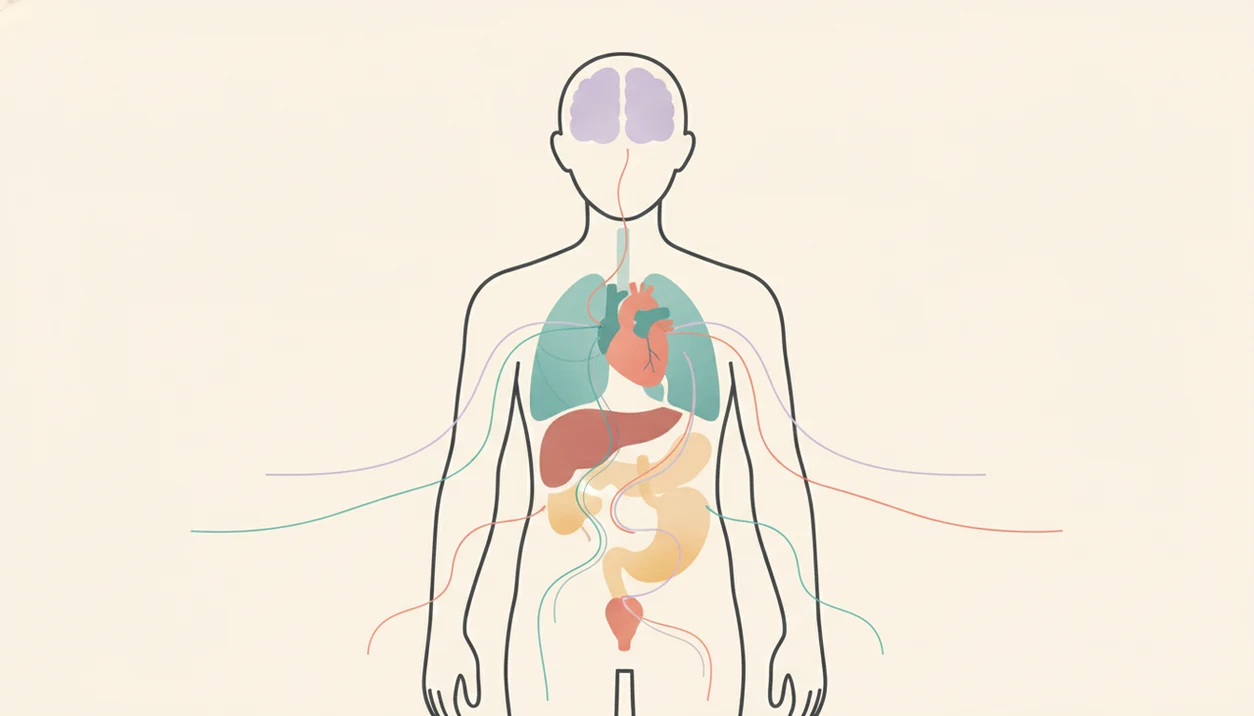
Flight anxiety side effects work through the fight-or-flight response. The brain’s threat system misreads flying cues, such as confinement, height, engine sound, or turbulence, as immediate danger.
Adrenaline and other stress hormones prepare the body to act. Heart rate rises, muscles tighten, breathing gets shallow, sweat increases, and digestion slows. That explains why nausea, dry mouth, stomach discomfort, and shaky legs can arrive at the same time.
A fear loop can then take over: sensation, catastrophic interpretation, more fear, stronger sensation. “My chest is tight” becomes “I can’t breathe,” which raises arousal further. Lack of control, uncertainty, past panic, and being unable to step outside the cabin can keep the loop going.
Meditation, hypnosis, breathing, and cognitive techniques target arousal, attention, and interpretation, not aircraft mechanics. Good flight anxiety relief through meditation, hypnosis, and cognitive techniques delivered via the calmflying app can give nervous flyers repeatable coping cues, not a promise that every sensation will disappear.
Flight anxiety side effects versus panic attacks, motion sickness, and travel stress
Flight anxiety can overlap with panic attacks, motion sickness, jet lag, and ordinary travel stress. The table below is educational, not a diagnosis.
| Condition | Typical signs | Timing | What helps |
|---|---|---|---|
| Flight anxiety | Worry, dread, racing heart, tight chest, sweating, avoidance | Before or during flying | Breathing, grounding, cognitive reframing, exposure practice |
| Panic attack | Sudden fear surge, breathlessness, trembling, fear of dying or losing control | Often peaks within minutes | Slow breathing, grounding, reassurance, clinical support if recurrent |
| Motion sickness | Nausea, dizziness, cold sweat, vomiting | During movement or visual mismatch | Looking forward, hydration, anti-nausea advice from a clinician |
| Jet lag | Fatigue, poor sleep, low focus, digestive changes | After time-zone travel | Light timing, sleep routine, gradual adjustment |
| Travel stress | Irritability, rushing, tension, frustration | Around logistics | Planning, buffers, rest, simpler packing |
Anxiety can worsen nausea, and nausea can worsen panic. Contact a clinician for fainting, chest pain, severe vomiting, new neurological symptoms, or a complex medical history.
Practical coping tools for fear of flying symptoms
Practical coping works best when the tool matches the symptom. Clinicians typically recommend CBT-style skills, gradual exposure, breathing, and relaxation for phobias and panic patterns because they target both fear thoughts and body arousal.
A symptom-to-tool coping map
- Racing heart: Use slow breathing with a longer exhale. A saved breathing exercise for panic on plane is easier to follow than inventing one mid-surge.
- Tight chest: Try progressive muscle relaxation, then soften the jaw and shoulders.
- Nausea: Ground your eyes on a fixed point, sip water, and avoid scanning the cabin.
- Catastrophic thoughts: Use cognitive reframing: “Turbulence is uncomfortable, not automatically unsafe.”
- Panic sensations: Name five visible objects, feel your feet, and keep your breathing small and steady.
- Avoidance: Practice gradual exposure before travel day, from airport videos to short flights.
Tools like Flight Anxiety App can be used before boarding, during takeoff, during turbulence, and after landing. Randomized controlled trials of CBT for fear of flying show significant and lasting reductions compared with wait-list controls.
If you only have five minutes, download the session before airport Wi-Fi drops.
How to respond to flight anxiety side effects
Respond to flight anxiety side effects by treating them as body signals first, not proof of danger. A short, rehearsed sequence works better than debating every sensation while the seatbelt sign is on.
- Name the symptom plainly before you explain it. Say, “This is tightness,” “This is nausea,” or “This is a racing heart,” rather than jumping straight to “Something is wrong.”
- Slow your exhale and soften the places that grip first. Let the out-breath last a little longer than the in-breath, then relax your jaw, drop your shoulders, and unclench your hands.
- Anchor your attention on one stable cue. Look at a seatback, a shoe, a window edge, or feel both feet pressing into the floor.
- Reframe the cue with one safety statement you practiced before the trip. Keep it short: “This is anxiety, and I can ride it out,” or “Turbulence is uncomfortable, not automatically unsafe.”
- Repeat the same exercise before boarding, during takeoff, and when turbulence starts. Repetition teaches the brain that the cue can be met with a plan, not panic.
When flight anxiety symptoms need professional help
Professional support is worth considering when fear causes cancellations, severe distress, work problems, relationship strain, or repeated panic attacks. If you are missing weddings, avoiding career travel, or bargaining with family over every trip, self-guided coping may not be enough.
Therapy options can include CBT, exposure therapy, specialist fear-of-flying programs, and treatment for panic disorder or specific phobias. Some people also discuss short-acting anti-anxiety medication or beta-blockers with a clinician. These may help short term, but they require medical advice and are not a complete treatment plan.
Alcohol is a poor coping tool. It can impair alertness, disturb sleep, and worsen anxiety rebound later.
People with heart conditions, severe psychiatric symptoms, pregnancy-related concerns, fainting, or complex medical histories should speak with a healthcare professional before relying on self-guided tools alone. If panic begins in the air, our in-flight panic attack guide explains immediate grounding steps.
Limitations
Self-guided tools can help, but they have limits. A fair plan leaves room for medical care, therapy, and trial-and-error practice.
- Meditation, hypnosis, breathing, and cognitive techniques may reduce symptoms, but they do not guarantee a symptom-free flight.
- Severe aviophobia may need in-person therapy or a specialist fear-of-flying program.
- Some people do not respond quickly to app-based tools and need repeated practice over time.
- Flight-specific evidence for app-delivered hypnosis and meditation is still emerging.
- Medication decisions should be made with a healthcare professional, especially with medical complexity.
- Alcohol and sedatives can impair alertness and do not resolve the underlying fear loop.
- New, severe, or unusual physical symptoms should not be assumed to be anxiety without medical evaluation.
Self-guided flight-anxiety apps, including calm.flights and SOAR, can support practice, but they should fit into a broader care plan when symptoms are severe. For safety context, read are flight anxiety apps safe before relying on any app during travel.
FAQ
What are flight anxiety symptoms?
Flight anxiety symptoms include racing heart, sweating, trembling, nausea, chest tightness, shortness of breath, dread, catastrophic thoughts, and avoidance. They may start before the trip or appear during boarding, takeoff, turbulence, or landing.
Can flight anxiety cause nausea?
Yes, flight anxiety can cause nausea because stress affects breathing, muscle tension, and digestion. Motion sickness can also cause nausea, and the two can overlap.
Can flight anxiety cause chest pain?
Flight anxiety can cause chest tightness or chest discomfort during panic or high arousal. New, severe, or unusual chest pain should be treated as a medical concern and assessed by a clinician.
Why is anxiety worse before flying?
Anxiety can be worse before flying because anticipatory worry gives the brain more time to imagine danger. Checking weather, safety stories, or panic symptoms repeatedly can keep the threat loop active.
Can flight anxiety cause insomnia?
Yes, flight anxiety can cause insomnia, early waking, and nighttime rumination before travel. Reducing late-night checking, using a wind-down routine, and practicing a calming exercise earlier in the evening may help.
How long does flight anxiety last?
Flight anxiety may last minutes, hours, or several days depending on the person and the trigger. Some people feel symptoms mainly before takeoff, while others feel drained after landing.
Does avoiding flights worsen anxiety?
Avoiding flights can maintain fear because the brain never learns that flying can be tolerated safely. Gradual exposure, often with CBT-based support, can reduce avoidance over time.
When should I get help for flight anxiety?
Get help if flight anxiety causes cancellations, panic attacks, major distress, work problems, relationship strain, or unsafe coping such as heavy alcohol use. Medical advice is especially important with chest pain, fainting, pregnancy concerns, or complex health conditions.