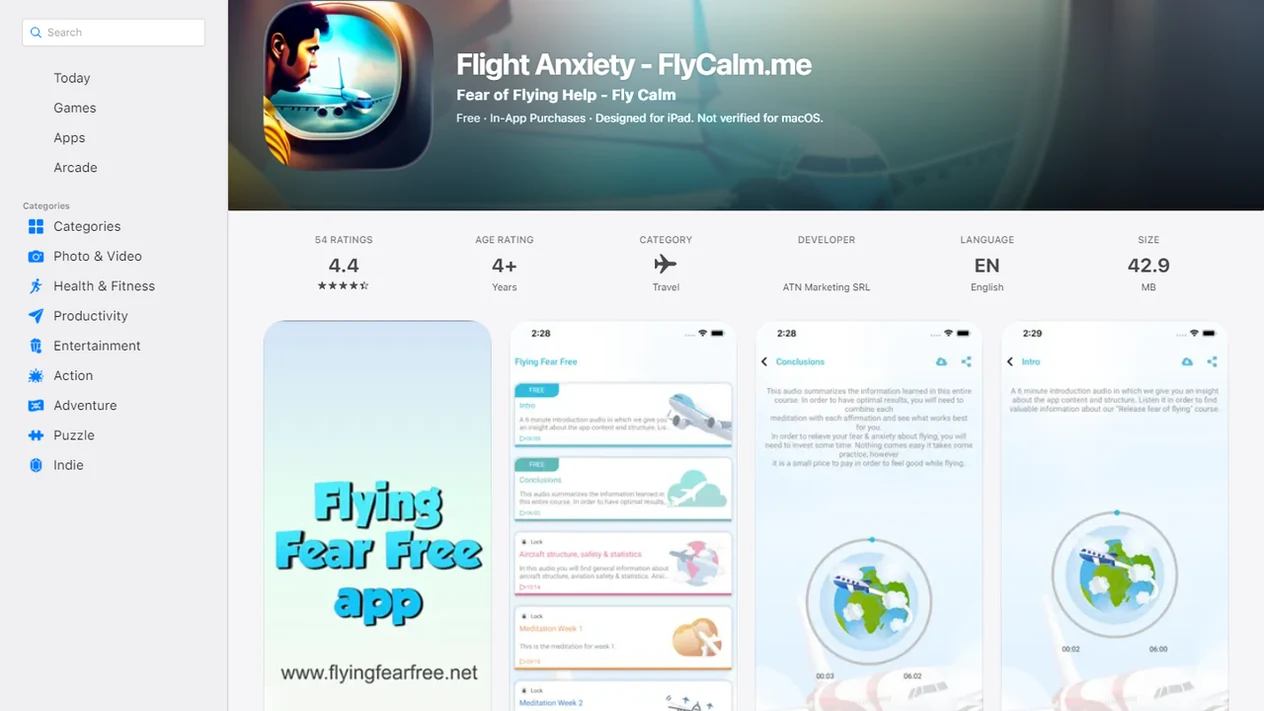
Definition: CalmFlying is a flight anxiety app that provides meditation, hypnosis, breathing exercises, and cognitive techniques for nervous flyers, available to download on iOS and Android.
What You Get When You Download The CalmFlying Fear Of Flying App
When you download CalmFlying, you get flight-specific support rather than a general relaxation library. The content is arranged around the moments that usually tighten the body, from the airport to landing.
- Airport module: Short grounding practices for gate waiting, security tension, and schedule uncertainty.
- Boarding module: Breathing cues for the jet bridge, the narrow aisle, and the seatbelt settling across the hips.
- Takeoff module: Guided meditation and hypnosis-style audio for engine sounds, acceleration, and climb.
- Turbulence module: Quick breathing, reassurance prompts, and body-based anchors for bumpy air.
- Landing module: A check-in and debrief so the flight becomes practice, not just something survived.
If your priority is having one place to open when fear spikes, Flight Anxiety App fits because it organizes CBT modules, guided meditation, hypnosis-style audio, and breathing exercises by flight phase. A general meditation app may calm you, but it usually won't name the drink cart rattle or the feeling of confinement.
How A Fear Of Flying App Works: The Science Behind CalmFlying
A fear of flying app works by pairing repeated exposure to flight cues with skills that lower arousal and change threat interpretation. In plain language, you practice meeting the flight in smaller pieces before your body is trapped in row 24.
Research snapshot: CBT exposure principles ask you to approach feared triggers gradually, such as takeoff sounds, turbulence thoughts, or loss-of-control fears. A randomized trial of self-help CBT for fear of flying found that 80% of participants were able to fly after treatment, compared with 20% in a waitlist group source. VR-based CBT studies have also reported anxiety reductions maintained at 1-year follow-up. For example, virtual reality exposure therapy for fear of flying has shown maintained improvement in follow-up research source.
Breathing and mindfulness help with physiological arousal. That means heart rate, muscle tension, and the stress response. Hypnosis-style relaxation adds imagery and suggestion, which can soften threat perception without pretending the fear is gone.
Not magic. Practice.
The most evidence-backed approach to reducing fear of flying is repeated CBT-style exposure combined with relaxation skills, because the brain needs new flight memories before it stops treating every sensation as danger.
How To Download And Set Up The Fear Of Flying App
Does setup matter before the flight? Yes, because an app you haven't tested is one more thing to manage when boarding group numbers are called and your stomach tightens.
- Open the App Store on iOS or Google Play on Android and search for CalmFlying.
- Tap Install, then create your account when the download finishes.
- Select your anxiety level and upcoming flight date so the program can match your starting point.
- Download all sessions for offline access before you leave home.
- Test headphones and audio playback in airplane mode, including volume and pause controls.
- Begin the pre-flight preparation module at least 7 days before travel.
Travelers trying to install fear of flying app support the night before departure should still start with the setup checklist, because offline sessions and airplane-mode testing protect the tools you may need after the cabin door closes. Put earbuds in once you find the seat. Check the first track. Then let the exhale be a little longer.
When To Use Each CalmFlying Feature During A Flight
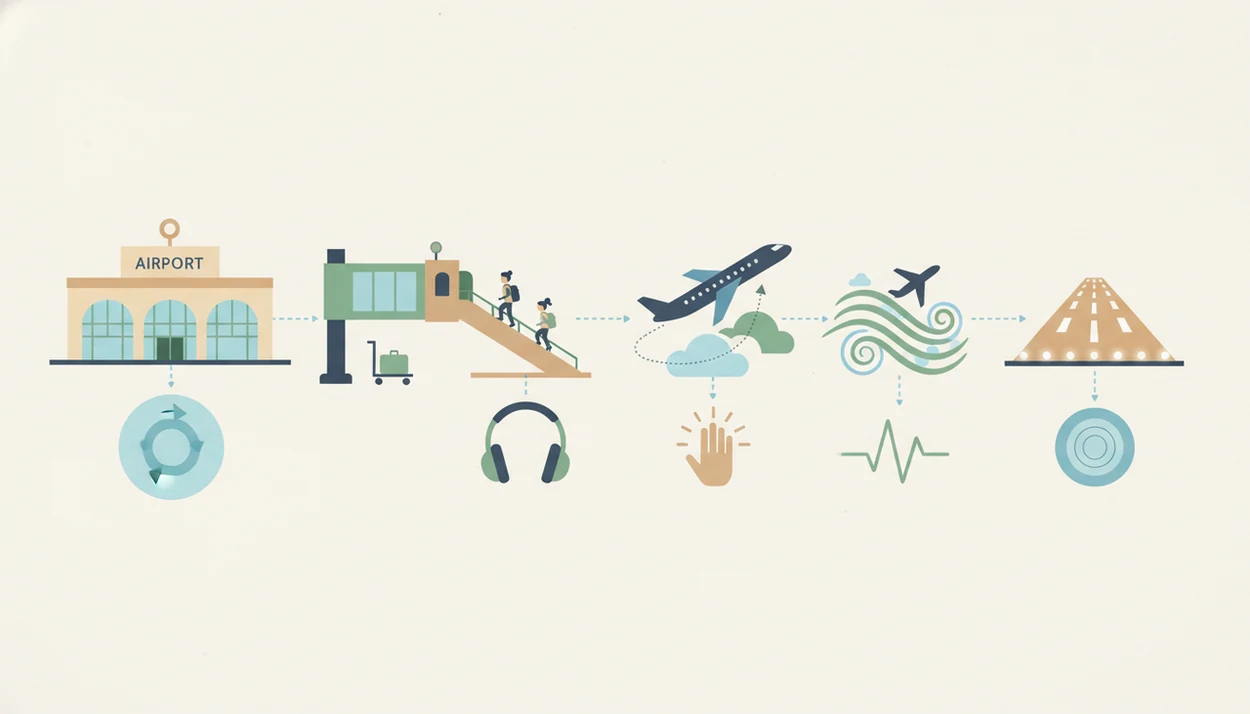
Use CalmFlying before fear peaks, not only after panic starts. Each feature is built for a different point in the travel sequence, so the support feels close to what is actually happening.
Pre-Flight Preparation Modules
In the days before travel, use CBT cognitive restructuring modules to challenge catastrophic predictions. Add sleep meditations the night before, especially if you're lying awake with the weather app checked under blankets and a passport beside a half-packed bag. CalmFlying also fits into practical routines like packing early, choosing a seat, and giving yourself enough airport time.
In-Flight Turbulence And Takeoff Tools
During airport waiting and boarding, use breathing exercises and grounding audio. At takeoff and climb, use the hypnosis-style relaxation track while you feel both feet and soften the jaw. When turbulence starts, open the quick-access breathing tool and reassurance audio. Press heels into the floor. Count the next three exhales.
When turbulence is the issue, Flight Anxiety App covers the moment with a quick-access breathing workflow and plain reassurance audio, rather than asking you to search through a long wellness menu.
Ready to fly calmer?
To download fear of flying app support, visit the App Store or Google Play, search for CalmFlying, and install it before your trip to access guided relaxation, breathing…
Fear Of Flying App Download: CalmFlying Vs Alternative Apps
A fear of flying app download should match the kind of help you need: aviation information, anxiety treatment skills, or general relaxation. CalmFlying is built around therapeutic anxiety reduction, not live flight prediction.
| Option | Main focus | Offline support | Therapeutic ingredients | Best fit |
|---|---|---|---|---|
| CalmFlying | Flight anxiety relief | Yes, when sessions are downloaded | CBT modules, mindfulness, hypnosis-style audio, breathing | Nervous flyers who want phase-by-phase coping |
| SkyGuru | Turbulence data and pilot explanations | Limited by data needs | Aviation reassurance | Flyers who want technical flight context |
| Flight Buddy | Companion-style flight support | Varies | Basic reassurance and tracking | Users who want simple trip guidance |
| Calm or Headspace | General meditation | Yes for some content | Mindfulness and sleep audio | People who want broad relaxation, not flight-specific work |
Flight anxiety relief through meditation, hypnosis, and cognitive techniques delivered via the calmflying app should give you flight-specific actions, not generic calm content with airplane wording added later. SkyGuru may help if uncertainty about aircraft movement is your main fear; CalmFlying is the stronger fit when the body needs CBT practice, breathing, and guided audio in one place.
Who Should Install A Fear Of Flying App
People with mild anxiety, moderate aerophobia, or turbulence-triggered stress can all benefit from a structured fear of flying app. The key question is whether you need reassurance, repeated practice, or professional support alongside the app.
Stat callouts:
- A large European survey found about 18% of respondents reported some fear of flying, and around 7% reported high fear source.
- The lifetime prevalence of specific phobias, including fear of flying, is about 12.5% in U.S. survey data source.
- Severe aerophobia may require licensed therapy, especially when panic disorder or trauma is also present.
Frequent flyers with situational anxiety often need a turbulence plan more than a full course. Moderate fear usually needs a structured program with repetition before the flight. For mild-to-moderate nervous flyers, Flight Anxiety App can be easier than waiting for panic to begin because it gives a plan for airport waiting, takeoff, turbulence, and landing.
Severe fear deserves backup.
Related CalmFlying Features For Nervous Flyers
Related features support the parts of travel that happen around the flight, not just the minutes in the air. That matters when anxiety begins in the rideshare, at the gate, or while checking the departure board.
The sleep meditations help the night before an early flight, when the body is tired but still scanning for danger. The progress tracker and flight journal let you record what happened after landing, including what helped and what still felt hard. The personalized anxiety assessment recommends content based on your triggers, such as takeoff, turbulence, confinement, or panic symptoms.
For nervous flyers who want continuity, the Flight Anxiety App is strongest when its journal, assessment, and adaptive recommendations turn each flight into usable practice, because the journal, assessment, and adaptive recommendations turn each flight into usable practice.
Limitations
CalmFlying can be a useful support, but it is not a cure-all. Set it up as one part of a flight anxiety plan, not the whole plan.
- Most fear of flying apps, including CalmFlying, lack large peer-reviewed clinical trials; effectiveness is extrapolated from related CBT, mindfulness, and exposure research.
- People with severe aerophobia, panic disorder, or complex trauma may need a licensed mental health professional.
- Simply downloading the app without completing modules and practicing techniques will not change fear patterns.
- Technical problems can matter: no offline download, low battery, forgotten headphones, or audio not tested in airplane mode.
- Phobias usually require repeated practice over time; one session on boarding day is rarely enough.
- Exposure-based content may feel uncomfortable at first because it asks you to approach feared sensations.
- Competitor options such as calm.flights, soar.com, or flyconfident.com may suit users who prefer pilot-led education or course-style coaching over mobile audio practice.
However, the limitation is also the instruction: practice early, download offline, and combine support when fear is bigger than a phone can hold.